
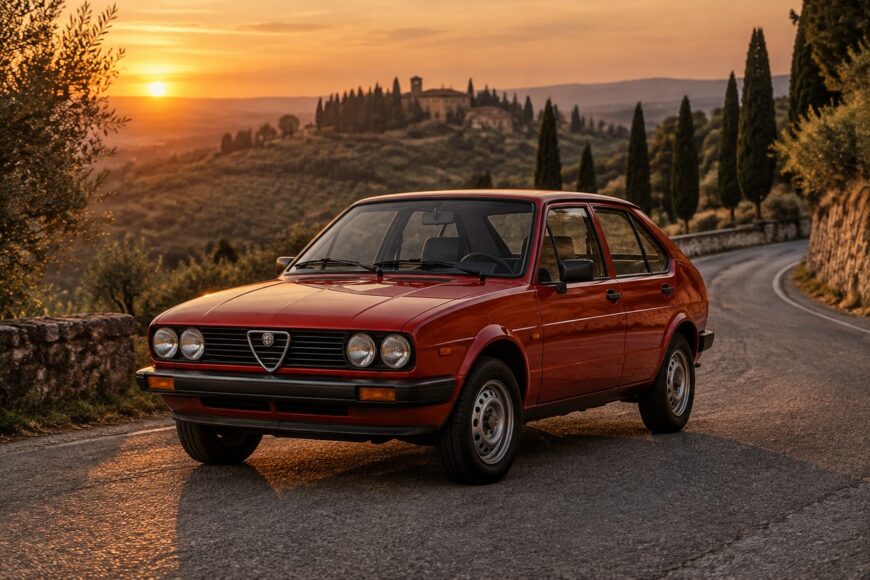
An Alfa Romeo Alfasud can feel exceptionally alive on the road while its body quietly becomes the most expensive part of the car. The steering, balance, and front-wheel-drive traction can still deliver the qualities that made the model famous, even when corrosion has already moved beyond visible paint damage.
That contradiction explains the Alfasud better than any specification sheet. Produced from 1972 to 1984, it combined ambitious engineering with poor long-term body survival. Its real assessment depends on chassis quality, corrosion risk, repair economics, and buying discipline rather than on Alfa Romeo stereotypes or a short test drive.
- Why the Alfasud Was a Big Deal for Alfa Romeo
- The Brilliant Chassis: Why It Still Feels Special
- Terrible Steel—or a More Complicated Corrosion Story?
- Buying an Alfasud: Inspect the Body Before the Engine
- The Restoration Trap: When a Pretty Car Is a Weak Car
- Where Alfasud Rust Hides and What It Means
- The Fair Verdict: Was the Alfasud a Good Car?
- Frequently asked questions
- How can you tell whether an Alfasud has had a proper structural restoration?
- Why is Alfa Romeo not popular in the US?
- Was the Alfasud a good car?
- What are the major problems with Alfa Romeo?
Why the Alfasud Was a Big Deal for Alfa Romeo
The Alfasud was Alfa Romeo’s first front-wheel-drive model, and that made it a major change in the company’s engineering direction. It was produced from 1972 to 1984 as a compact car intended to bring Alfa Romeo engineering to a broader market. The project was associated with chassis engineer Rudolf Hruska, while Giorgetto Giugiaro designed the body.
Its importance came from the way the components worked together. The front-drive layout allowed efficient packaging in a compact car, while the flat-four engine kept the center of mass low. This was a small family car with a distinctly serious approach to road behavior.
The range extended beyond one body shape. Buyers encountered sedan and hatchback versions, the Sprint coupe, and the Giardinetta estate. That breadth matters today because each version brings different parts, trim, and body-panel challenges, especially where production numbers and surviving examples are limited.
The Alfasud therefore deserves a more precise historical judgment than “an old Alfa that rusted.” Its corrosion problems damaged the model’s long-term reputation, yet the original engineering represented a genuine technical step for Alfa Romeo and helped establish why enthusiasts still seek the car out.
The Brilliant Chassis: Why It Still Feels Special
The Alfasud’s flat-four petrol engines covered 1,186–1,490 cc, with period outputs of approximately 60–105 hp. Base outputs were modest, but the figures do not explain the car’s appeal on their own. The important combination was the low, compact engine, front-wheel drive, responsive steering, and carefully balanced suspension.
Early cars were especially praised for chassis balance and cornering ability. At approximately 3,890 mm long, with a 2,455 mm wheelbase and about 140 mm of ground clearance, the Alfasud was small enough to feel immediate without becoming nervous. It rewards smooth inputs and momentum rather than dramatic straight-line acceleration.
Some versions used rear disc brakes, a strong technical choice for a small mass-market car of the period. In good condition, the braking system complemented the chassis when the road became tighter and more demanding. A healthy example feels coordinated, light, and eager to change direction.
That is why a mechanically ordinary Alfasud can still be memorable. Its appeal lies in the relationship between steering, weight transfer, and cornering balance, rather than in maximum speed. The same quality creates a buying hazard: a car can drive beautifully while its body is already too compromised to justify restoration.
Terrible Steel—or a More Complicated Corrosion Story?
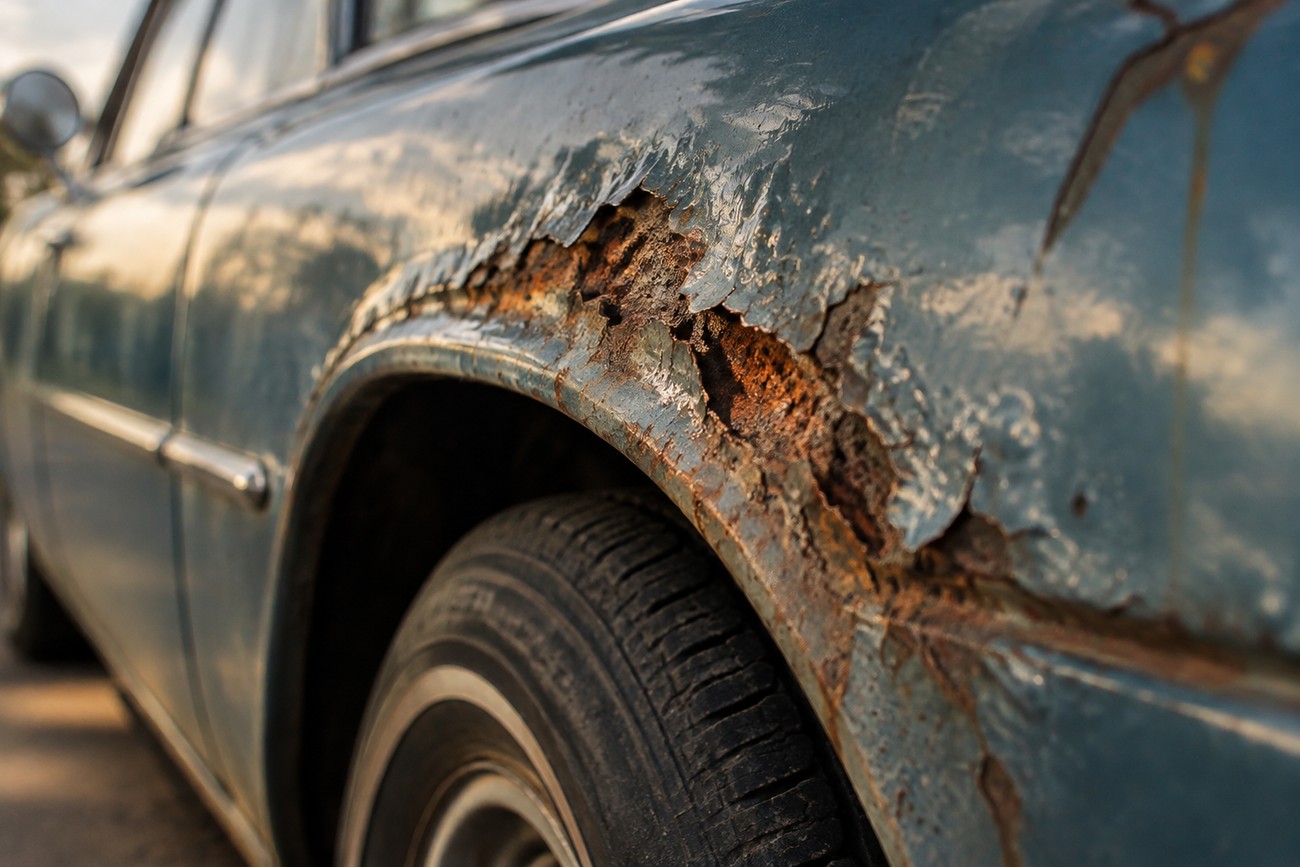
“Bad steel” is a useful shorthand for the Alfasud’s reputation, though it is too simple as a complete explanation. The survival problem is generally described as a combination of weak corrosion protection, storage of body panels, and production factors. Treating one cause as proven and universal can lead buyers toward the wrong inspection priorities.
Rust commonly appears at edges, seams, wheel arches, and hidden cavities. The boot or tailgate panels can corrode even when the visible exterior presents well. Paint bubbling is therefore often the last stage of a process that began behind trim, inside folded metal, or where moisture remained trapped.
Floors and suspension mounting areas deserve greater attention than a clean-looking quarter panel. Corrosion in those locations can affect structural integrity and geometry, while repairs around mounting points may conceal poor alignment or thin replacement metal. A polished exterior gives little evidence about the quality of work in those zones.
The central problem is systemic rather than cosmetic. Corrosion affects body survival and residual value, and it can progress differently between cars that appear similar in age or mileage. Climate, storage, maintenance, and previous repairs often explain that variation better than the odometer.
The Alfasud’s strong chassis makes the risk harder to detect. A car may start, run, steer, and corner convincingly while weakened metal is carrying the suspension loads. Driving quality is useful evidence about the mechanical systems; it is not evidence that the shell is sound.
Buying an Alfasud: Inspect the Body Before the Engine
A sound body is usually harder to find than a serviceable engine. Engines can be repaired or replaced by a specialist, while a badly corroded shell can require extensive metalwork, alignment checks, and repeated dismantling. The first inspection should therefore establish whether the car has a sound structure and correct geometry.
Look beyond visible arches and freshly painted panels. Inspect the floors, suspension cups, mounting points, seams, edges, hidden cavities, and the boot or tailgate panels. Evidence of consistent metalwork, accessible repaired areas, and sound transitions between old and new metal is more valuable than a recent paint finish.
Shell geometry and metal thickness should be verified before time is spent tuning a running engine or admiring a cosmetic finish. A straight, properly repaired body gives every later mechanical decision a rational foundation.
Storage history matters because moisture, poor ventilation, and long periods of neglect can create serious damage without adding mileage. Ask how the car was kept, how long it stood, and which panels or structural areas have been repaired. A low-mileage example can carry more restoration risk than a higher-mileage car that was kept dry and maintained.
Previous welding requires careful interpretation. A documented structural repair with sound, properly formed welds is a positive sign; scattered patches, heavy underseal, uneven panel gaps, or inaccessible welds deserve caution. Rare versions add another risk because specific panels and trim can be difficult to source.
A repaint proves only that the exterior was refinished. It does not prove that internal corrosion, floor structure, suspension mounting areas, or the reverse sides of panels were repaired. If the seller cannot show photographs or provide access to the work, value the visible condition conservatively.
The Restoration Trap: When a Pretty Car Is a Weak Car
Photographs favor shiny paint, straight-looking panels, and clean engine bays. They rarely show the back of a seam, the inside of a cavity, or the quality of a repair beneath underseal. This makes the Alfasud especially vulnerable to presentation-led buying, because a photogenic shell can conceal a weak foundation.
Long-term storage introduces problems beyond ordinary corrosion. Seized components, degraded systems, improvised repairs, and missing original parts can appear after the car is made mobile. Old stock may also look promising while carrying years of exposure or incomplete previous work.
The difference between structural restoration and cosmetic repair is visible in the evidence. A proper restoration should account for metal continuity, panel fit, geometry, repaired cavities, and the condition of mounting areas. New paint without that supporting record is a finish, not a diagnosis.
Progressive corrosion discovery makes restoration costs difficult to cap. Opening one repaired area may reveal adjacent thin metal, and removing coatings can expose further work beneath them. The sensible starting point is a shell assessment by someone able to inspect structure and geometry, before committing to an engine rebuild or full cosmetic treatment.
Where Alfasud Rust Hides and What It Means
Use the following areas as an inspection sequence. The visible clue is only the starting point; the buying implication depends on what lies behind it and whether previous repairs can be verified.
| Inspection area | Visible warning sign | Hidden structural or restoration risk | What it means for a buyer |
|---|---|---|---|
| Edges and seams | Blistering paint, swollen joints, or uneven seam lines | Corrosion may be advancing between folded panels or beneath sealant | Request access to the reverse side and inspect the continuity of any repair |
| Wheel arches | Rust bubbles, repaired lips, or thick underseal | Hidden thinning can extend into adjacent panels and inner arch areas | Budget for further investigation; a clean outer lip does not confirm a sound arch |
| Hidden cavities | Loose sealant, drainage marks, or fresh coating without documentation | Moisture may have remained trapped where inspection is difficult | Give greater weight to photographs and inspection access than to the coating itself |
| Floors | Patch plates, damp carpeting, soft areas, or uneven underbody protection | Weak metal can affect shell strength and the quality of previous welding | Inspect from above and below before treating the car as a usable restoration base |
| Suspension mounting areas | Cracks, distortion, corrosion scale, or visibly irregular repairs | Mounting geometry and load paths may be compromised | Obtain a structural assessment before driving the car hard or proceeding with restoration |
| Boot lid or tailgate | Rust around seams, lower edges, or trim holes | Corrosion can continue inside folded sections even when the outer panel looks presentable | Check whether the panel is repairable and whether a correct replacement is available |
| Previous welded areas | Overlapping patches, rough welds, rippled panels, or excessive filler | Earlier repairs may have covered corrosion without restoring strength or geometry | Price the car based on the quality of the repair evidence, not the paint finish |
The Fair Verdict: Was the Alfasud a Good Car?
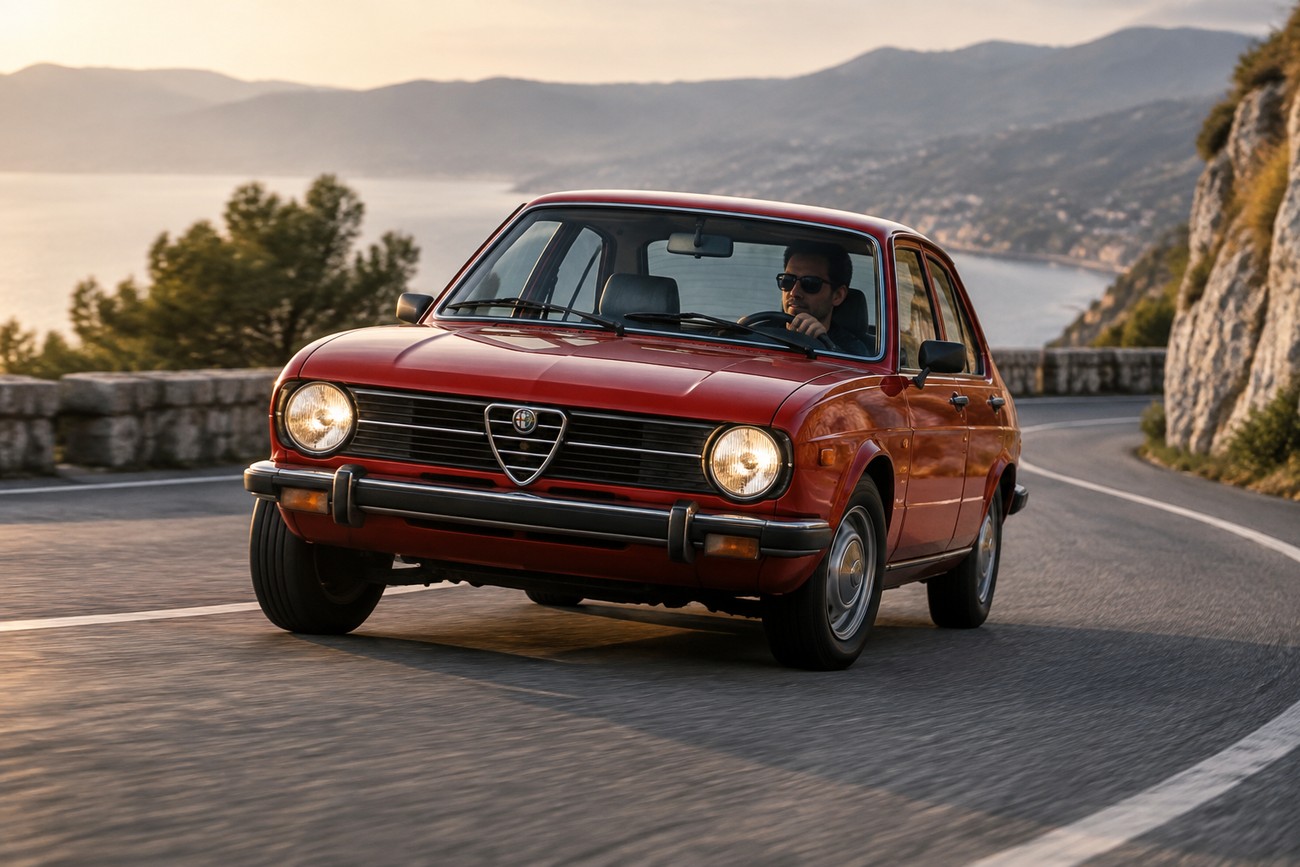
Yes, the Alfasud was a good car in the engineering sense that matters most to a driver. Its chassis balance, steering response, and cornering ability remain widely valued, and its front-drive, flat-four layout gave it a character that many compact cars lacked. The bodywork reputation reflects a serious ownership problem, not a failure of the entire concept.
Its surviving examples vary substantially with climate, storage, maintenance, and repair history. A dry, correctly repaired shell can preserve the model’s strengths, while a glossy car with hidden corrosion can consume a restoration budget quickly. The correct buying priority is a structurally sound shell, followed by geometry and repair quality, with the drivetrain assessed afterward.
Power figures for a 1.5-liter version should be treated with care. One source lists 84 hp, while historical or catalog accounts give approximately 85–96 hp. That discrepancy is a reason to identify the exact version and source rather than attach false precision to a general specification.
The fairest conclusion is that the Alfasud was unusually good to drive and unusually difficult to preserve. Its chassis earned the legend; its corrosion risk created the warning. A buyer who understands both can find a rewarding classic, while someone buying only the driving story may acquire a welding project disguised as a lively car.
Frequently asked questions
Body condition is central to assessing a surviving Alfasud. The answers below address structural repairs, the model’s driving qualities, and the risks that matter when buying one. They also distinguish the Alfasud’s reputation from broader questions about Alfa Romeo ownership.
How can you tell whether an Alfasud has had a proper structural restoration?
Look for evidence rather than paint quality. A credible repair should show sound metal, appropriate welds, correct panel alignment, and access to the reverse sides of repaired areas. Floors, suspension mounting points, seams, inner arches, and cavities should be inspectable or supported by clear restoration photographs.
Check geometry as well as appearance. Even gaps, straight mounting areas, and a shell that tracks correctly during a road test support the claim, though they do not replace a proper structural inspection. Heavy filler, broad underseal, isolated patches, and a lack of repair records should be treated as unresolved risk.
Why is Alfa Romeo not popular in the US?
Alfa Romeo’s limited visibility in the United States reflects several factors, including market presence, dealer support, parts access, and the brand’s position relative to more established competitors. The Alfasud itself was primarily a European-market compact, so its US recognition is naturally lower than that of models sold more widely there.
Corrosion damaged the reputation of surviving Alfasud examples, but it does not fully explain Alfa Romeo’s broader market profile. Availability, ownership support, changing regulations, and brand history also shape how familiar the marque is to American buyers.
Was the Alfasud a good car?
The Alfasud was a good-driving compact with an exceptionally effective chassis, responsive steering, and a distinctive flat-four layout. Its weakness was long-term body survival, especially where corrosion protection, storage, or previous repairs were poor.
A sound shell makes the model worth considering; a severely corroded shell can overwhelm the value of its mechanical qualities. The answer depends less on the badge or engine output than on body integrity and repair quality.
What are the major problems with Alfa Romeo?
For classic Alfa Romeo ownership, the major risks often involve corrosion, parts availability, previous repair quality, and long-term maintenance history. These issues vary by model and example, so a general brand judgment is less useful than inspecting the particular car.
With an Alfasud, hidden body corrosion is the priority. Check floors, cavities, seams, arches, boot or tailgate panels, suspension mounting areas, and earlier welded sections before committing to mechanical or cosmetic work.







