
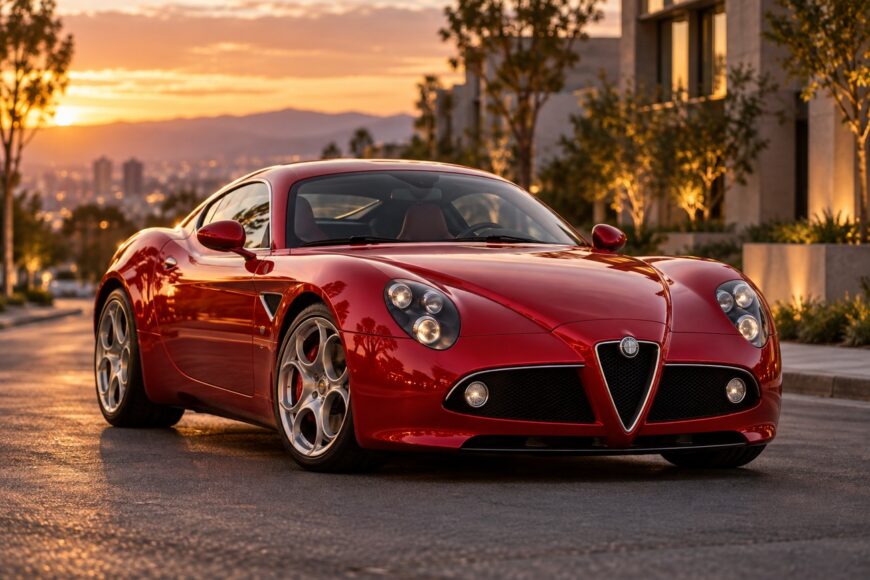
The Alfa Romeo 8C Competizione arrived as a comeback statement: a V8 supercar shaped to make the marque impossible to ignore. Its long hood, compact cabin, and open-throated exhaust still make a case that few specifications can capture. From the driver’s seat, though, its promise comes with a gearbox and ownership demands that resist the easy grand-tourer image.
That tension matters most when an 8C changes hands. Limited production makes one desirable; it does not make a neglected example sound or an occasional drive inexpensive. The car earns its place in Alfa Romeo’s story, but a buyer has to judge the machine behind the occasion.
- Why the 8C was Alfa Romeo’s comeback supercar
- The shape and the hardware beneath it
- What the performance figures feel like on the road
- Why everyday driving exposes the compromises
- Coupe, Spider and the meaning of rarity
- Buying an 8C: checks that matter more than mileage
- Frequently asked questions
- How much does an Alfa Romeo 8C Competizione cost today?
- What does “Competizione” mean in the 8C’s name?
- How should an 8C be stored between drives?
- How do you arrange a pre-purchase inspection for an 8C?
Why the 8C was Alfa Romeo’s comeback supercar
The 8C Competizione gave Alfa Romeo a place in the supercar conversation again. A V8 flagship carried a message that an ordinary new model could not: the marque could still build a car around drama, speed, and a distinctive shape. Its significance lies as much in that declaration as in its performance.
Its proportions made the message legible before the engine started. The long hood and rounded rear evoke Alfa Romeo’s sporting past without requiring the viewer to recognize a specific predecessor. On the road, the sound and acceleration gave those references substance.
Production was limited to 500 coupes and 500 Spiders. Those totals matter to collectors because surviving cars form a small pool, and the 8C represents a particular moment in the marque’s history. They also mean that finding the right specification and condition may take patience.
Scarcity alone cannot settle a purchase. An 8C with weak records or deferred work remains a costly prospect, regardless of its place in the production run. The comeback story explains why people seek one out; the individual car determines whether they should buy it.
The shape and the hardware beneath it
The 8C’s body draws attention through its curves rather than elaborate visual devices. Its low roof, broad stance, and closely gathered rear give the coupe a sense of motion even at rest. That shape is central to its appeal, although it also leaves less room for the visibility and easy access expected of a more conventional GT.
Underneath, the layout is front-engine, rear-wheel drive, with a six-speed automated manual transmission. The naturally aspirated 4.7-liter V8 belongs to the Ferrari/Maserati F136 engine family. Its standard quoted output is 450 hp and 480 Nm, delivered without a turbocharger or supercharger.
Some catalogs incorrectly call the engine supercharged. The distinction matters because the 8C’s rising response and sound come from a naturally aspirated V8, not forced induction. Engine-family kinship helps explain its character, but it does not make the car a rebadged Ferrari or guarantee that every part and service procedure is interchangeable.
The automated manual is equally important to the car’s identity. It can make an upshift feel like an event under acceleration, then require more patience during a gentle maneuver. Anyone drawn in by the styling should experience that behavior before deciding what sort of driving the 8C will suit.
What the performance figures feel like on the road
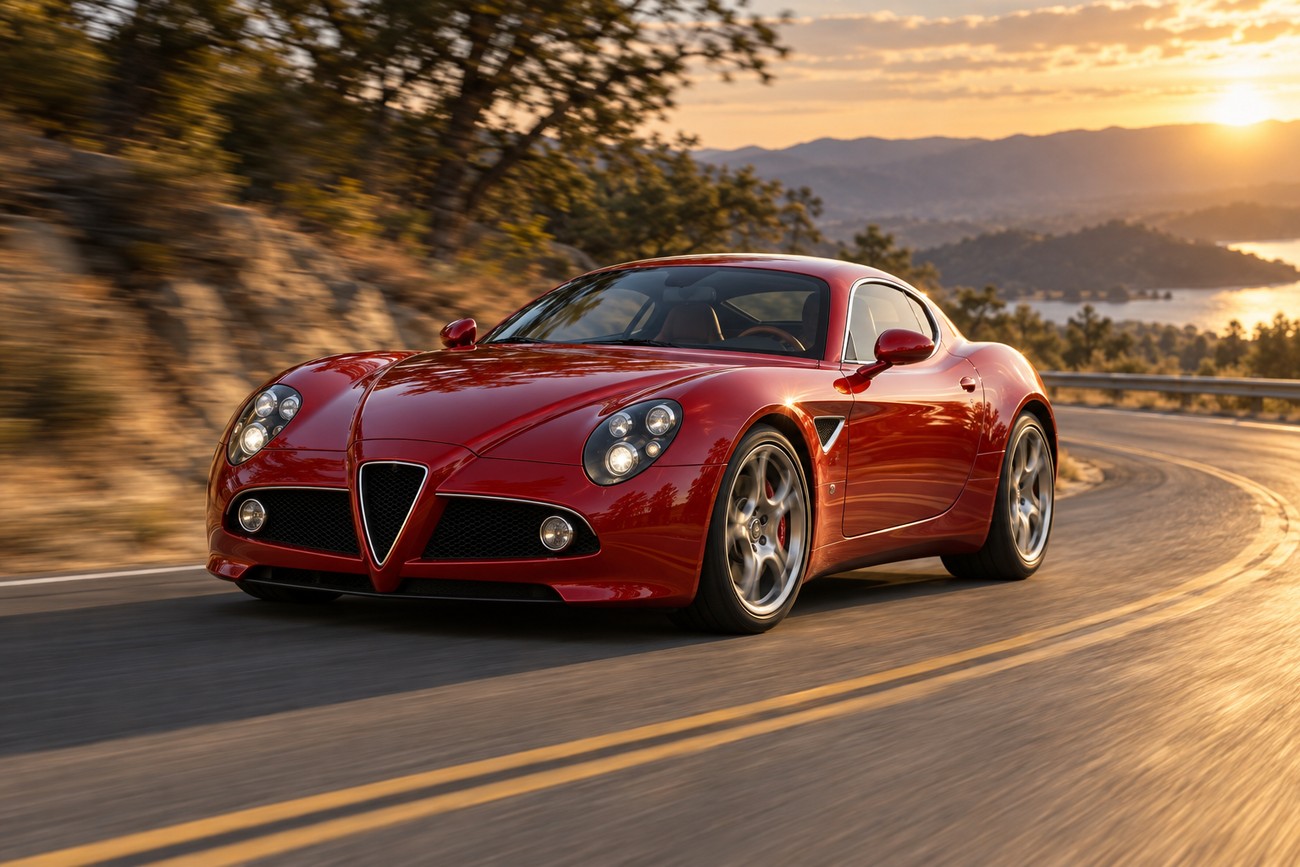
Published 0–100 km/h figures sit at approximately 4.2–4.4 seconds, depending on version and source, and quoted top speed is approximately 292 km/h. For its period, those figures put the 8C firmly in supercar territory. They describe its capability, though they cannot convey how the engine builds speed or how the transmission delivers it.
Official or heritage references put mass at approximately 1,490 kg; some catalogs cite figures closer to 1,450 kg. Figures also vary between body styles, so a single number should not be applied to every 8C. Either way, the car’s weight belongs in any discussion of tires, braking effort, and repeated hard use.
On a clear road, the immediate response of the naturally aspirated V8 and its expanding exhaust note give the quoted 450 hp and 480 Nm their force. Grip and braking condition matter more to confidence than another comparison of peak output. Worn tires or tired brakes can diminish the experience that makes the engine appealing.
Slow travel changes the picture. The six-speed automated manual may shift decisively when the driver is pressing on, yet feel abrupt as the car creeps forward in traffic. A brief open-road drive can therefore flatter an 8C while revealing little about how agreeable it will be near home.
Why everyday driving exposes the compromises
The 8C has grand-tourer presence, but routine journeys ask different things of it than an empty road does. The automated manual can feel abrupt at low speeds, particularly when repeated starts leave little space to drive smoothly. That behavior is part of the car’s operating character, although a buyer should still have any unusually poor engagement investigated.
Visibility, access, ground clearance, and cabin space further narrow its useful range. A low seating position that feels appropriate on an open road can make a tight parking maneuver less pleasant. The interior has visual charm, but its limited room and sometimes awkward practical details are worth assessing in person.
Running costs extend beyond scheduled servicing. Tires and brakes have to cope with the car’s performance and mass, while damage to a scarce body component may be difficult to remedy. Limited production can make parts and specialist support expensive or slow to secure; it says nothing by itself about reliability.
The exhaust is one of the rewards for accepting those compromises. Some road-test impressions also suggest that its volume can become tiring over a long journey, a judgment that will depend on the driver and the route. If regular travel is the plan, time in the cabin matters more than a short burst of acceleration.
Coupe, Spider and the meaning of rarity
The coupe presents the 8C’s silhouette in its most concentrated form: the roof completes the sweep from hood to rear deck. The Spider exchanges that enclosed shape for a more immediate connection to the V8’s sound. Neither version is the automatic choice for every collector; intended use and personal preference carry weight.
Production was limited to 500 coupes and 500 Spiders. That balance gives both body styles a clear place in the 8C story, rather than making one a routine derivative. Published mass and acceleration figures can differ by version and source, so comparisons should identify the car and the basis for each figure.
Rarity supports collector interest because the 8C marks Alfa Romeo’s symbolic return to the supercar segment. It can also make finding a suitable replacement part or qualified service more involved. The same limited run that strengthens the story can complicate the practical side of ownership.
Condition, documentation, and usability deserve separate judgments from desirability. A striking Spider with unresolved work is not automatically a better purchase than a carefully maintained coupe, or vice versa. Nor does either production total establish what an individual car will be worth later.
Buying an 8C: checks that matter more than mileage
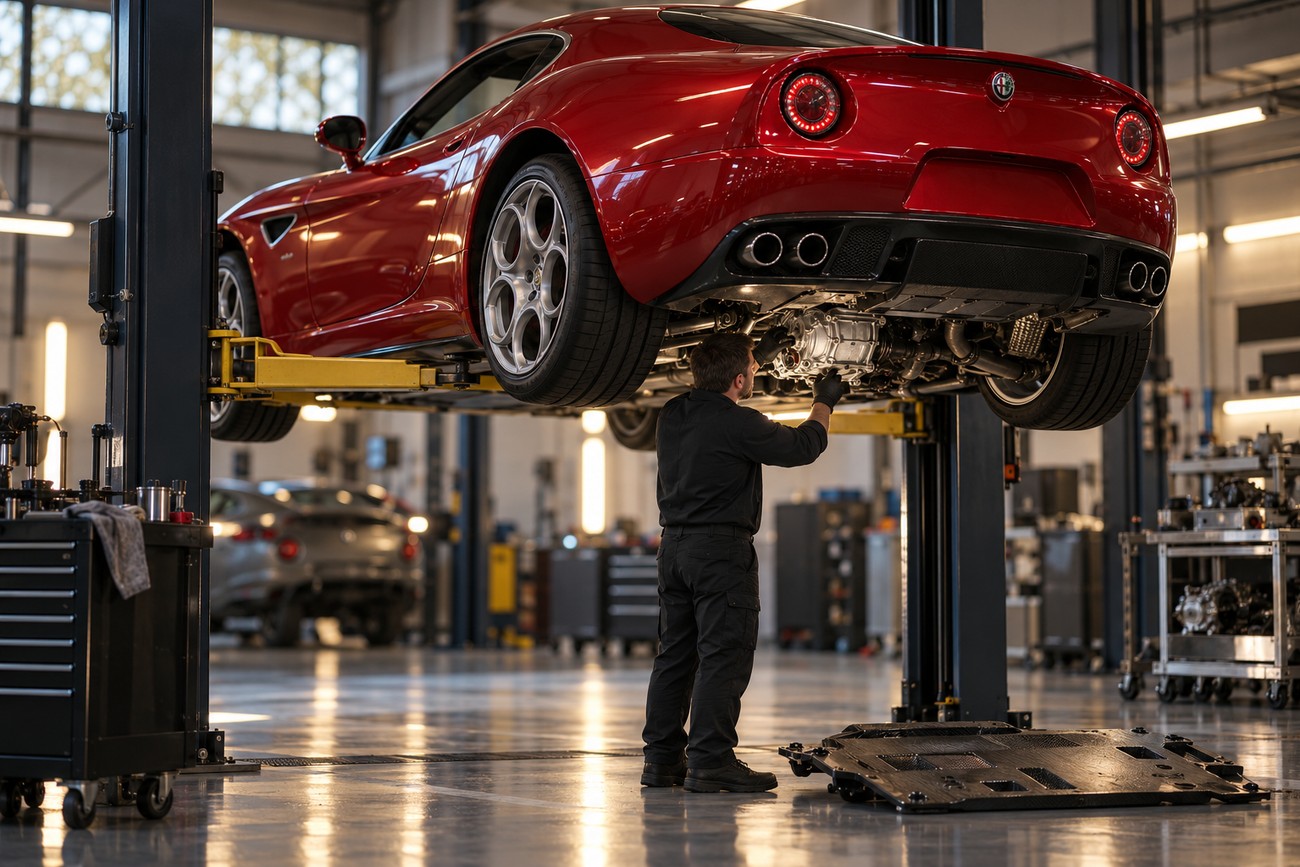
Begin with service continuity, rather than the odometer. Records should show what work was done, when it was done, and who carried it out; long gaps need an explanation even on a lightly used car. A specialist familiar with the model can then relate that history to the car’s present condition.
Give the six-speed automated manual particular attention. Clutch condition, prior work, and any available adaptation records matter because a pleasing shift at speed does not establish how consistently the system engages in slower use. Ask for evidence behind claims that the gearbox has been maintained or recently adjusted.
Warm running can make clutch engagement seem more settled than it does at the start of a drive. Observe cold operation before drawing conclusions from a warmed-up test.
Next, inspect brake and tire condition, including signs that the car has been standing or maintained unevenly. Examine bodywork carefully and establish how any previous damage was repaired. These findings can materially change the cost of taking ownership, even when the car looks excellent in photographs.
Finally, confirm access to qualified servicing before committing. Limited production can make parts and specialist work scarce and expensive; it does not prove that a given 8C will be trouble-free. A low-mileage example with incomplete records may demand more investigation than a regularly used car whose care is clear.
Frequently asked questions
The practical answers depend on the individual car and where it will be kept or purchased. These points provide a starting method, rather than a substitute for current market evidence or specialist advice.
How much does an Alfa Romeo 8C Competizione cost today?
No live market figure is available here. Use recent completed sales rather than asking prices, then compare coupe with coupe or Spider with Spider and adjust for condition, documented history, specification, and market. With so few cars changing hands, one sale is a weak guide on its own.
What does “Competizione” mean in the 8C’s name?
“Competizione” is Italian for “competition.” It gives the name a sporting connotation consistent with the 8C’s character, but a standard road-going 8C Competizione is not thereby a factory race car.
How should an 8C be stored between drives?
Keep it in a dry, suitable space, follow appropriate battery-care guidance, and protect the tires from prolonged loading or pressure loss. Check fluid levels and the car’s condition periodically, and agree on any storage-related service work with a qualified specialist. The right schedule depends on the car and its use.
How do you arrange a pre-purchase inspection for an 8C?
Find a marque-capable specialist before agreeing to the purchase, then secure the seller’s consent for an independent inspection. Arrange access to the service records, suitable diagnostic equipment, and a lift, with enough time for the specialist to assess the car and report findings in writing.







