

The Alfa Romeo 75 Twin Spark puts its five-speed gearbox at the rear, beside the differential. That rear-drive transaxle layout is central to the sedan’s appeal, and the 2.0-liter engine gives it an eager character without making performance the whole story.
For an owner, the more important distinction is between a sound car that can be maintained and an attractive car that needs rebuilding. A strong test drive cannot reveal every corroded repair or scarce mechanical part. Buy on evidence of condition, documented work, and a realistic route to keeping this particular 75 on the road.
- Know Which Twin Spark You Are Buying
- Start the Inspection With the Body, Not the Engine
- Protect the 2.0 Twin Spark: Oil, Noise, and Starting
- Test the Transaxle, Clutch, and Shift Quality
- Plan Maintenance Around Parts You Can Actually Source
- Decide Whether This Particular Car Is Worth Taking On
- Frequently asked questions
- What should I ask the seller to hand over with a 75 Twin Spark?
- How can I arrange a pre-purchase inspection without a local Alfa specialist?
- How should I prepare a 75 Twin Spark for winter storage?
- What should I do if the car develops an oil leak far from home?
Know Which Twin Spark You Are Buying
Built from 1985–1992, the Alfa Romeo 75 is a rear-wheel-drive sedan with its gearbox mounted at the rear by the differential. The Twin Spark is commonly listed with a five-speed manual. That arrangement gives the car a distinctive feel, but it also puts the gearbox and associated driveline work in a different place from those of a conventional front-engine sedan. Familiarity with a later Alfa carrying the same engine name is no substitute for knowing the 75.
The 75’s 2.0 Twin Spark is an eight-valve engine with two spark plugs per cylinder and a timing chain. Both plugs are part of the ignition system and belong in a proper service plan. Timing-belt replacement schedules published for later Twin Spark engines do not apply to this engine. If a seller presents a generic Twin Spark checklist, establish which engine it describes before treating it as evidence of appropriate maintenance.
Commonly quoted figures are 148 hp at 5,800 rpm and approximately 186 Nm, although some market or year specifications quote 143 hp. Common references also give a weight of approximately 1,190 kg, subject to specification. Those numbers help explain why the car can feel lively without needing extraordinary output. They are less useful than a clean cold start, steady running, and a gearbox that behaves consistently during a viewing.
Confirm the car’s identity from its documentation and the engine actually fitted, especially if it has been repaired or altered over the years. Invoices headed only “Twin Spark” may refer to parts or advice for a different generation. Matching work to the 75’s eight-valve, chain-driven engine prevents a service history from looking more reassuring than it really is.
Start the Inspection With the Body, Not the Engine
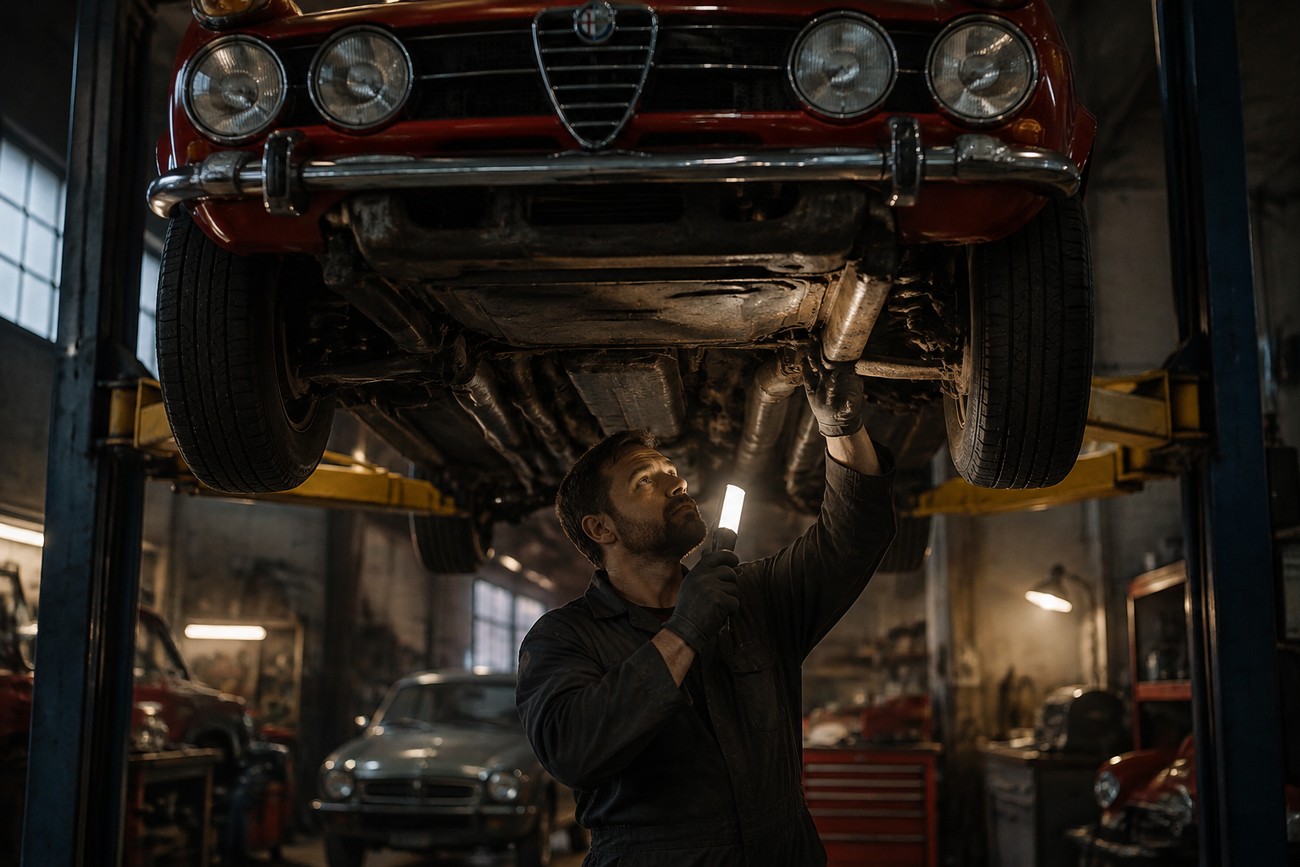
Finding a genuinely sound 75 can be harder than finding one that starts and drives. An eager engine can distract from corrosion or older repairs that demand more work than the mechanical faults you first noticed. Before spending money on an engine or transaxle, establish whether the body provides a sound basis for keeping the car. Ask for access beneath it; photographs of polished exterior panels cannot settle that question.
Inspect the floors, sills, wheel arches, jacking points, and other structural areas with adequate light and safe access. Look at seams and panel edges as well as broad painted surfaces. Fresh coating, uneven metalwork, or an abrupt change in finish deserves a closer look at what lies beneath. A seller’s description of “minor rust” is a starting point for inspection, not a diagnosis.
Surface corrosion on an exposed part is different from weakened metal at a load-bearing point or a repair whose extent cannot be seen. An independent inspection can help distinguish the two, particularly if trim, underbody protection, or previous patching obscures the area. Where the structure is uncertain, seek an assessment from someone equipped to judge and repair it before agreeing to buy. A short road test cannot tell you whether the shell is sound.
Body condition also affects the order of future spending. A car that needs structural repairs, gearbox attention, and engine diagnosis at once is a different ownership proposition from one with a documented mechanical job outstanding. Record suspected corrosion and previous repairs separately from routine age-related blemishes. That gives you a clearer basis for deciding whether this is a maintainable 75 or the beginning of a wider restoration.
Protect the 2.0 Twin Spark: Oil, Noise, and Starting
Check the oil level on the dipstick and look for leaks before the engine is started. Owners report oil consumption, so ask how often the level is checked and whether top-ups are recorded. A low level or unexplained oil loss deserves investigation: running with inadequate oil risks severe engine damage. Do not assume a tidy engine bay proves the car has held its oil between services.
Arrange to see a genuinely cold start, then allow time to assess how the engine runs as it warms. Note prolonged cranking, uneven running, persistent noise, and any warning indication; ask the seller what has already been diagnosed. Listen again when the engine is warm, and check for signs of cooling trouble during a sensible test drive. A demonstration that begins with an already warm engine leaves a useful part of the inspection unanswered.
Variator-related noise is a reported possibility on the 75 Twin Spark, but a particular sound does not identify a failed part on its own. Poor starting likewise needs diagnosis rather than an automatic cam-sensor replacement copied from a later-engine guide. The same caution applies to timing advice: this 75 engine has a chain, so a later Twin Spark timing-belt interval is irrelevant. Ask for evidence of what was inspected and repaired, rather than accepting a familiar fault name.
Service records should show regular oil changes, although a stamped book alone cannot prove the level was monitored between them. Conservative owner practice often favors an oil change every 5,000–10,000 km or once a year; that is an ownership precaution, not a universal factory requirement. Some references give an oil capacity of approximately 5.6 liters. Verify the correct specification for the individual car and use its dipstick level rather than treating that approximate figure as a fill instruction.
Test the Transaxle, Clutch, and Shift Quality

The gearbox sits at the rear by the differential, so a 75 inspection must extend beyond the gear lever and the engine bay. The clutch, gearbox, and rear driveline each need attention, even when the car moves away cleanly. The five-speed manual is part of the Twin Spark’s appeal, yet imperfect shifting is a recurring owner complaint. A transaxle layout does not, by itself, guarantee a satisfying shift.
Drive the car long enough to compare changes when cold with changes after it has warmed. Work through the gears without forcing the lever, and note any reluctance, grinding, unexpected movement, or noise. Check how the clutch engages when setting off and during ordinary changes. Also listen for noises and feel for vibration under drive and on a closed throttle, then report precisely when they occur.
A written note of which gears resist engagement when cold, and whether the behavior changes when warm, is more useful than saying the shift feels vague. It gives a workshop a starting point for assessing the linkage and clutch operation before it decides whether the gearbox itself needs investigation.
Some resistance may warrant adjustment or other external work; a worn internal component calls for a different repair. Neither outcome can be guaranteed from the driver’s seat. If the seller dismisses grinding, clutch trouble, or a driveline vibration as “just how transaxles are,” ask for an independent assessment. Accept the car’s character only after separating it from a fault that may require scarce parts.
Plan Maintenance Around Parts You Can Actually Source
Turn the service file into a list of work you can verify and work still needing attention. Include regular oil-level checks, evidence of oil changes, ignition service, and follow-up on noises or leaks identified during inspection. For this eight-valve Twin Spark, ignition service means accounting for both spark plugs in each cylinder.
Parts availability matters before a major unit is dismantled. Usable engine and transaxle components can be difficult to source, and rebuild reports describe crankshaft machining and searches for serviceable major engine parts. An estimate that assumes every removed component can simply be replaced may therefore be incomplete. Ask a prospective workshop how it will assess reusable parts and what it can obtain before committing to a strip-down.
Documentation can save time here. Keep part numbers, invoices, and photographs of components removed during previous repairs, while verifying compatibility rather than assuming that every Twin Spark part interchanges. If a car comes with spares, identify what they are and check their condition before counting them as a solution. A box of unidentified parts offers less reassurance than a smaller set with clear provenance.
After purchase, address findings in a sensible order instead of treating each new symptom as an isolated surprise. An aging 75 may need attention across several systems, so arrange mechanical follow-up while the inspection notes are fresh. Establish who can diagnose the engine and rear transaxle, and what parts support they can access. That plan makes routine maintenance easier to distinguish from a restoration you did not intend to undertake.
Decide Whether This Particular Car Is Worth Taking On

Start the decision with structural condition and the quality of earlier repairs. If the shell needs major work, an enjoyable drive and recent engine invoices do not remove that commitment. Next, establish the engine’s oil level, evidence of oil loss, cold-start behavior, and the basis for any diagnosis already offered. Verified health carries more weight than an assurance that an unfamiliar noise is normal.
Then assess the transaxle on a proper road test and compare what you felt with the service record. Poor shift quality deserves investigation; so do clutch symptoms, unusual noises, and unexplained driveline vibration. Documented work is useful when it identifies the parts fitted and the fault addressed. An invoice for a general adjustment cannot prove that a gearbox problem has been cured.
Finally, check whether the remaining jobs can be supported by available parts and a workshop willing to tackle them. A more expensive sound car may be easier to own than a cheaper incomplete project, even if both look appealing in photographs. The difference lies in how much uncertain work you are taking on across the body, engine, and rear driveline. Keep that uncertainty visible rather than hiding it inside an optimistic purchase budget.
Pause if there are oil-pressure concerns, serious structural corrosion, or driveline faults no one can explain. Arrange diagnosis before making a decision, and be prepared to walk away if access or evidence is refused. The useful ownership principle is specific to the car in front of you: buy a sound structure and understandable mechanical condition, with a credible route to the parts and help it will need.
Frequently asked questions
A viewing is only part of the handover. These practical details can make the first months of ownership easier and help you respond sensibly if the car develops a problem away from home.
What should I ask the seller to hand over with a 75 Twin Spark?
Ask for every key, the manuals, registration and ownership documents appropriate to your location, and the complete set of service and repair invoices. Request any recorded part numbers and labeled spare components, including an explanation of which car or repair they came from. Photograph loose parts before collection and check that promised documents and spares are included in the sale agreement.
How can I arrange a pre-purchase inspection without a local Alfa specialist?
Use an independent inspector for a physical check of the body, underside, fluids, and road-test behavior. Supply clear photographs and the service records to a marque specialist for remote input on findings that need 75-specific interpretation. Remote advice can help you frame follow-up questions, but it cannot confirm metal hidden beneath repairs or diagnose a noise the adviser has not heard in person.
How should I prepare a 75 Twin Spark for winter storage?
Store it in a dry, ventilated location, follow appropriate battery-care guidance, and support the tires in a way that avoids leaving them neglected under load. Before its first drive back, check fluid levels, leaks, tire condition and pressure, and that the brakes operate normally. Let the engine warm without heavy load, then recheck for signs of trouble.
What should I do if the car develops an oil leak far from home?
Stop safely, switch off the engine, and check the oil level once it is safe to do so. Do not assume a visible leak is minor or continue driving with uncertain oil supply; inadequate oil can cause severe engine damage. If the source or rate of loss is unclear, arrange recovery and have the leak assessed before the car is driven again.







