
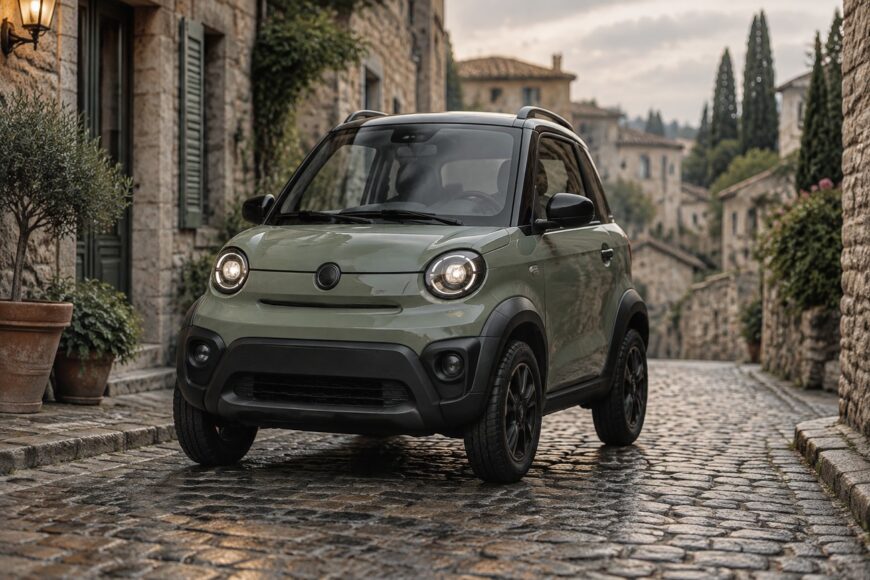
Aixam Crossline appeals to drivers who need a small French vehicle that may be usable with limited licensing in some European jurisdictions. Its compact body, low fuel use, and four-seat layout make it attractive for local errands, especially where a conventional driving license is difficult or unavailable.
The compromise is substantial. The Crossline is limited to approximately 45 km/h in its light-quadricycle form, offers less crash protection than a modern passenger car, and can be noisy, cold, and expensive to support. It works best as a local runabout for short, familiar routes rather than as a universal replacement for a normal car.
- What the Aixam Crossline Really Is: L6e, L7e, and the 45 km/h Limit
- Living With It: Speed, Hills, Noise, and Weather
- Running Costs Beyond the 3 l/100 km Promise
- Used Crossline Buying Checklist: Condition Beats Mileage
- Safety and Road Position: The Compromises You Cannot Tune Away
- Who Should Buy a Crossline—and Who Should Not
- Frequently asked questions
- How much does an Aixam cost?
- What country is Aixam from?
- What documents should I check before buying a used Crossline?
What the Aixam Crossline Really Is: L6e, L7e, and the 45 km/h Limit
Aixam-Mega is a French manufacturer and one of the larger players in the European microcar market. The Crossline is a utility-oriented pseudo-crossover microcar for local travel, with a raised stance and practical-looking bodywork. Its appearance suggests a small SUV, while its legal and mechanical limits remain those of a quadricycle.
Crossline examples may be classified as L6e or L7e; the exact registration documents must be checked. That distinction affects the permitted speed, licensing, registration, inspection, and insurance rules. A seller’s description or advertising label is not enough evidence of the applicable category.
Depending on the country, use may be permitted from approximately age 14–16 with a moped or local light-vehicle qualification. The phrase “license-free” therefore needs careful interpretation. Some jurisdictions require a moped certificate or another local qualification, and the age threshold also varies.
The light-quadricycle version is limited by law and specification to approximately 45 km/h. This is a legal ceiling rather than a target speed that the vehicle can maintain in every situation. Before buying, check the vehicle’s registration document and the rules in the country where it will be driven, including whether the route allows that class of vehicle.
Living With It: Speed, Hills, Noise, and Weather

The Crossline commonly uses a Kubota diesel of approximately 0.4–0.5 liters, with one- or two-cylinder configurations. Power is reported as approximately 4–5 hp in some listings and approximately 8 hp in some catalogs and reference sources, so vehicle-specific documentation matters. Regardless of the quoted figure, the driving experience is defined by limited acceleration and the 45 km/h legal maximum.
On hills, with a load, or against the wind, real speed can fall to approximately 25–30 km/h. A route that feels easy when empty may become slow with passengers, shopping, or a headwind. This makes route planning important: a short local trip can be manageable, while a road with repeated climbs can turn into a stressful journey.
Owner-reported urban consumption is approximately 2.5–3.5 l/100 km, while advertising may state up to approximately 3 l/100 km. That economy is useful for frequent short errands, although it does not change the vehicle’s pace. The small diesel can sound and feel like a compact tractor, with vibration and weak sound insulation becoming tiring over longer distances.
Heating is present in common equipment, along with electric windows, basic audio, seat belts, and a reinforced frame. Winter ownership can still be uncomfortable because heating is slow and damp conditions may cause persistent window fogging. Rain, snow, crosswinds, and poor road surfaces also expose the effects of low weight, small tires, and the usual absence of electronic stability assistance.
Traffic behavior becomes part of ownership. Faster drivers may overtake closely, sound their horns, or pressure the Crossline in places where its speed cannot increase. Small towns, villages, and resort areas are the strongest operating environments because local roads and familiar routes reduce this pressure.
Running Costs Beyond the 3 l/100 km Promise
Fuel is only one part of the ownership calculation. The Crossline’s advertised economy can look impressive, but insurance, maintenance, specialist labor, and parts availability may dominate the budget. Young drivers can also find that insurance costs are higher than the moped-like image of the vehicle suggests.
The continuously variable transmission deserves particular attention. Belt slip, jerky engagement, and worn pulleys can develop, especially with frequent stop-and-go driving or neglected servicing. Belt and pulley repairs may be costly, so a low fuel bill does not compensate for a poorly maintained CVT.
The diesel also needs routine attention despite its simple appearance. Frequent short trips and repeated acceleration from rest place demands on both the engine and transmission. A service history that records specialist work is more useful than a generic claim that the engine is an “unbreakable diesel.”
Outside France and the Benelux, specialist servicing and parts can be difficult or expensive. A component may need to be ordered, and a general repair shop may lack the correct knowledge or willingness to work on the vehicle. Before purchase, identify a suitable specialist and confirm that routine parts and transmission components can be sourced locally.
Used Crossline Buying Checklist: Condition Beats Mileage
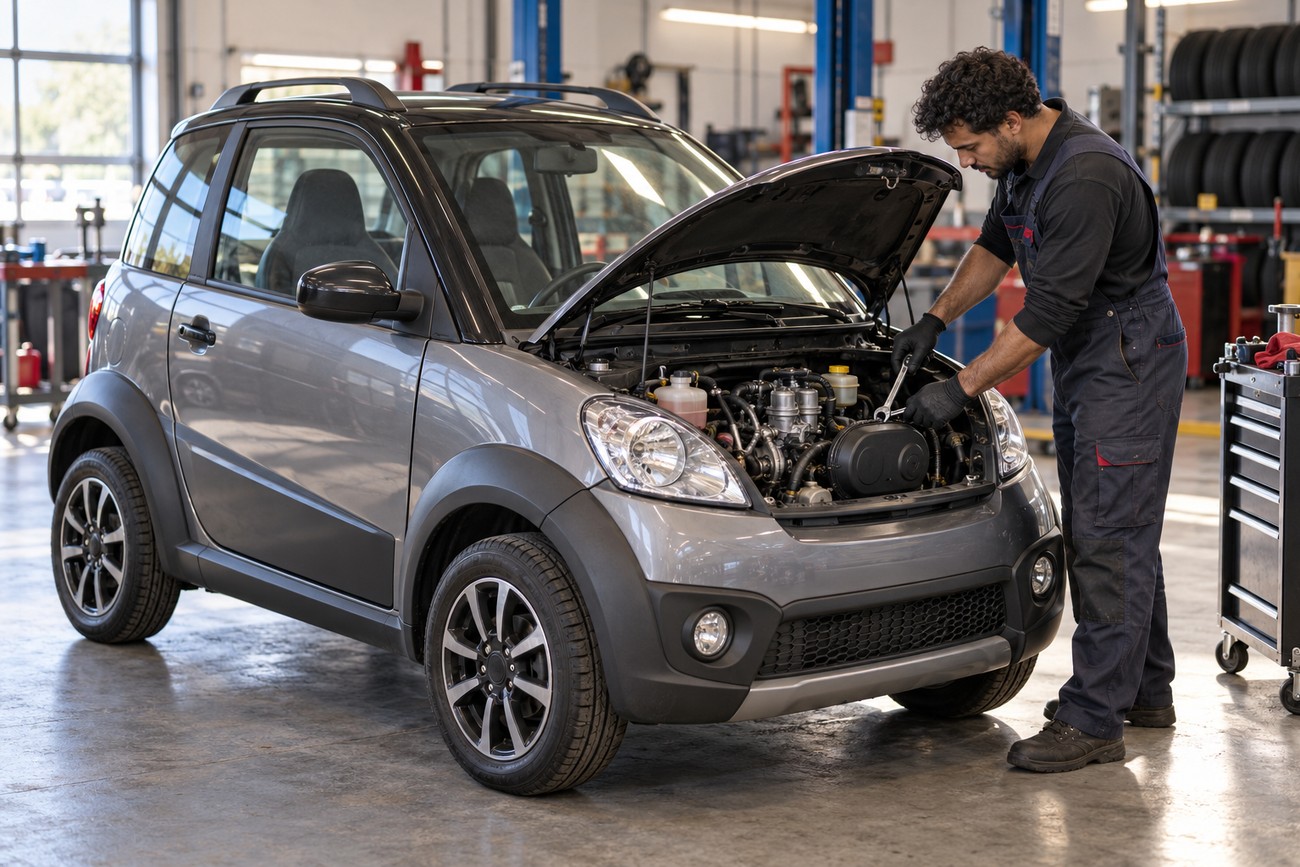
A used Crossline should be inspected as a light quadricycle with unusual running gear, rather than judged like an ordinary hatchback. Frame corrosion, worn suspension, and CVT condition matter more than polished bodywork or a low odometer reading. The plastic body can look presentable while expensive mechanical work is already overdue.
Start the inspection with a cold engine. Check how it starts, how much vibration it produces, and whether the idle settles properly. During the drive, the CVT should engage without pronounced slipping, shuddering, or unexplained delay; test it on an incline or with a realistic load where possible.
Prioritize a cold start, CVT engagement under load, and a frame inspection over a clean body or low odometer reading. The service history should identify work on the belt and pulleys.
Inspect the frame, suspension mounts, steering, and underside for corrosion or impact damage. Listen for knocks over uneven ground, and check whether the vehicle tracks straight. Rattling plastic, brittle panels, and cosmetic aging are common complaints, but structural corrosion and worn mechanical parts deserve priority.
Typical wheels are approximately 13–14 inches, with tire examples around 145/70 R13 or 155/65 R14. Incorrect tire size, wheel offset, or wheel weight can worsen handling and accelerate suspension wear. Confirm the exact fitment for that vehicle instead of assuming that any small-car wheel will be suitable.
Ask for invoices that identify the workshop and the work completed, especially CVT belt and pulley service. Used examples with documented servicing by a microcar specialist are preferable to vehicles maintained only by an unspecified general garage. A test drive should cover starting, acceleration, braking, steering, hills, and operation of the heater and demisting system.
Safety and Road Position: The Compromises You Cannot Tune Away
A reinforced frame and seat belts provide a basic occupant structure, but they do not make the Crossline equivalent to a modern B-segment car. Quadricycles are certified under different requirements from conventional passenger cars and generally have smaller deformation zones. The reduced mass and compact structure leave less physical protection in a serious collision.
ABS, ESP, and airbags are usually absent. That affects braking and stability on wet or slippery roads, particularly when the light vehicle is disturbed by a crosswind, a rut, or an emergency maneuver. Careful speed and route selection become essential because electronic assistance cannot compensate for the vehicle’s limited safety equipment.
The Crossline is poorly suited to high-speed roads and situations where surrounding traffic greatly exceeds 45 km/h. A road may be legally open to the vehicle in one jurisdiction while remaining a poor practical choice because of traffic speed, lane layout, or limited escape space. Local restrictions for quadricycles, parking, and central districts also need checking.
Removing the speed limiter or installing a more powerful engine can remove the vehicle from its legal quadricycle category and require different licensing or re-registration. Such modifications may also affect insurance and inspection status. A faster Crossline is therefore a legal and technical project, not a harmless upgrade.
Who Should Buy a Crossline—and Who Should Not
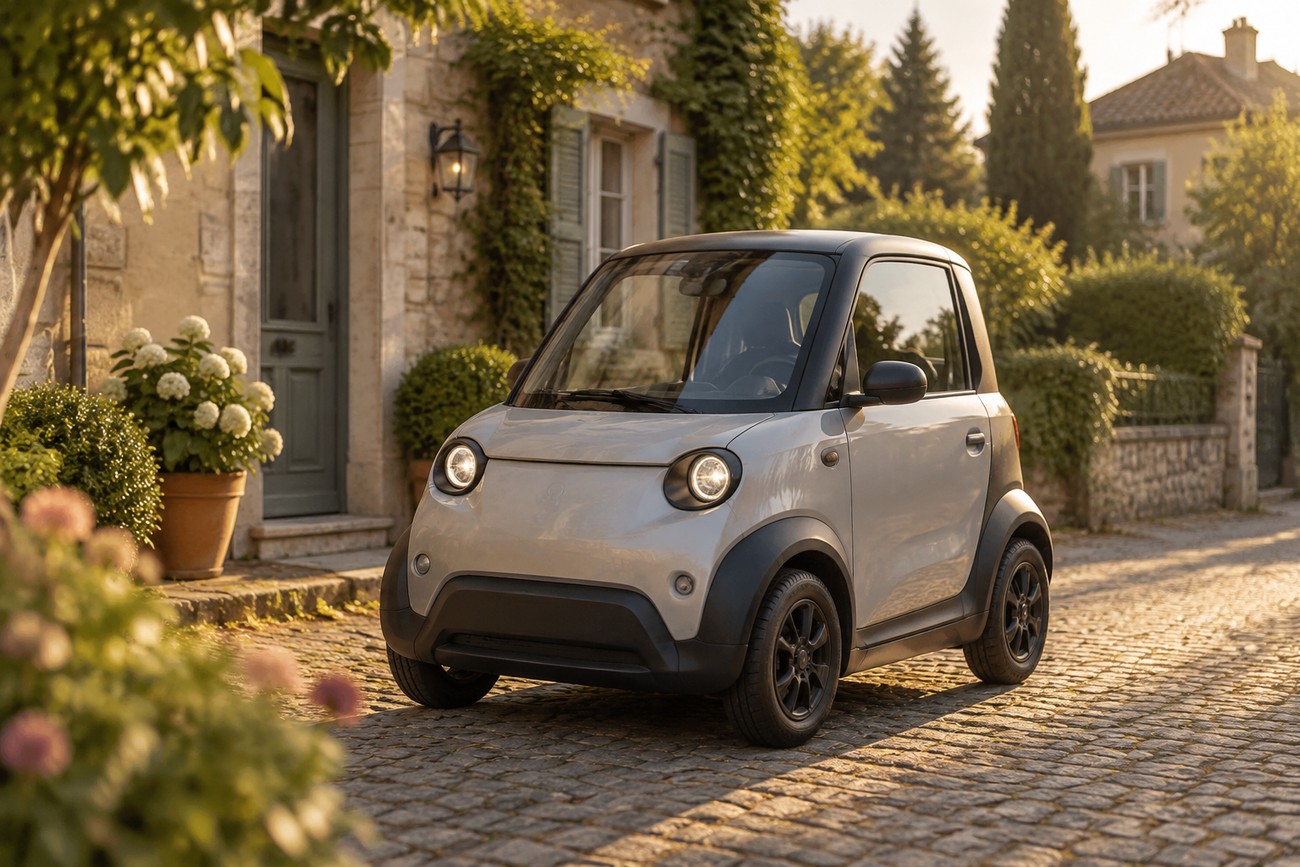
The suitable buyer needs a compact local runabout for short, familiar journeys on low-speed routes. This may include village travel, errands in a small town, or movement around a resort area. Four seats are available, although the cabin and performance should not be treated as equivalent to those of a conventional four-seat car.
The Crossline is a poor fit for a long-distance commuter, a motorway user, or anyone who regularly travels on fast ring roads. Families expecting modern crash protection, strong heating, quiet cruising, or easy access to ordinary repair shops are likely to find the compromises frustrating. Even an attractive used example cannot overcome the 45 km/h limit and limited acceleration.
Low fuel use helps when the vehicle is used frequently on suitable local trips. It does not automatically reduce total ownership cost once insurance, specialist servicing, parts delays, and CVT risk are included. The individual vehicle’s condition is often more important than a small difference in quoted fuel consumption.
The decision rule is simple: buy only when the legal category matches your qualification, the regular routes suit a 45 km/h vehicle, and specialist support is available. If those conditions are met, the Crossline can be a useful local tool. If one is missing, a conventional small car or another legally suitable vehicle may be the safer ownership choice.
Frequently asked questions
The answers below apply to the general Crossline concept, while exact equipment, registration, and legal requirements depend on the individual vehicle and country.
How much does an Aixam cost?
There is no single universal Aixam price. The final cost depends on the country, vehicle age, condition, specification, registration category, insurance, specialist servicing, and parts support. An advertised purchase price can therefore give an incomplete picture of the budget.
For a used Crossline, allow for a professional inspection and confirm the likely cost of CVT work, tires, and routine servicing before agreeing to buy. A cheaper vehicle with weak records may cost more to own than a better-documented example once specialist repairs and delays are included.
What country is Aixam from?
Aixam-Mega is a French manufacturer associated with the European microcar market. The Crossline is part of its utility-oriented microcar range and is designed around quadricycle regulations rather than conventional passenger-car performance.
What documents should I check before buying a used Crossline?
Check the VIN, ownership history, registration document, and the registered L6e or L7e category. Confirm the permitted speed, the required driving qualification, and whether the vehicle has inspection obligations in the country where it will be used.
Also request service invoices, especially records concerning the engine, CVT belt, pulleys, suspension, and frame repairs. Do not rely on the seller’s “no license” wording; compare the paperwork with the current local rules for licensing, insurance, registration, helmet use, and inspection.







