
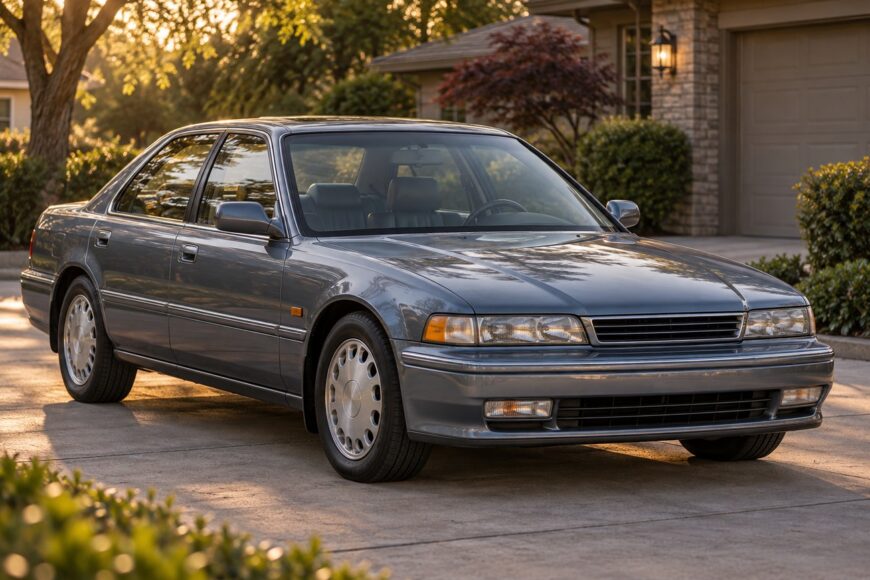
The Acura Vigor’s central contradiction is easy to miss: it is a technically interesting, unusually smooth inline-five Acura, yet it can be harder to own than a conventional Honda sedan. Sold in the United States for 1992–1994, it paired a rare engine with an equally unusual drivetrain layout and a short market life.
Factory information also deserves priority over loose catalog data. Acura specified 176 hp and 170 lb-ft from the 2.5-liter G25A1, while some listings show 174 hp or 190 hp. The engine was mounted longitudinally and connected through a driveshaft and front differential, so this car should be judged as a niche project with specific parts and service risks, not as an ordinary used Acura.
- Why the Acura Vigor Still Matters
- The G25A1 Inline-Five: Factory Specs, Not Forum Lore
- The Unusual Longitudinal Layout Explained
- What the Vigor Feels Like on the Road
- The Hidden Cost of Owning a Rare Acura
- Buying a Vigor: Errors, Inspections, and Specification Traps
- Myths, Market Position, and the Final Verdict
- Frequently asked questions
- What are the disadvantages of a five-cylinder engine in a car like the Acura Vigor?
- How many Acura Vigor cars were made?
- Which car has the best five-cylinder engine?
Why the Acura Vigor Still Matters
The US-market Acura Vigor was sold for the 1992–1994 model years. Its defining feature was the inline-five: it was the only Acura sold in the United States with this cylinder arrangement. That fact gives the Vigor genuine historical interest without making every surviving example automatically collectible.
Honda’s idea was practical rather than theatrical. The five-cylinder was intended to sit between a four-cylinder and a V6, offering smoother operation than the former while avoiding some of the weight and consumption associated with the latter. This explains the car better than the assumption that it was a disguised sports sedan.
The Vigor was a short-lived niche project, not a routine mass-market Acura with an unusual badge. That distinction affects everything from technical research to resale. A buyer who approaches it as a normal Honda or Acura may underestimate the time needed to identify parts, confirm specifications, and find someone familiar with the layout.
The G25A1 Inline-Five: Factory Specs, Not Forum Lore
Acura described the engine as a 2.5-liter all-aluminum G25A1 inline-five. Its official output was 176 hp and 170 lb-ft of torque. The engine used a SOHC valvetrain, four valves per cylinder, and a Dual-Stage Induction System, giving it 20 valves in total.
Those specifications describe a smooth, flexible engine rather than a high-revving VTEC-style unit. Acura’s factory description identifies SOHC and Dual-Stage Induction; it does not describe the engine as VTEC. That matters because many buyers expect the sharp change in character associated with later Honda and Acura performance engines.
MotorTrend’s description remains a useful summary of the engineering objective: smoother than a four-cylinder, and lighter and less thirsty than a V6. Some catalogs and user listings quote 174 hp or 190 hp, but those figures do not replace Acura’s official 176-hp US specification. For diagnosis, insurance, and purchasing decisions, the factory number is the safer reference.
The Unusual Longitudinal Layout Explained
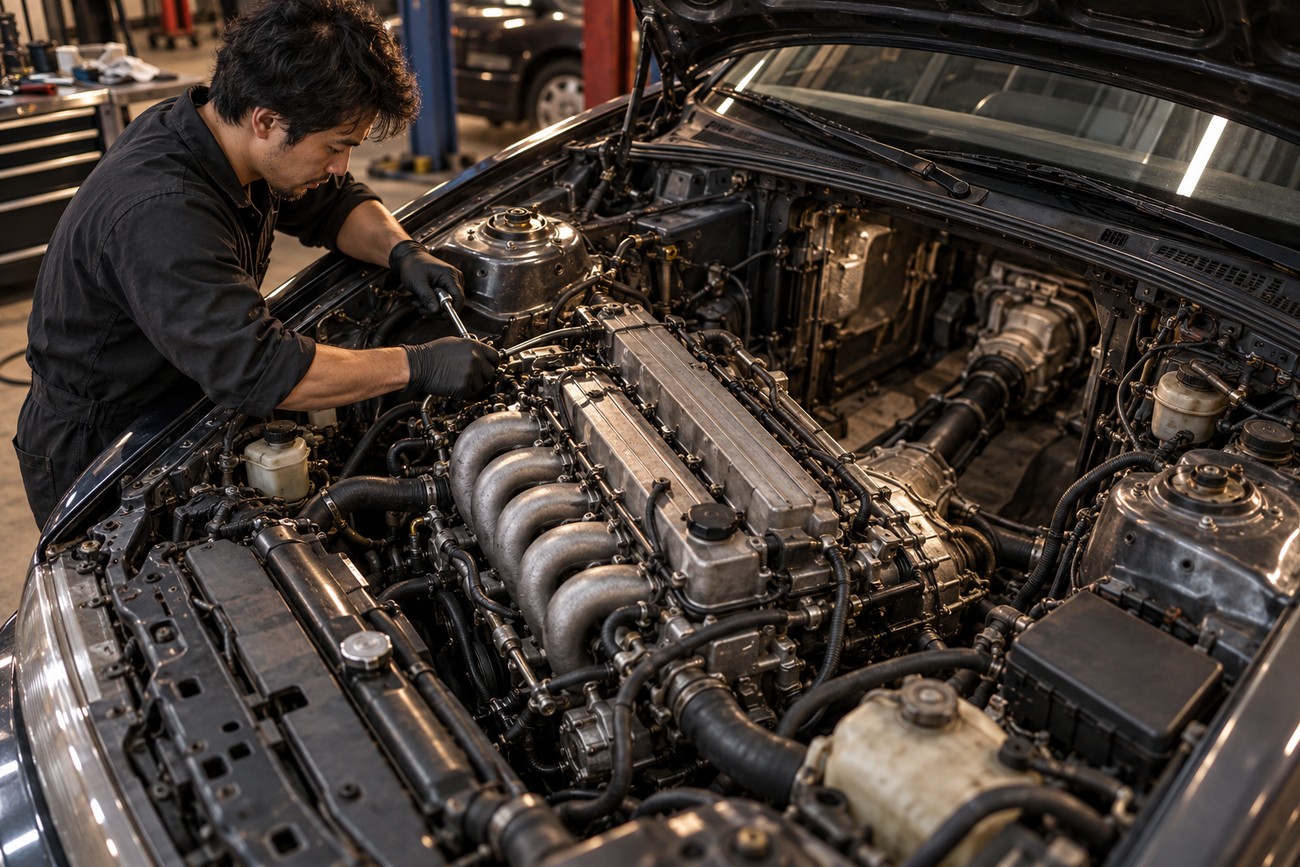
The engine’s position is as important as its cylinder count. The G-series inline-five was longitudinally mounted, an arrangement that is unusual in a front-wheel-drive-oriented sedan and very different from the transverse four-cylinder layout associated with many Hondas of the period.
The drivetrain was linked through a driveshaft and front differential. This architecture allowed Honda to package the powertrain in its chosen way, but it also changes how a technician identifies surrounding components. Repair access, component location, and interchange assumptions cannot be based on the model name alone.
That does not mean every repair is inherently difficult. It means that a familiar Honda part number or a generic Acura catalog result may be misleading. The longitudinal engine, related drivetrain pieces, mounts, and application-specific hardware should be checked by VIN and market before ordering.
The layout is one reason the Vigor remains interesting to technically minded owners. It is also why a cheap example can become expensive: labor and parts research may consume more time than the purchase price suggests, especially when the car arrives with incomplete service records.
What the Vigor Feels Like on the Road
The inline-five’s main road advantage is smoothness. Its torque delivery is more substantial than the character of a typical small four-cylinder, while the engine avoids the heavier, thirstier impression associated with many V6 sedans of the same era. The result is a composed powertrain rather than an aggressive one.
Acura rated the manual-transmission car at 20 mpg city and 27 mpg highway. The automatic was rated at 20 mpg city and 26 mpg highway. These figures support the original compromise: the Vigor was designed to balance refinement and consumption, not to win a horsepower contest.
Owners who expect a later Honda or Acura VTEC sensation can find the engine underwhelming. The absence of that dramatic change in character is not evidence of a defective design; it reflects a different brief. The G25A1’s appeal lies in its unusual smoothness and packaging, not in an exotic top-end rush.
The Hidden Cost of Owning a Rare Acura
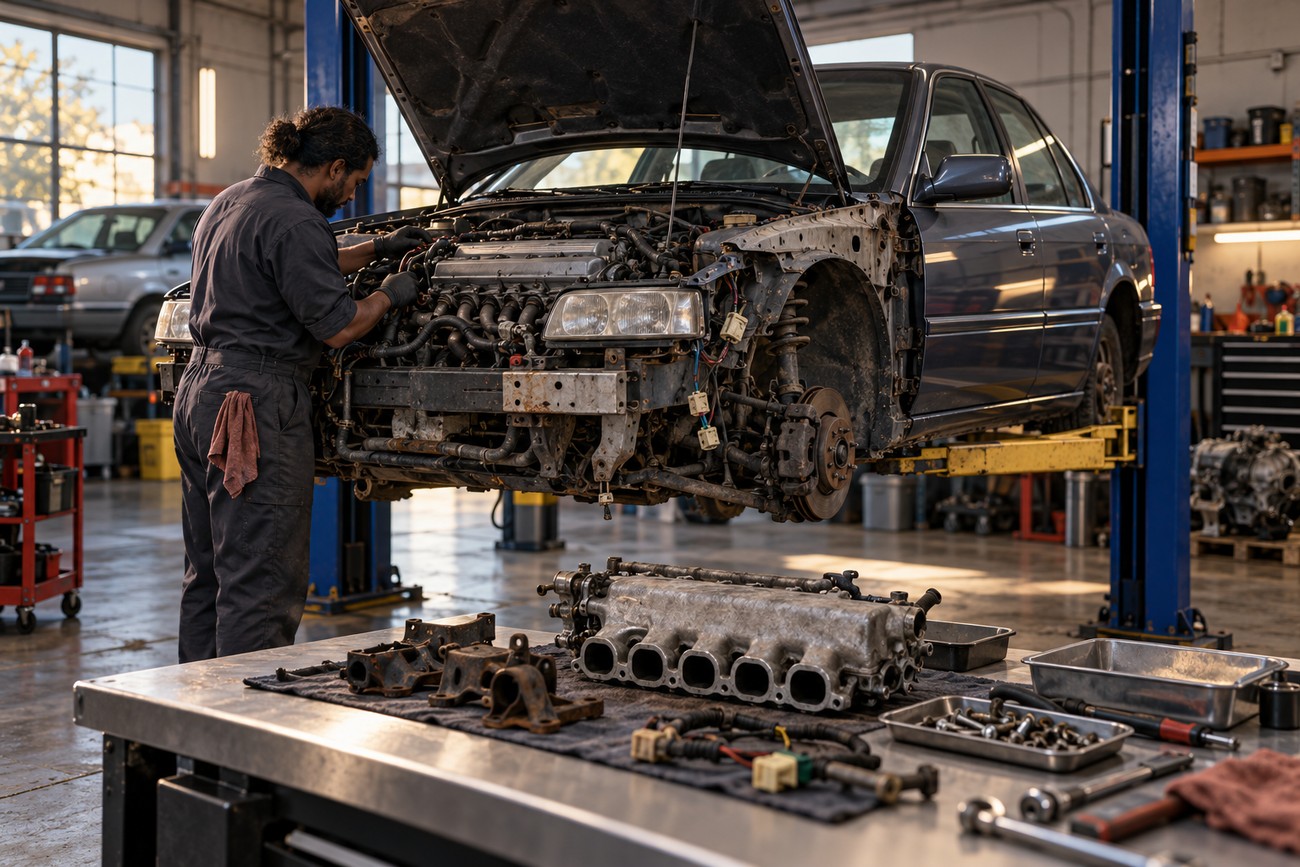
The first practical risk is parts supply. A rare inline-five does not have the same depth of aftermarket support or donor availability as a common Honda four-cylinder. Some components may be obtainable, but the search can require application-specific research rather than a simple model-and-year lookup.
Age adds a second layer of risk. Surviving cars may have brittle plastic, electrical faults, and tired suspension components. These problems are ordinary for an older sedan, yet the Vigor’s narrower knowledge base and limited ready-made solutions can make ordinary repairs more frustrating.
Donor vehicles can help, but a donor is useful only when its parts actually match the required application. The same caution applies to online listings, where descriptions may combine US Acura Vigor information with Japanese Honda Vigor data. Confirming the market, drivetrain, and part number is usually cheaper than correcting a mistaken order.
Resale is another weakness. The Vigor’s niche status may attract a specialist buyer, but the overall market is narrow, so a seller can face a substantial discount when the car needs work. Rarity creates interest; it does not guarantee liquidity or low running costs.
Buying a Vigor: Errors, Inspections, and Specification Traps
Begin with identity. Confirm the VIN, US-market specification, model year, transmission, and drivetrain-related components before relying on a listing or catalog. Do not automatically substitute information for the Japanese Honda Vigor, because different markets can combine different years, bodies, engines, and equipment.
Inspect the car as an aging project. Look for evidence of neglected maintenance, electrical irregularities, deteriorated plastic, and worn suspension components. A clean body cannot compensate for a powertrain that lacks service history or for parts that are difficult to source in your region.
Verify the longitudinal drivetrain carefully. Check the condition and history of the driveshaft, front differential, related hardware, mounts, and surrounding service items. The point is not to assume failure, but to identify expensive uncertainty before discussing price.
Power figures are a recurring trap. Some listings show 174 hp or 190 hp, while Acura’s official US figure is 176 hp. Treat the factory specification as the baseline, and spend more time confirming serviceability and parts access than chasing an inflated catalog number.
Myths, Market Position, and the Final Verdict
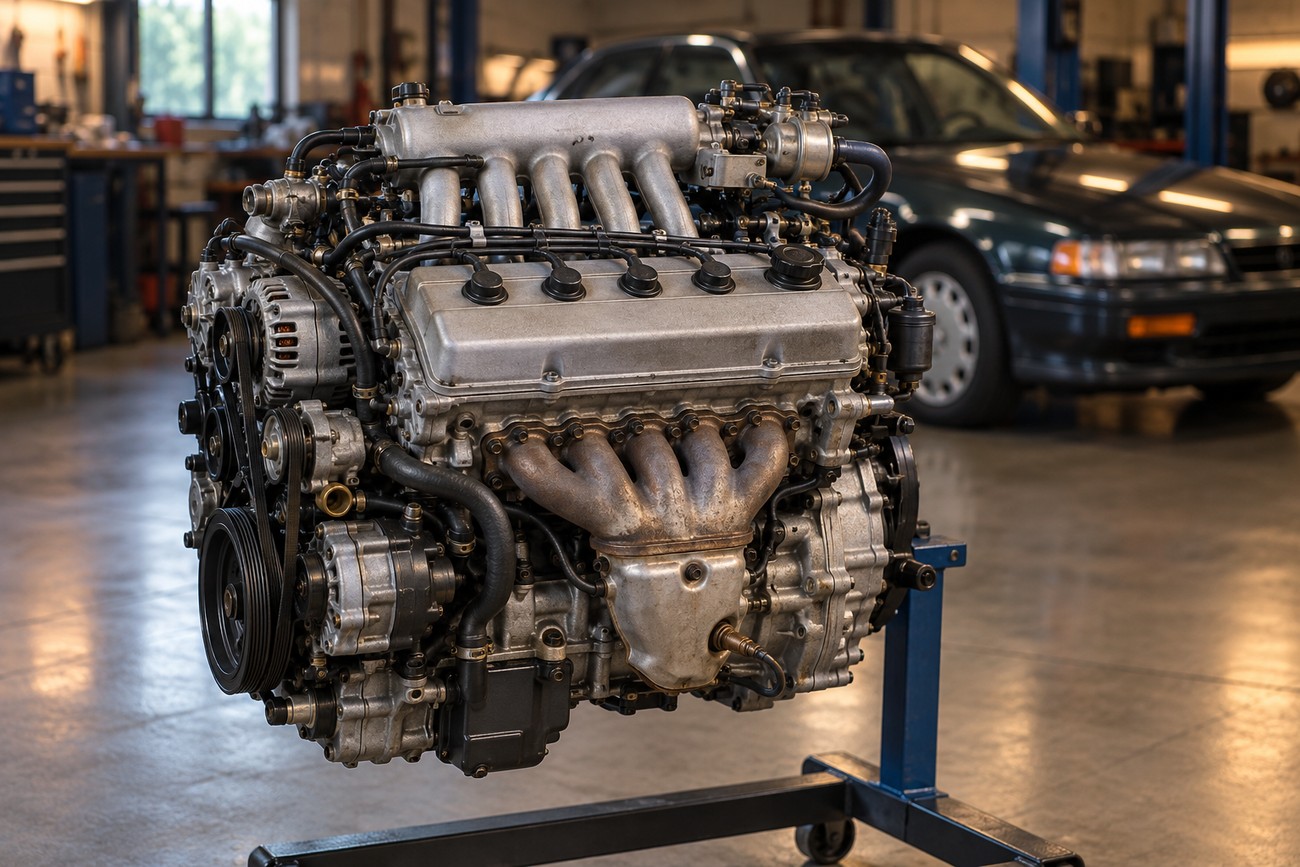
The Vigor was not simply a conventional mass-market Honda or Acura sedan. Its short US sales run, longitudinal inline-five, and unusual drivetrain made it a specialized product from the beginning. That is the reason its history is more interesting than its market success.
It was also not a hidden VTEC sports car. Acura described the G25A1 as a SOHC engine with a Dual-Stage Induction System, and the official output was 176 hp. The 174-hp and 190-hp figures found in some catalogs or user listings should be treated as disputed secondary data.
The sensible verdict is conditional. A well-documented Vigor can offer smooth inline-five character, distinctive engineering, and a driving experience unlike a routine four-cylinder sedan. Its architecture also brings rare parts, VIN-dependent compatibility, limited technical knowledge, aging components, and weak resale liquidity.
Buy one because you understand the project, not because rarity sounds like an investment thesis. The Vigor is a technically interesting Acura, but its unusualness increases ownership risk as readily as it increases appeal.
Frequently asked questions
The factory record is the most reliable starting point for this model. Secondary catalogs often mix markets or repeat disputed figures, so context matters as much as the headline specification.
What are the disadvantages of a five-cylinder engine in a car like the Acura Vigor?
A five-cylinder can be smooth and have fewer cylinders and components than a comparable six-cylinder, but its uneven cylinder count creates different vibration and balancing requirements. Packaging a long engine can also restrict access around the engine bay, especially when the car uses a less typical drivetrain arrangement.
For the Vigor, the main disadvantage is practical: the engine and related components are less common than Honda four-cylinders. That can complicate diagnosis, sourcing, and interchange, even when the underlying mechanical problem is familiar.
How many Acura Vigor cars were made?
A reliable exact production total is not established in the supplied factory information. What can be stated with confidence is that the Acura Vigor was sold in the United States for the 1992–1994 model years.
Be cautious with exact totals repeated by listings or unsourced articles. A precise number without a clear factory or market definition may combine different Vigor versions and create false certainty.
Which car has the best five-cylinder engine?
There is no objective universal winner. A useful comparison should consider smoothness, sound, reliability, parts supply, service access, and intended use rather than cylinder count alone.
The Vigor’s G25A1 is compelling for its balance and unusual longitudinal installation. It is a poor choice for someone who prioritizes abundant parts, simple repairs, or easy resale, but a thoughtful choice for a buyer who values distinctive engineering and accepts the associated work.







