
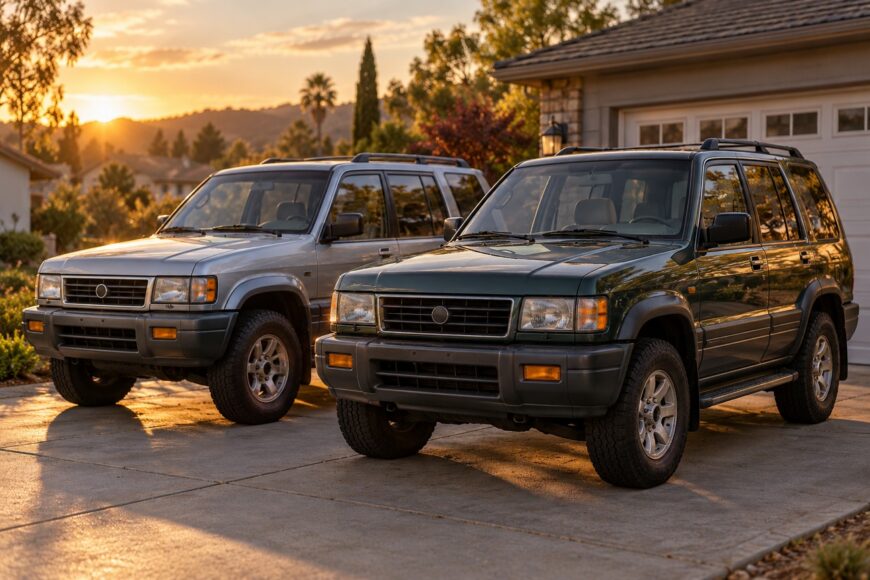
The Acura SLX looks like a standalone premium SUV, yet its technical and parts history is closely tied to the Isuzu Trooper. That relationship matters more than the badge suggests. A buyer who searches only for Acura may miss useful service information, while a buyer who assumes every Trooper part will fit can order the wrong component.
Built from 1995 to 1999, the SLX is a five-door, body-on-frame, four-wheel-drive SUV from an era when durability, weight, and mechanical simplicity mattered more than crossover refinement. Its specifications are also unusually easy to misread: catalogs disagree about power, engines are confused with one another, and listings often combine SLX, Trooper, Bighorn, and Honda Horizon data.
- The Acura SLX Was an Isuzu Trooper in Disguise
- SLX Specs: What the Numbers Actually Tell You
- 3.2 vs. 3.5 V6: Why Acura SLX Power Figures Conflict
- Finding Parts: Search for the Isuzu, Then Verify the Acura
- What to Check Before Buying a Used Acura SLX
- Living With the SLX Today: Strengths, Trade-Offs, and the Verdict
- Frequently asked questions
- What was the Acura version of the Isuzu Trooper?
- How rare is the Acura SLX today?
- How many Acura SLX were made?
- How can you tell whether an SLX listing has the correct engine and transmission?
The Acura SLX Was an Isuzu Trooper in Disguise
The SLX was Acura’s version of a vehicle closely related to the Isuzu Trooper. It belongs to the same wider family associated with the Isuzu Bighorn and from the perspective of professional practitioners project. The five-door body, frame, four-wheel-drive layout, and much of the underlying mechanical architecture explain why owners and parts suppliers commonly connect these models.
That badge engineering can be misleading when viewing an old advertisement. Acura branding suggests a dedicated luxury model, but many service questions are answered more effectively through Isuzu catalogs, donor vehicles, and owner communities. Searching for the SLX alongside the Trooper, Bighorn, and Horizon often reveals information that is difficult to find under the Acura name alone.
Shared architecture does not create universal interchangeability. A suspension or drivetrain component may cross over, while a body panel, interior trim piece, sensor, or bracket may differ by year, market, or exact specification. The SLX is rare enough that sellers sometimes describe a vehicle with a mixture of data from related models, making the VIN and the actual part number more useful than the badge.
SLX Specs: What the Numbers Actually Tell You
SLX specifications should be read alongside the model year, market, and drivetrain version. The figures below combine commonly cited data and identify areas where catalogs or versions differ.
| Item | Commonly cited specification | Practical qualification |
|---|---|---|
| Production period | 1995–1999 | Equipment and specifications vary by year and market. |
| Body and layout | Five-door body-on-frame SUV with four-wheel drive | Four-wheel-drive configuration depends on the version and source. |
| Wheelbase | 2760 mm | Useful for confirming the vehicle’s substantial Trooper-family proportions. |
| Length | 4740 mm | Catalog measurement; verify the exact market specification. |
| Width | 1750 mm | Catalog measurement; trim and measurement methods can vary. |
| Height | 1840 mm | Catalog measurement; equipment may affect the published figure. |
| Curb weight | 1880 kg | Listed by one specialist source; equipment and market can change the result. |
| Gross vehicle weight | 2800 kg | Listed by one specialist source. |
| Fuel tank | 85 liters | Commonly cited capacity. |
| Engines | Petrol V6 engines from 3165 to 3494 cc | Do not assume that every SLX uses the same V6. |
| 3.2 V6 output | Often listed as 190 hp and 255 N·m | Power figures vary by market, year, version, and conversion method. |
| 3.5 V6 output | Often listed as 215 hp and 312 N·m | Confirm the engine and specification before ordering parts. |
| Transmissions | Five-speed manual for some versions; four-speed automatic listed for part of 1999 data | Published transmission details are version-dependent. |
The dimensions explain why the SLX feels larger and more substantial than a typical compact SUV. Its 2760 mm wheelbase and 4740 mm length provide a stable, long-legged stance, while the frame and roughly 1880 kg curb weight add a distinctly truck-based character.
These figures are best treated as identification tools rather than promises about a particular vehicle. A listing that gives the correct body dimensions but the wrong engine or transmission may still be describing a different Trooper-family configuration. Compare the paperwork, VIN, engine number, and visible drivetrain before accepting a catalog entry.
3.2 vs. 3.5 V6: Why Acura SLX Power Figures Conflict
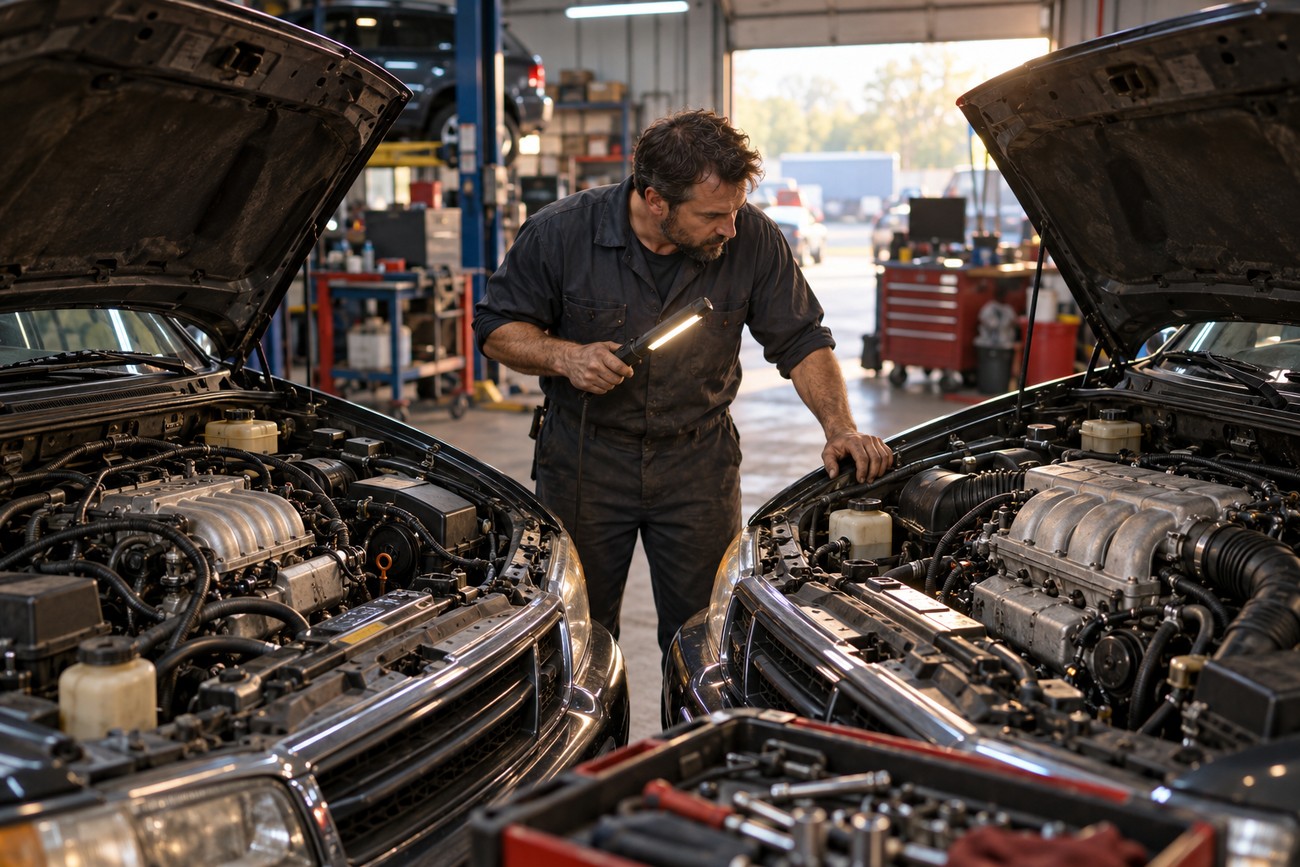
Acura SLX power figures conflict because sources combine different markets, model years, engine versions, and methods of converting or reporting horsepower. Values of 177, 190, 215, and 218 hp all appear in catalogs and reference material. Treating one of these numbers as the universal SLX specification creates confusion during both buying and parts research.
The 3.2-liter V6 is often listed at 190 hp and 255 N·m. The later or larger 3.5-liter V6 is often listed at 215 hp and 312 N·m. Those figures provide a useful starting point, but they do not replace an inspection of the engine identification and the vehicle’s production details.
Some sources identify 1999 as the year associated with a 3.5-liter V6 rated at 215 hp and a four-speed automatic. That description should be treated as a version-dependent catalog reference, rather than evidence that every 1999 SLX has exactly that combination. Earlier specifications and other market descriptions may differ.
A careful buyer should compare the model year, VIN, engine number, intake and accessory layout, and transmission type. The description “3.2” or “3.5” in an online listing is not enough by itself, especially when a seller has copied details from a related Trooper or Bighorn listing.
Finding Parts: Search for the Isuzu, Then Verify the Acura
Parts are often easier to locate when the search begins with Isuzu rather than Acura. Trooper, Bighorn, Wizard, and Rodeo catalogs can provide useful cross-references for mechanical components, and owner communities frequently organize their knowledge around the Isuzu family. This is the practical advantage of the SLX’s shared foundation.
The cross-reference is only a starting point. A part number that appears in a Trooper catalog may apply to one engine, suspension design, market, or production period and fail to match another SLX. Body panels and interior pieces are especially risky because Acura-specific trim and low production numbers make them less common than mechanical donor parts.
Match the suspected part number to a Trooper or Bighorn catalog first, then confirm its application against the SLX VIN and the vehicle’s actual configuration. This extra check is particularly important for body and suspension components.
Age adds another layer of difficulty. Wiring, sensors, rubber components, vacuum lines, and other small service items may have deteriorated even when the vehicle looks complete. For these parts, the number stamped on the old component, the connector shape, and the engine or chassis specification can be more reliable than a generic model search.
What to Check Before Buying a Used Acura SLX
Begin with the frame and the underside, then move outward to the suspension, brakes, and drivetrain. The SLX is a heavy body-on-frame SUV, with one specialist source listing a curb weight of 1880 kg. That mass places meaningful loads on aging bushings, mounts, steering components, brake hardware, and transmission-related parts.
During a road test, look for driveline noise, delayed or harsh shifting, vibration, uneven braking, and steering play. Inspect vacuum lines, wiring, sensors, and rubber components rather than assuming that an apparently clean engine bay proves good mechanical condition. Old age often appears first in small systems that a sales description does not mention.
The listing itself deserves an inspection. A description may combine an SLX badge with Trooper, Bighorn, or Horizon dimensions, engine details, and transmission claims. Check the VIN, engine number, transmission, and four-wheel-drive hardware against the documents and the vehicle in front of you.
Budget for age-related restoration even if the body and interior present well. A well-kept example can still need suspension, brake, seal, wiring, vacuum, or sensor work, while a missing trim panel may be harder to replace than a common mechanical service part. The cost and effort depend heavily on what the inspection finds before purchase.
Living With the SLX Today: Strengths, Trade-Offs, and the Verdict
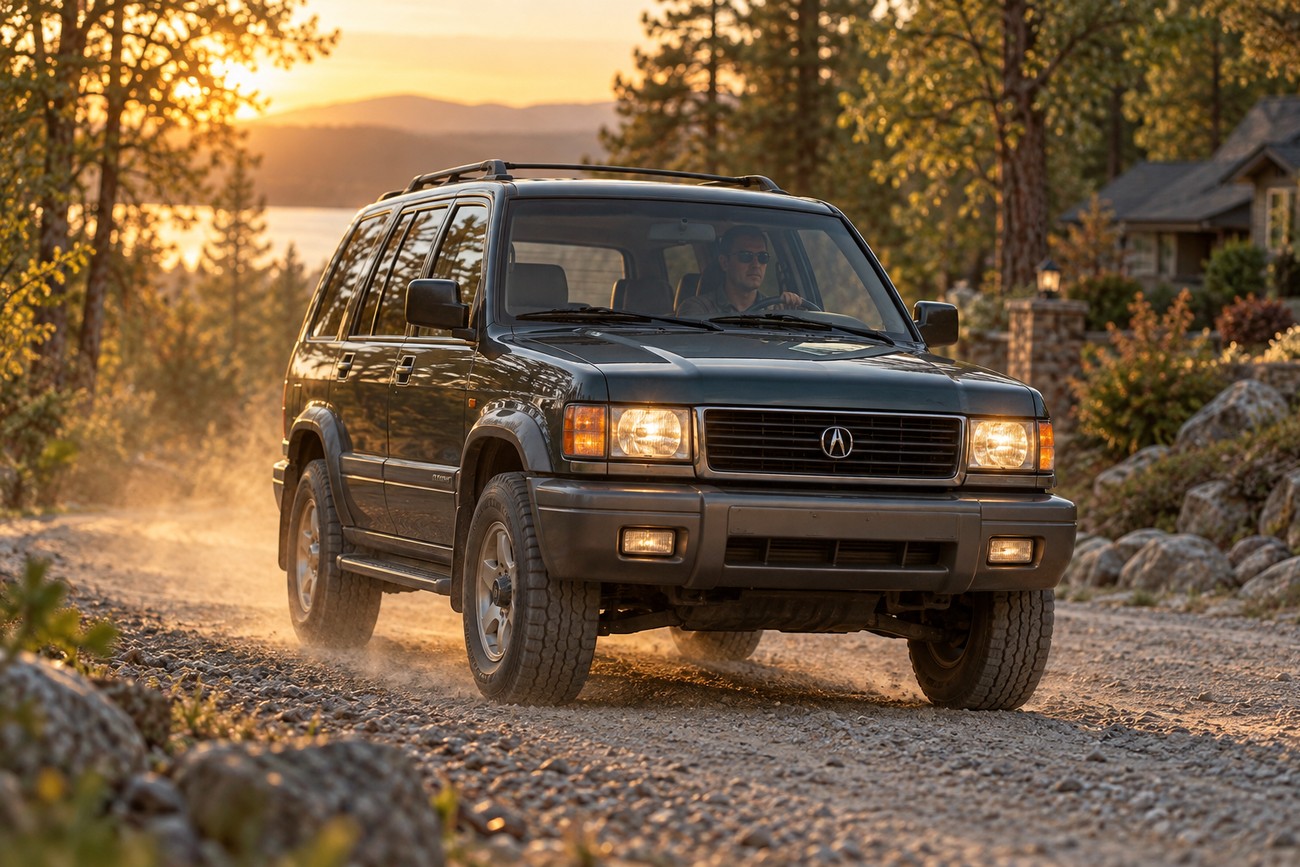
The SLX drives like a classic body-on-frame SUV. Its 2760 mm wheelbase, 4740 mm length, substantial mass, and four-wheel-drive layout give it a planted, truck-based feel. That character can suit rough roads and utility use, but it also means less car-like behavior than a modern crossover.
Owners commonly describe these vehicles as firm and noisy by contemporary standards. Ride quality, cabin isolation, and steering response should therefore be judged against other older Trooper-class SUVs, not against a current Acura crossover. The same rugged layout that gives the SLX its identity also brings more road noise and a greater need to monitor aging chassis components.
The shared Isuzu foundation is the model’s practical strength. Mechanical information and donor-part leads can often be found through the wider Trooper family, even when an Acura-specific search produces little. Rare body and interior parts remain the weak point, and visual similarity between related models does not guarantee that a replacement panel or trim piece will fit.
The SLX makes sense as a verified member of the Trooper family, not as a trouble-free Acura. Buy the condition, confirm the exact engine and transmission, and accept that parts research may involve both brands. A sound example can provide distinctive old-school SUV capability, but the badge alone does not reduce the work required to own an aging, rare vehicle.
Frequently asked questions
The Acura SLX is easiest to identify through its combination of Acura documentation, Isuzu-family architecture, and verified drivetrain details. Related models provide valuable clues, but final identification should come from the specific vehicle.
What was the Acura version of the Isuzu Trooper?
The Acura SLX was the American-market Acura version of a vehicle closely related to the Isuzu Trooper. It shared its broader technical family with the Isuzu Bighorn and Honda Horizon, so it is more accurate to describe it as a rebadged or closely related Acura offering than as a fully separate Acura design.
That market role explains the unusual ownership experience. Acura supplied the premium identity, while much of the service knowledge and mechanical parts trail leads back to Isuzu catalogs and Trooper-family vehicles.
How rare is the Acura SLX today?
The SLX is rare in several different ways. The vehicle itself is less commonly encountered than mainstream Japanese SUVs of the period, Acura-specific body and interior parts are difficult to source, and technical components may be easier to find because they overlap with Isuzu-family models.
Those categories should not be confused. A scarce bumper or interior panel can be difficult to replace even when a related suspension or engine component is available through Trooper, Bighorn, Wizard, or Rodeo references.
How many Acura SLX were made?
There is no confirmed single production total in the available reference material. Club discussions, catalogs, and informal estimates should not automatically be treated as official production statistics, particularly when market versions and related Isuzu models are sometimes grouped together.
For a buyer, the exact total matters less than the condition and identity of the individual vehicle. A VIN check and a careful inspection provide more useful information than an unverified estimate of how many were sold.
How can you tell whether an SLX listing has the correct engine and transmission?
Check the model year first, then compare the VIN, engine number, visible engine layout, and transmission type with the listing. For later specifications, some references associate 1999 with a 3.5-liter V6 and four-speed automatic, while other sources describe different combinations for other years or markets.
Do not rely on the Acura badge or a copied specification card. Confirm the physical engine and transmission, inspect the vehicle identification details, and verify any replacement part against the exact VIN and part number before purchase or ordering.







