

Two similar Honda Accords are ready for delivery, but the VIN on the car handed to the buyer differs from the VIN in the deal. The buyer may have insured the vehicle named in the paperwork, while the seller may believe that same vehicle was delivered. Before either side debates trim, condition, or blame, they need to establish which Accord changed hands.
That distinction shapes the next step. A different physical car raises questions about the sale documents and ownership, while an inaccurate description of the correct car calls for a closer look at what was promised.
- What does “the wrong Accord” actually mean?
- Pause the handoff and preserve the evidence
- Match the VIN to the Accord’s actual configuration
- Check recalls, condition, and ownership separately
- How to correct the sale before or after signing
- Prevent a second mix-up when replacing or reselling the car
- Frequently asked questions
- Can I sue someone who sold me a bad Accord?
- What if the wrong VIN is already on my insurance or registration?
- What happens when a dealership sells you the wrong car?
- What is the claim in the class action lawsuit against Honda Accord?
- What year should I stay away from when buying a Honda Accord?
What does “the wrong Accord” actually mean?
A wrong-car sale means the physical Accord delivered has a different VIN from the vehicle identified in the agreement. The full 17-character VIN identifies the specific vehicle; compare the entire number on the car with the relevant records. If the numbers differ, establish where each car is before discussing a repair or a change in price.
The physical car may instead match the contract while the listing gives the wrong trim or equipment. Accords from the same model year can differ in trim, powertrain, transmission, and market configuration. An incorrect description matters, but it does not by itself establish that a different vehicle was delivered.
Unexpected mechanical faults are a third issue. A buyer who finds a transmission problem after delivery needs inspection findings and the seller’s statements about condition; a VIN mismatch calls first for identity and document checks. A seller who notices a genuine mix-up should raise it promptly, while a buyer should report the discrepancy without assuming it was deliberate. Evidence may later show a mistake, misrepresentation, or separate problems that need separate responses.
Pause the handoff and preserve the evidence
If the discrepancy appears during collection, pause payment, delivery, or document submission where feasible. If the car has already changed hands, avoid an informal swap while the parties check which vehicle the paperwork describes. Both sides need a stable record of the car’s identity before anyone changes a form.
Photograph the VIN where it appears on the car, then compare the entire 17-character number with the listing, sale agreement, title or registration records, and insurance documents. Record the date and current location of the vehicle. Keep the original listing, correspondence, VIN photographs, signed documents, and any diagnostic report; screenshots can preserve an advertisement that may later change.
Describe the finding in writing: identify the VIN on the car, the conflicting VIN in each record, and when the difference was found. Ask the other party to confirm which Accord was intended for the sale and what correction they propose. Do not alter a signed record or replace its VIN by hand without understanding the required process.
A quick exchange of keys may create a second paperwork problem if insurance, registration, or financing already identifies the first car. Available corrections or returns depend on jurisdiction, contract terms, and the stage of the transaction. A written pause gives both parties room to check those details without treating a proposed fix as an agreed outcome.
Match the VIN to the Accord’s actual configuration
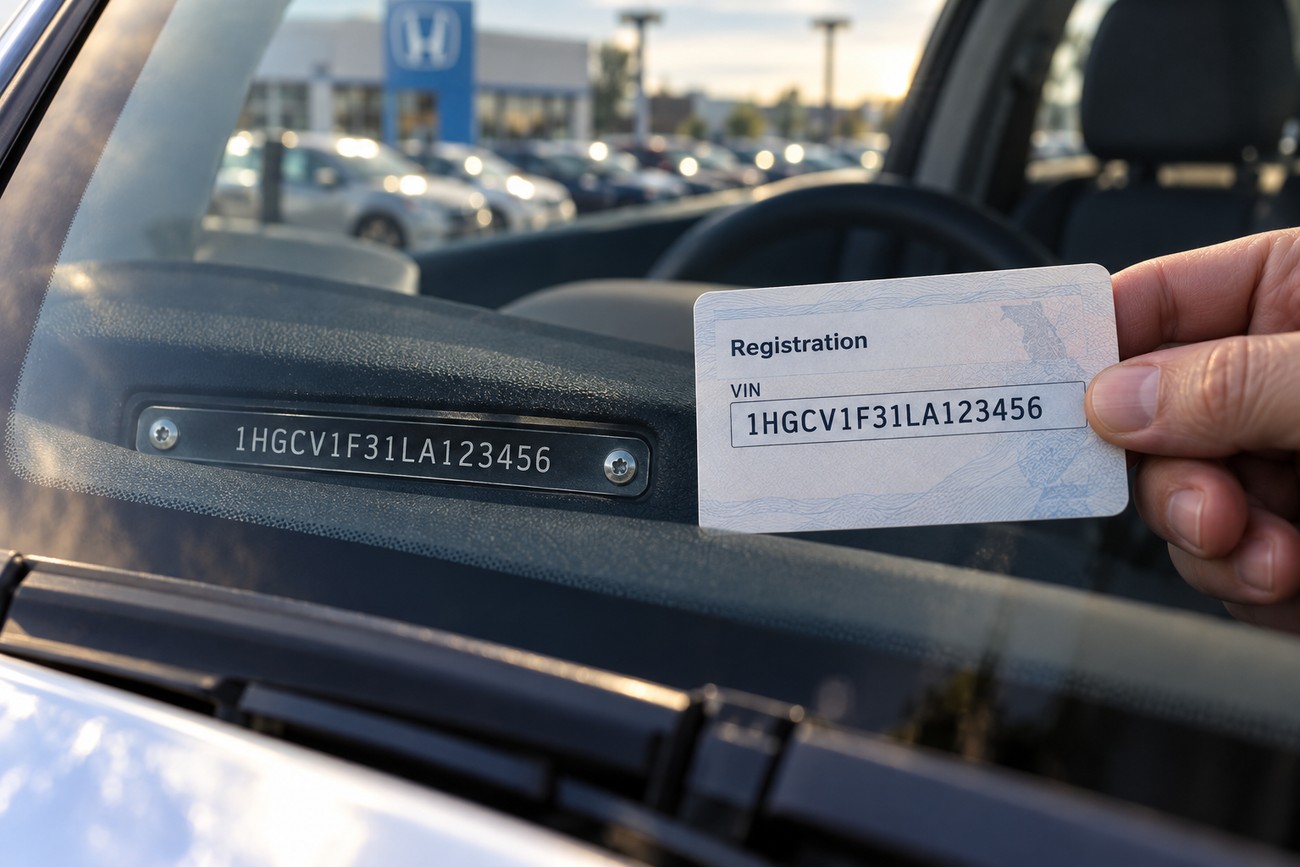
Start with the physical car and read its full 17-character VIN. Compare it character by character with the registration, insurance record, and sale paperwork; matching only the final digits is insufficient. A discrepancy in one record may be a transcription error, while a different VIN on the delivered car may indicate a different vehicle.
Once the identity is clear, compare the promised trim, engine, transmission, and equipment with VIN-based manufacturer information and the car’s factory labels where applicable. Accords from the same model year can differ in trim, powertrain, transmission, and market configuration. A listing may claim a higher trim, while official equipment and recall applicability depend on the specific VIN and production configuration.
Read the VIN directly from the car before amending a contract. Copying it from the listing that caused the dispute can reproduce the original error.
Badges, dashboard details, and photographs can point to a discrepancy, but they are weak proof of the original specification on their own. Parts may have been replaced, an imported car may differ from a local-market version, or a vehicle database may be wrong. Ask for the source behind a disputed trim claim and document the actual equipment before attributing a mismatch to intentional deception.
Check recalls, condition, and ownership separately
A model-year search cannot establish the open recalls for a specific Accord; check its VIN in an official recall lookup for the relevant market. Save the result and check again if the vehicle’s identity is corrected in the paperwork. A campaign listed for an Accord year does not establish that every version of that year is eligible.
The cited 2013–2015 Accord CVT driveshaft campaign, concerning possible corrosion and driveshaft failure, illustrates the need for VIN confirmation. Its year range and transmission description alone do not prove that a particular car is covered. Campaigns may also distinguish gasoline and hybrid vehicles, so the model name is too broad a basis for deciding applicability.
An independent inspection answers a different question: what condition is this car in now? It may identify urgent faults or prior repairs that a recall lookup cannot reveal. Likewise, a closed recall does not establish that the Accord is mechanically sound or that its advertised equipment is correct.
Check vehicle history, title status, and the seller’s authority to transfer ownership separately. A history report and an inspection cannot confirm every title detail, and a recall lookup cannot verify the legal owner. Even a promise that the seller will handle registration leaves those questions open until the relevant records have been checked.
How to correct the sale before or after signing
If the error is caught before payment or delivery, the parties can stop and identify the intended car in writing. The seller can confirm which Accord is available, and the buyer can decide whether its verified specification and condition match what they agreed to buy. Any revised agreement should identify the actual vehicle before the handoff resumes.
After signing, contact the dealership or private seller promptly and provide a concise record of the mismatch. Preserve the listing, messages, VIN photographs, signed documents, and inspection findings. Ask for a written proposal that identifies the car currently with the buyer, the car named in the contract, and any paperwork the seller proposes to correct.
Check the contract, title status, and who legally owns each vehicle before agreeing to a swap, refund, or amended document. A seller’s promise to handle the title does not establish legal ownership or clear title. A dealer may also need to coordinate corrections across sale, registration, insurance, and financing records rather than changing the sale agreement alone.
Where the car matches the signed VIN but differs from the advertisement, focus the discussion on the specific representations and their effect on the deal. A genuine inventory mistake and a knowingly false description can have different implications, but intent should not be inferred from a trim badge or listing error alone. Keep proposals and responses in writing so each side knows what has been offered.
If the parties cannot agree, seek advice from a local consumer-protection body or qualified legal adviser before signing a release or surrendering the vehicle. Available corrections or returns depend on jurisdiction, contract terms, and the stage of the transaction. There is no universal automatic return rule for an Accord sold in error.
Prevent a second mix-up when replacing or reselling the car
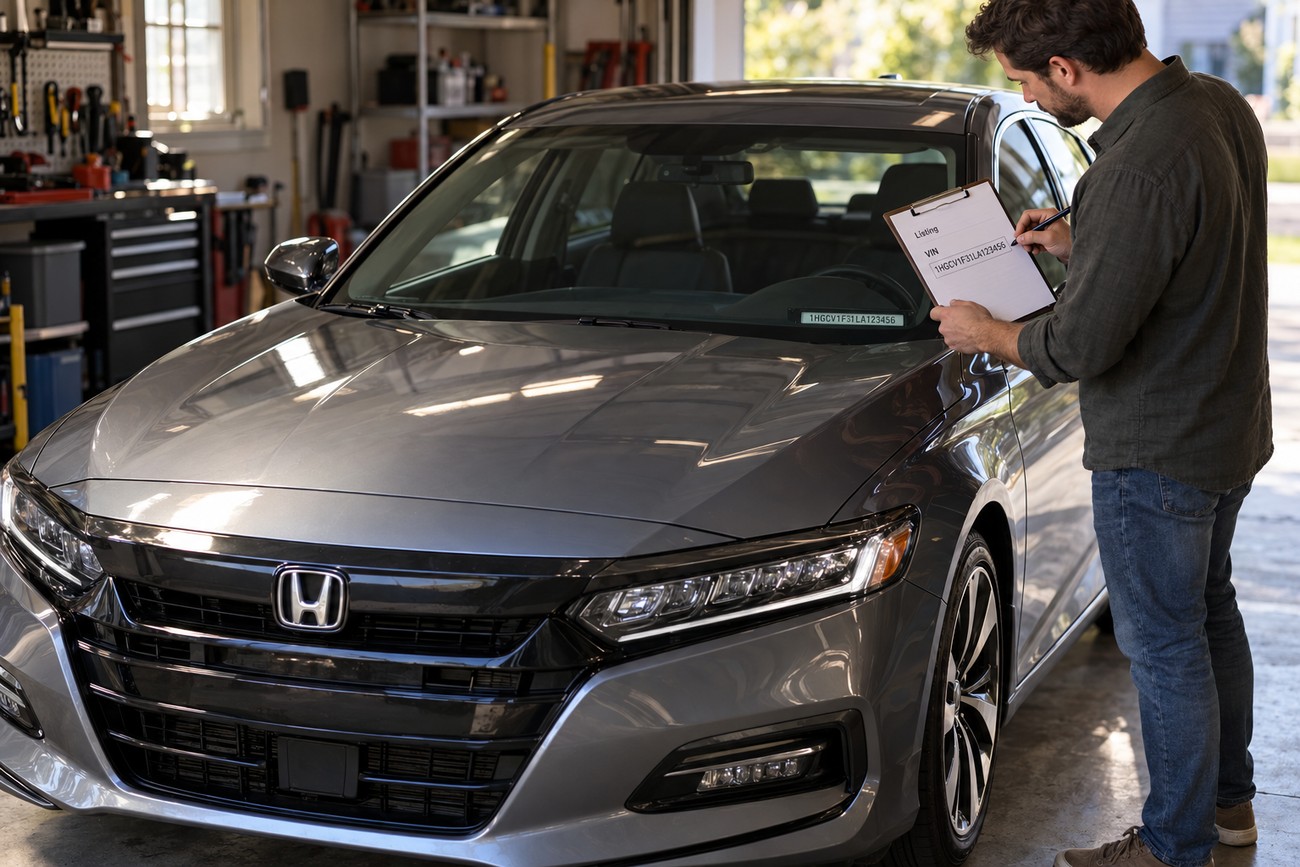
Make the physical Accord the starting point for the next sale. Read its complete 17-character VIN and compare it with the listing, contract, title or registration records, and insurance details before signing. A seller preparing a replacement listing should recheck the car rather than reuse a VIN from an earlier advertisement or template.
Confirm the promised trim, powertrain, transmission, and important options against the vehicle’s production information. Accords from the same model year can differ in trim, powertrain, transmission, and market configuration. An attractive car that resembles the advertised trim may still have different equipment beneath replaced badges or interior parts.
Then perform the checks that answer separate questions: use an official VIN-specific recall lookup, obtain an independent condition inspection, review vehicle history, and verify title and legal ownership. A vehicle-history report and an inspection do not replace recall or title checks. Record promised features and the verified VIN in the sale documents so the next buyer and seller are referring to the same Accord.
Frequently asked questions
A wrong-Accord dispute can involve the identity of the car, its description, or its condition. The answer depends on which of those issues the evidence supports.
Can I sue someone who sold me a bad Accord?
Legal action may be possible, but a bad-car claim needs more than proof that the car requires repairs. For an undisclosed-defect claim, establish what was said about condition, what an inspection found, and any resulting loss. For a wrong-car or inaccurate-description claim, compare the delivered VIN or equipment with the representations and signed documents. A local adviser can assess those facts under the applicable law and contract.
What if the wrong VIN is already on my insurance or registration?
Contact the insurer and registration authority promptly, explain the mismatch, and ask what evidence they require to correct their records. If the purchase was financed, ask the lender to check the vehicle identified in the loan documents as well. Until the records are reconciled, do not assume a correction to the sale contract automatically updates coverage, registration, or financing.
What happens when a dealership sells you the wrong car?
Tell the dealership which VIN is on the delivered Accord and which VIN appears in the deal, then request its proposed correction in writing. The dealership may need to trace its inventory and coordinate documents with the registration authority, insurer, and lender. Whether the transaction can be amended, replaced, or unwound depends on the contract, local law, and how far the transfer has progressed.
What is the claim in the class action lawsuit against Honda Accord?
There is no single class action identified by the phrase “Honda Accord lawsuit.” Claims depend on the particular filing, vehicles covered, alleged defect, and jurisdiction. Obtain the case name or notice and check its VIN, model year, and other eligibility terms; a lawsuit about a vehicle defect does not establish that a seller delivered the wrong car. Recall applicability likewise requires a check for the specific VIN.
What year should I stay away from when buying a Honda Accord?
No model year alone determines whether an individual Accord is a poor purchase. Versions within a year can have different powertrains and campaign eligibility, while maintenance and condition vary by car. For a candidate vehicle, check its VIN for open recalls, review its history and title, and arrange an independent inspection before deciding.







