
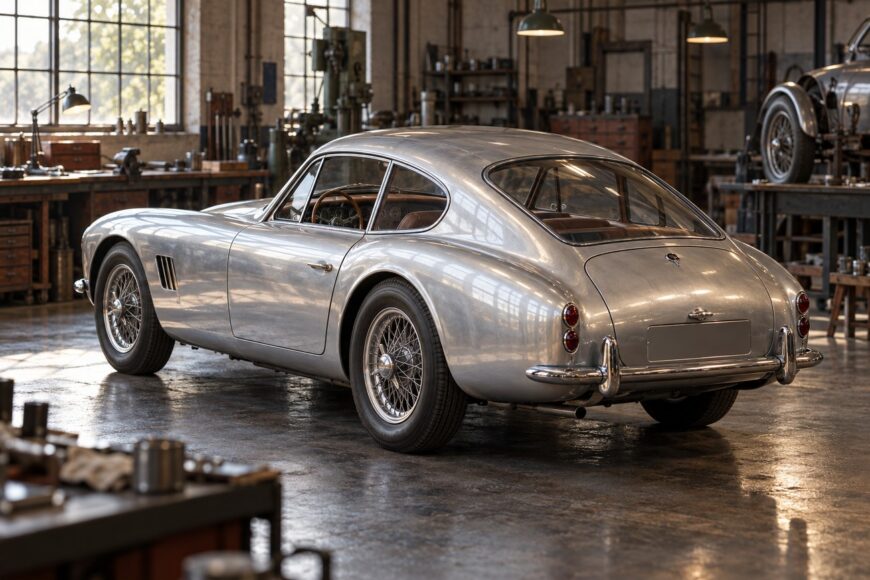
The AC Aceca is often described as a closed Cobra, but that label is historically wrong. It was an earlier AC fastback coupé derived from the open Ace, introduced before the Cobra and developed as a separate model with its own engineering and production history.
Built from 1954 to 1963, the Aceca combined a remarkably light structure with a small-coupé body and usable luggage space. Only 357 cars were made. That rarity gives the car unusual appeal, while also making identity checks, specialist repairs, and correct period specification more important than a fresh paint finish.
The central compromise remains clear today: an Aceca can feel agile and special because it weighs approximately 900–1000 kg, yet it offers limited space, aging brakes and cooling systems, modest protection, and difficult parts support. It is a fascinating historic sports car, though ownership rewards careful selection more than impulse.
- The AC Aceca Was Not a Cobra Coupe
- Lightweight Construction Was the Real Performance Story
- Engines, Versions, and the Numbers That Need Context
- What to Verify Before Buying an AC Aceca
- Living With an Aceca Today
- Why Rarity Does Not Make Every Aceca a Safe Investment
- Frequently Asked Questions
- How much is an AC Aceca worth?
- How many AC Aces were made?
- What does AC stand for in the Shelby Cobra?
The AC Aceca Was Not a Cobra Coupe
The Aceca was AC’s closed fastback interpretation of the Ace, sharing the earlier car’s basic architecture while adding a roof, rear bodywork, and a more practical luggage area. Its name and shape place it within AC’s own development line rather than within the later Cobra story. Calling it a “Cobra coupé” compresses two different chapters of the company’s history into one attractive myth.
Production ran from 1954 to 1963, with 357 Aceca cars built. The number matters because it explains both the model’s collector appeal and the difficulty of finding a car with a clear, uninterrupted history. Small production totals also encourage repeated restoration, mechanical substitution, and claims about originality that deserve documentary support.
The Cobra came later and drew on earlier AC Ace architecture. That relationship is historically important: the Aceca helps explain the engineering background from which the Cobra emerged, while its own fastback body and closed-cabin compromises served a different purpose. It was a lightweight British sports coupé, not a roofed version of a later American-British hybrid.
Lightweight Construction Was the Real Performance Story
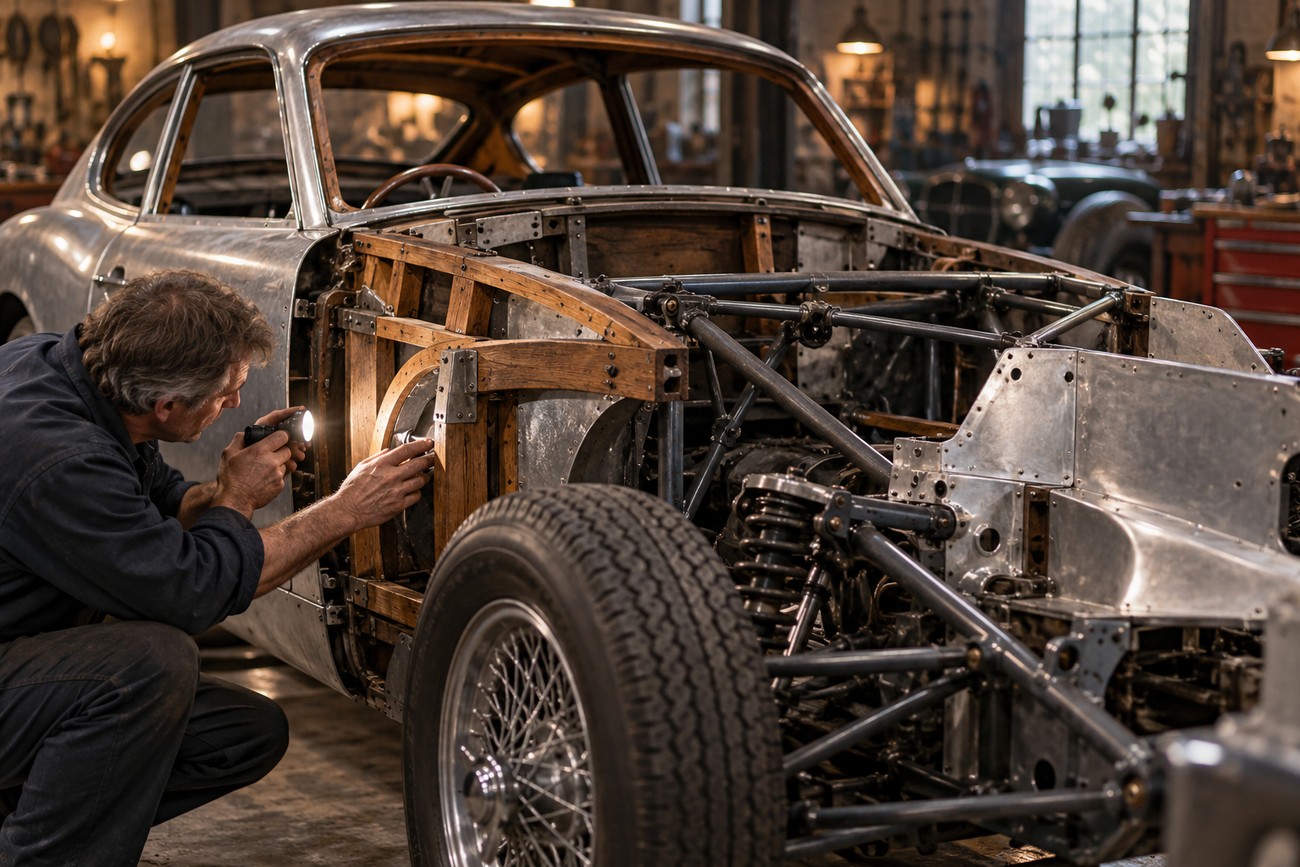
The Aceca inherited a wooden-and-steel frame/spaceframe construction approach from the Ace. This was a period method suited to low-volume production, in which shaped wood helped define the body structure and steel provided the principal frame elements. It was not a modern monocoque, and repairs must be assessed with that distinction in mind.
Depending on engine and equipment, a typical Aceca weighed approximately 900–1000 kg. That low mass shaped the driving experience more than any headline power figure: steering response, braking demands, acceleration, and cornering feel all benefited from carrying less weight. The car’s appeal therefore survives even when its period performance figures are treated cautiously.
A closed body brings practical penalties. Access around the mechanical areas can be more difficult than on an open Ace, and removing interior or body fittings may add labor to work that appears straightforward from underneath. Hidden deterioration around frame sections, mounting points, and the junctions between old structural materials can remain expensive long after the exterior has been refinished.
Engines, Versions, and the Numbers That Need Context
Early Aceca cars commonly used a 2.0-liter Bristol straight-six. Later examples could be fitted with the Ford Zephyr 2.6, while additional market-, export-, or customer-specific engine configurations existed. Engine identity is therefore part of the car’s history and specification, rather than a detail that can be changed without affecting how the vehicle should be judged.
Bristol versions are commonly quoted at approximately 185–190 km/h. Ford-engine versions were generally slower, and published figures vary according to specification, gearing, equipment, and the source being consulted. A single catalog number can create a false impression of precision, especially when comparing cars with different engines and rear axles.
The more useful comparison is the complete mechanical package. Mass, engine condition, carburetion, gearbox, final drive, and tune determine how an Aceca feels on the road. A car with a less celebrated engine may be easier to use, while a Bristol example with incorrect components or poor cooling may offer less satisfaction than its specification suggests.
What to Verify Before Buying an AC Aceca
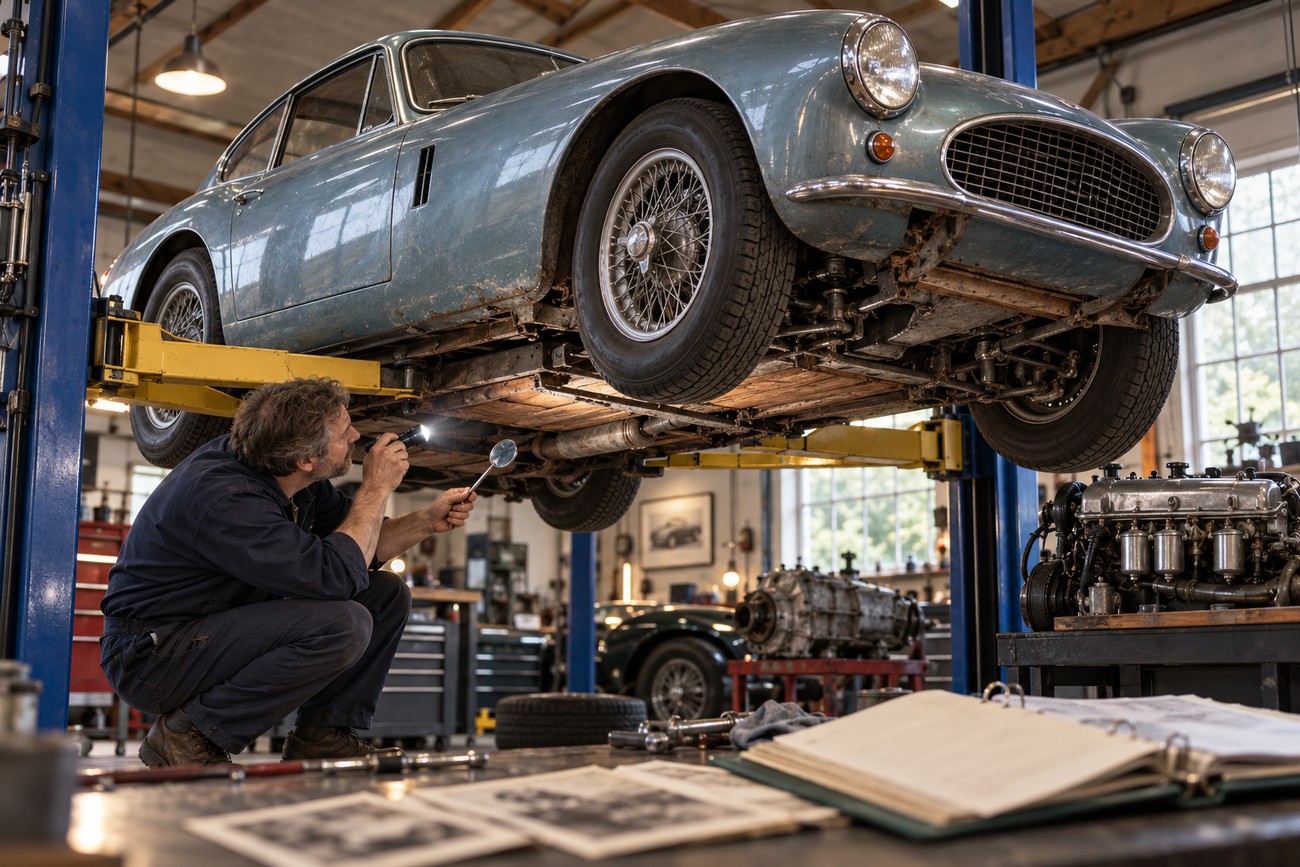
Begin with identity. The chassis number, engine-block identity, gearbox, and restoration records should form a coherent chain, supported where possible by club or archive information. A replacement engine may be acceptable for use, yet it should be disclosed and valued differently from a car retaining its documented specification.
Inspect the structure before judging the paint. Hidden corrosion, frame geometry, mounting points, and the condition of wooden or composite elements can matter more than a straight-looking body. A glossy restoration can conceal earlier repairs, altered mounts, or a mixture of parts assembled over several decades.
Chassis identity, engine numbers, and period specification must be reconciled before restoration quality is judged. A visually perfect Aceca can still be a mechanically or historically mixed example.
Specification deserves the same attention as condition. Right- or left-hand drive, carburetion, gearbox, rear axle, engine identity, and period-correct trim can materially affect authenticity and value. Minor-looking details may reveal whether the car reflects its original market configuration or a later attempt to imitate a more desirable version.
Ask for invoices, photographs taken before and during restoration, ownership records, and evidence of specialist inspection. A documented car with honest age-related flaws can be a better purchase than a flawless-looking example with an unclear past. A pre-purchase examination should include a road test, cold start, cooling behavior, brake operation, and checks for abnormal chassis movement.
Living With an Aceca Today
The Aceca is best understood as a two-seat car with highly conditional 2+2 accommodation. The rear area is mainly suitable for children or luggage, and the low seating position can make entry, exit, and long periods behind the wheel tiring. Restricted rear visibility also turns ordinary urban maneuvering into a task that rewards patience.
Sound insulation and thermal comfort reflect the standards of the period. The closed cabin offers more shelter than an open Ace, yet it does not provide modern grand-touring refinement. Noise, heat, ventilation, and road vibration remain part of the ownership experience, especially on extended trips.
Parts may require worldwide sourcing, fabrication, or patient searching through specialist networks. A restorer familiar with generic classic cars may still lack the knowledge needed for AC-specific structure, trim, and mechanical details. Before purchase, establish who can service the car locally and how long unusual parts or specialist work may take.
Brakes, cooling, tires, fuel systems, and general mechanical maintenance deserve regular attention. The car has no modern crumple zones, airbags, or contemporary stability systems, so its safety margin is below current expectations. Careful speeds, sound tires, reliable stopping performance, and sensible route planning are essential to using it responsibly.
Why Rarity Does Not Make Every Aceca a Safe Investment
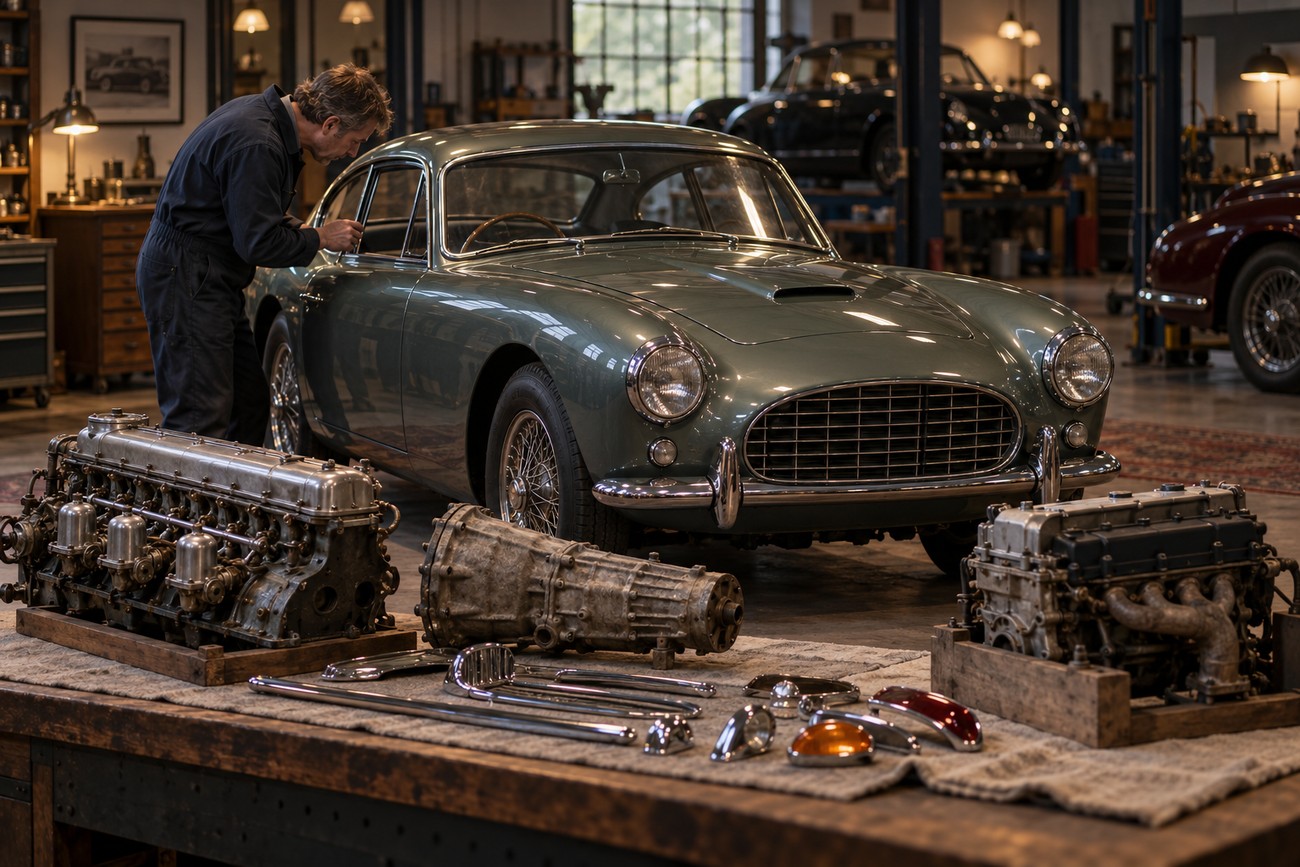
A production run of 357 cars makes the Aceca rare, though rarity alone does not establish financial security. Collectible value depends heavily on authenticity, specification, documentation, and restoration quality assessed together. The strongest cars usually offer a traceable identity and period-correct details that can be checked rather than merely asserted.
Repeated rebuilding or re-equipping can make originality difficult to establish. Some cars have acquired non-original engines, gearboxes, trim, or body details during their lives, and the result may be enjoyable without being historically correct. Club or archive verification can influence liquidity because future buyers need confidence that the car is what its description claims.
Rare-car ownership can increase dependence on specialist repairers and hard-to-source parts. It also does not remove routine obligations: old rubber, fuel-system components, cooling hoses, seals, and electrical connections continue to age even when annual mileage is low. “Stored” is not the same as mechanically preserved.
Some Acecas suit short drives, club events, and carefully planned outings better than regular long-distance mileage. That does not make them lesser cars; it reflects their ergonomics, access to service points, comfort, and safety equipment. Buy the example that fits the intended use, and treat investment potential as a secondary result of correct history rather than a promise.
Frequently Asked Questions
The Aceca’s value and identity are easiest to understand by separating model history from general AC production figures. The following points address the areas where listings and casual descriptions most often create confusion.
How much is an AC Aceca worth?
There is no reliable universal price because an Aceca’s value depends on comparable sales, documented provenance, specification, and restoration quality assessed together. A Bristol-engine car with matching identity and credible records may occupy a different market from a mechanically mixed example, even when both present well in photographs.
Compare cars by chassis history, engine and gearbox identity, steering side, period details, structural work, and the quality of recent maintenance. Auction estimates and advertised prices are useful reference points, though they should not replace an inspection or verification of the individual car.
How many AC Aces were made?
The figure for the open AC Ace family should not be used as the production total for the Aceca. The Aceca itself was a separate closed fastback model, and 357 Aceca cars were built between 1954 and 1963.
Production totals can also become confusing when listings group several AC models together or use “Ace” as a general family label. For valuation and provenance, identify the exact body style and chassis record first, then compare it with the correct model history.
What does AC stand for in the Shelby Cobra?
AC refers to AC Cars, the British manufacturer associated with the AC Ace, the earlier sports car whose architecture later contributed to the Cobra. The Shelby Cobra was created afterward through the development of that British platform with a different powertrain and American involvement.
This history explains the connection without making the cars interchangeable. The Aceca belongs to the earlier AC fastback-coupé line, while the Cobra is a later model that used earlier AC Ace architecture as its starting point.







