
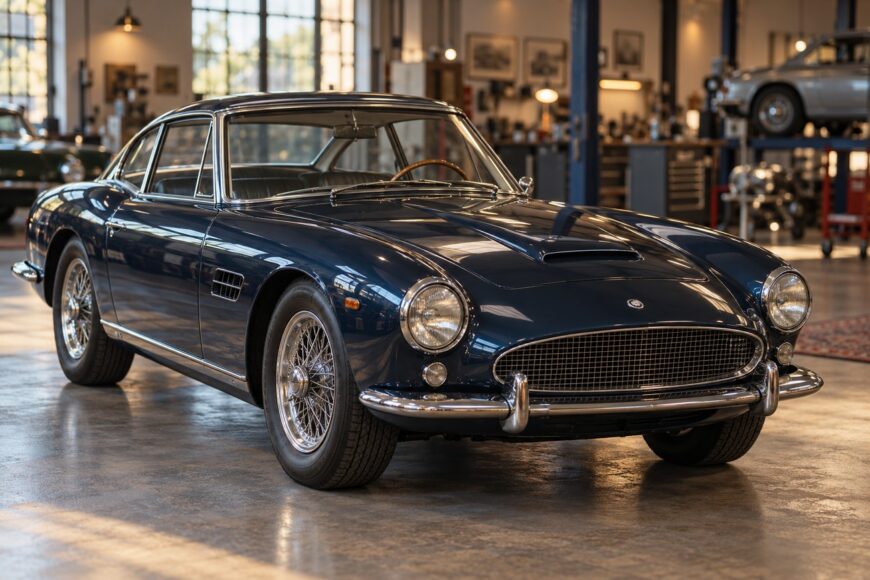
The AC 428 Frua carried Cobra ancestry into a different kind of car. Its Ford V8 and related chassis promised formidable pace, while Pietro Frua’s body and more accommodating cabin made it a grand tourer. Judging it by its resemblance to a Cobra misses the changes that shaped how it was built and driven.
Rarity makes a surviving 428 harder to assess than its familiar mechanical name might suggest. An attractive restoration can conceal corrosion in the steel body, and a plausible-looking replacement part may have no straightforward Cobra equivalent. For a buyer, the history of the particular chassis matters as much as the model’s reputation.
- How Cobra underpinnings became an Italian grand tourer
- Frua styling, steel construction, and the cost of rarity
- The FE V8, chassis, and choice of gearbox
- What period performance figures really say
- Why so few were built
- Buying an AC 428: verify the car, not the silhouette
- Frequently asked questions
- Why do published AC 428 weights differ?
- How can I check a claim that an early AC 428 has its original 427 engine?
- How can I verify that a convertible was built with a manual gearbox?
- What should I ask a workshop before commissioning a Frua body restoration?
How Cobra underpinnings became an Italian grand tourer
The AC 428 project spanned 1965–1973, bringing an Italian-designed body to a British-built car with American V8 power. Pietro Frua styled it around a Cobra 427-derived chassis lengthened by six inches. That extra length was part of a broader change in purpose: the 428 was conceived as a grand tourer rather than another version of the Cobra roadster.
Its coupé and convertible bodies gave the car a distinct shape and cabin. The chassis relationship remained important for understanding its layout and appeal, but a standard Cobra 427 did not simply acquire new panels. The altered dimensions and Frua-specific components still matter whenever a car needs structural or cosmetic work.
Approximately 80–81 cars were built, making every surviving example significant. Even that small total is reported differently across sources, partly because body styles and special-bodied cars are classified in different ways. A production count can establish the model’s rarity; it cannot, on its own, establish an individual car’s originality.
Frua styling, steel construction, and the cost of rarity
Frua’s restrained grand-touring shape gave the 428 an identity separate from the Cobra. Its cabin, trim, glass, and fittings also belong to that identity. Those details can be more consequential to an owner than their size suggests: an engine component may be identifiable, while a missing piece of model-specific trim can take much longer to replace.
Body material is a useful correction to a persistent assumption. The prototype had an aluminum body, but production cars used steel body panels. A claim that a production example has an original aluminum body therefore calls for evidence tied to that particular car, rather than an appeal to the prototype’s history.
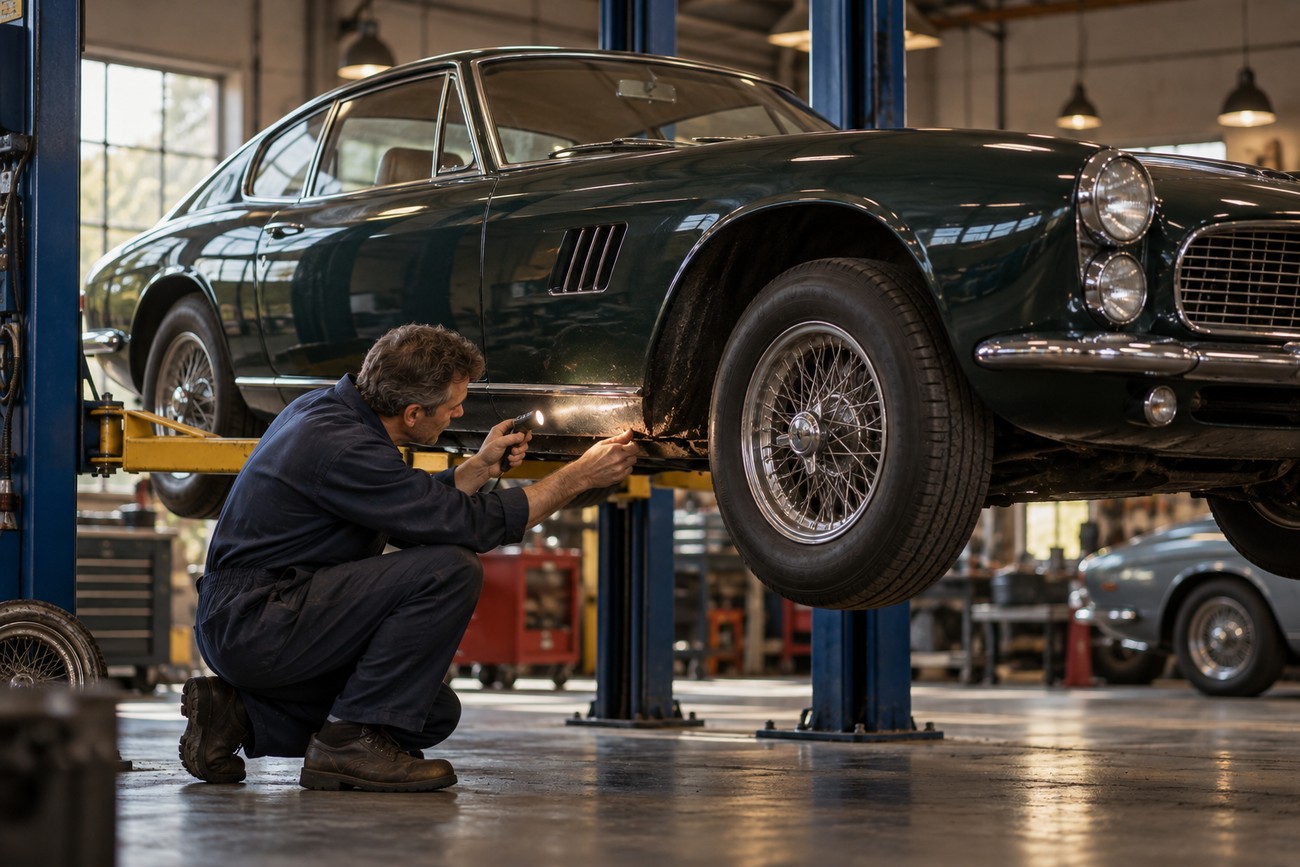
Steel construction makes concealed corrosion a central restoration concern. Sills, wheel arches, the underside, and body-mounting areas all deserve inspection beyond the visible paintwork. A polished exterior offers little assurance about metal hidden behind panels or trim, especially where earlier repairs have obscured the original construction.
Repair costs can rise before any major mechanical work begins. Glass, seals, cabin pieces, and exterior fittings may require a search through specialists, owners’ networks, or existing parts stocks. The available evidence does not establish how often particular faults occur, so condition should be assessed car by car rather than inferred from a supposed model-wide failure rate.
The FE V8, chassis, and choice of gearbox
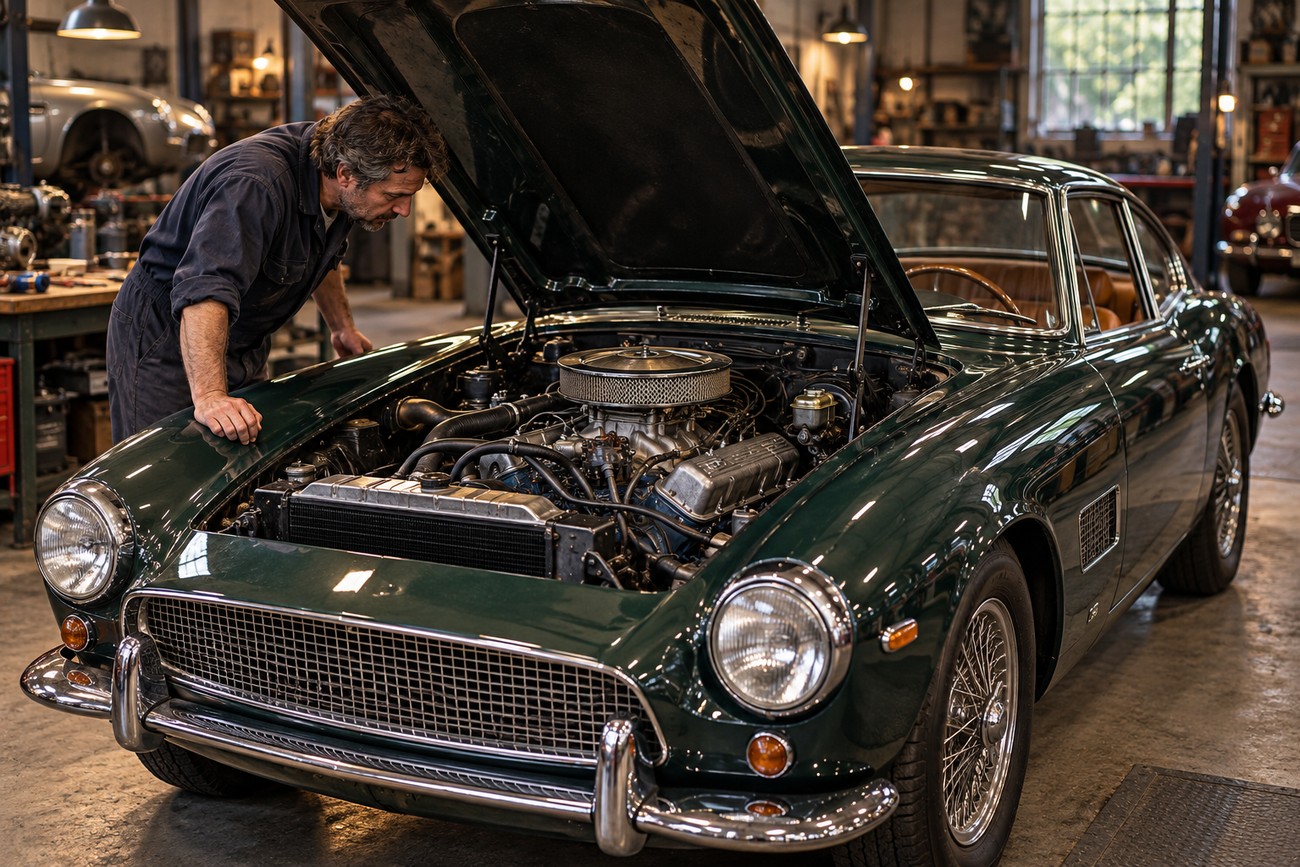
The usual AC 428 engine specification is a cast-iron Ford FE 428 cu in (7,014 cc) OHV V8 with one four-barrel Holley carburetor. Its quoted output was about 345 bhp, a period specification rather than a measurement of every engine still on the road. Some early cars may have used a Ford 427 V8, so the model badge alone cannot settle an individual engine’s identity.
Underneath, the 428 had independent suspension with springs and transverse wishbones, rack-and-pinion steering, and disc brakes at all four wheels. A Salisbury rear differential completed a layout intended to manage the V8’s power in a grand-touring car. These features help explain its period performance, but each system’s present condition has to be established separately.
Buyers could choose a four-speed Ford Toploader manual or a three-speed Ford C6 automatic; approximately two-thirds of production was automatic. The C6 suits the car’s relaxed GT role, while the Toploader gives the driver more direct control over the engine. That difference in character makes the gearbox worth verifying against the car’s records, particularly when a manual is described as original.
What period performance figures really say
Period road tests reported approximately 6.2 seconds from 0–60 mph and a maximum speed of 141–145 mph. Those results describe tested cars under particular conditions, rather than a performance guarantee for every 428. They are a sounder point of reference than treating a quoted engine output as though it were a complete road test.
Figures of 5.4 seconds to 60 mph and more than 150 mph also appear in accounts of the model. Before using them for comparison, identify the version, gearbox, and measurement behind the claim. A promotional figure and an independently recorded test result should retain their separate labels, even when both are presented in period material.
Published weights likewise vary: approximately 1,416 kg, 1,426 kg, and 1,430 kg are all encountered. Equipment and the basis of measurement affect what those numbers mean, so selecting one as the definitive weight creates false precision. For a surviving car, compression, carburetor setting, ignition, cooling, and general mechanical health matter more than a historic acceleration claim.
Why so few were built
The 428 occupied a difficult position in the grand-touring market. Hand-built construction made it costly, and its price stood more than £1,000 above that of an Aston Martin DB6. A buyer had to value the AC’s distinctive combination of Frua design and Ford power enough to accept both that premium and the uncertainties of a low-volume car.
Production is commonly put at approximately 80–81 cars, but published breakdowns do not agree. One account lists 51 coupés and 30 convertibles; another lists 49 coupés, 29 convertibles, and three special-bodied cars. Other classifications also appear, so a count for one body style needs its source and its treatment of special cars attached.
High production costs were joined by regulatory pressures, Ford supply difficulties, and the oil-crisis era as the project drew to a close. No single one of those factors tells the whole commercial story. Their combined effect helps explain why such a distinctive car remained a tiny series rather than becoming a regular fixture of AC’s range.
For an owner or insurer, a disputed model-wide total has limited practical value. Factory and ownership records that establish the history of a particular chassis provide a firmer basis for assessing what makes that car unusual. Rarity is real, but an exact ranking within a contested production breakdown may be impossible to support.
Buying an AC 428: verify the car, not the silhouette
Start with identity. Match chassis and body numbers to available records, then check the recorded body style, engine, gearbox, and steering configuration against the car in front of you. This sequence can expose questions that paintwork and a familiar V8 soundtrack cannot answer, including whether a desirable specification was fitted from new.
Next, examine the structure before valuing cosmetic finish. Production bodies used steel panels, so inspect sills, arches, the underside, and body-mounting areas for concealed corrosion or repairs. Panel fit and paint quality deserve attention, but neither substitutes for seeing the metal and understanding how previous work was carried out.
Check the original component and the AC 428’s dimensions against car-specific records before ordering a Cobra-specified replacement. Shared ancestry does not establish that a part will fit the lengthened chassis or Frua body.
Mechanical inspection should cover brakes, suspension, and electrics as well as the FE V8. Confirm that cooling, ignition, and fuel delivery work properly and that the carbureted engine starts and runs consistently. These are meaningful checks on an old car; they are not evidence that any one failure is unusually common across the model.
Finally, compare the restoration file with the work visible on the car. Records for body repairs, fitted components, and changes of gearbox or engine make an attractive example easier to assess and maintain. Where evidence is missing, allow for the time and specialist help needed to establish what is actually installed before treating the car as finished.
Frequently asked questions
Published specifications and a seller’s description are useful starting points for an AC 428, but several claims need evidence specific to the car. The following checks help separate a period figure or plausible configuration from a documented one.
Why do published AC 428 weights differ?
Published figures include approximately 1,416 kg, 1,426 kg, and 1,430 kg. They should not be compared as though each describes an identically equipped car measured on the same basis. Ask whether a figure is quoted or measured, what equipment was fitted, and how the car was weighed before using a small difference to draw conclusions.
How can I check a claim that an early AC 428 has its original 427 engine?
Compare the engine’s identification with period records for that chassis. Some early cars may have used a Ford 427 V8, but the AC 428 name neither proves nor disproves the claim for an individual example. A seller’s description should be supported by chassis-specific documentation and a physical identification of the installed engine.
How can I verify that a convertible was built with a manual gearbox?
Seek build information or ownership records that identify the gearbox fitted to that convertible when new. A four-speed Ford Toploader in the car today establishes its present specification, not necessarily its factory configuration. Because most 428s were automatic, a claimed original manual is worth documenting carefully rather than judging by the gear lever alone.
What should I ask a workshop before commissioning a Frua body restoration?
Ask how the workshop will inspect concealed steelwork, record the existing panel fit, and identify the trim, glass, and fittings the job may require. Agree on how it will report hidden damage before the repair scope expands. That plan makes it easier to distinguish necessary structural work from cosmetic work and to identify model-specific parts before the car is dismantled.







