
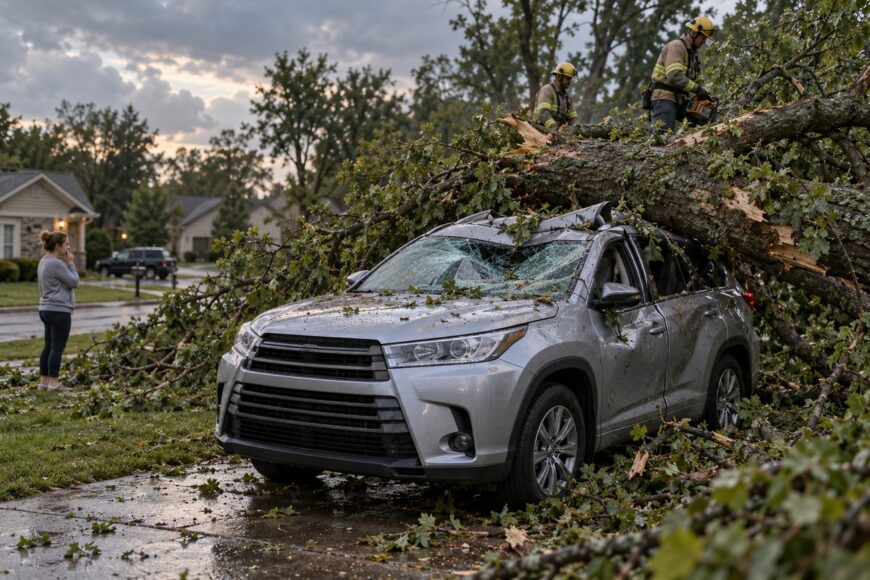
A tree striking a parked Toyota Highlander can leave you facing more than a crushed roof and broken glass. Damage hidden beneath the headliner may involve the pillars, curtain airbags, wiring, moonroof, seals, or climate components. Water entering through a damaged roof or moonroof can also worsen the loss before repairs begin.
The insurance description matters as well. A tree that falls onto a parked vehicle is usually treated as comprehensive or other-than-collision damage, while a vehicle that strikes an already fallen tree is more commonly treated as collision damage. The final decision depends on the policy, jurisdiction, deductible, limits, exclusions, and claims department, so the safest approach is to document the scene carefully and describe the sequence of events accurately.
- First: Make Sure the Highlander Is Safe
- Document the Scene Before Anything Is Moved
- How Insurance Usually Classifies the Loss
- Why a Small Roof Dent Can Hide a Major Repair
- Repair, Supplement, or Total Loss?
- Avoid These Mistakes Before and After Repair
- Frequently asked questions
- What is the most common problem with a Toyota Highlander after a tree strike?
- Who is liable if a tree falls on my car?
- What should I keep if the insurer declares my Highlander a total loss?
First: Make Sure the Highlander Is Safe
Do not assume the Highlander is safe to drive after a tree impact. Leave the vehicle where it is if conditions permit, move people away from unstable branches, and call emergency services if there is an immediate hazard. Arrange an inspection and towing when doors are blocked, glass is cracked, roof pillars appear distorted, airbags or curtains have deployed, or water is entering the cabin.
A roof can look like a panel with a single dent while the structure underneath has shifted. The impact may affect the pillars, curtain airbags, headliner, wiring, moonroof, climate components, glass, or weather seals. A door that still opens does not establish that the passenger compartment or restraint system is undamaged.
Avoid climbing onto the vehicle, pulling branches away, or cutting the tree yourself. Tension in a fallen trunk or branch can release suddenly, and moving it may cause additional damage or create a new risk to people nearby. Keep occupants away until the site and vehicle have been assessed.
Before towing, tell the tow operator about blocked doors, unstable branches, leaking water, damaged glass, or deployed restraints. Those details affect how the vehicle should be loaded. If the battery, electrical system, or airbags may be damaged, the repair facility should receive the same information before unloading begins.
Document the Scene Before Anything Is Moved
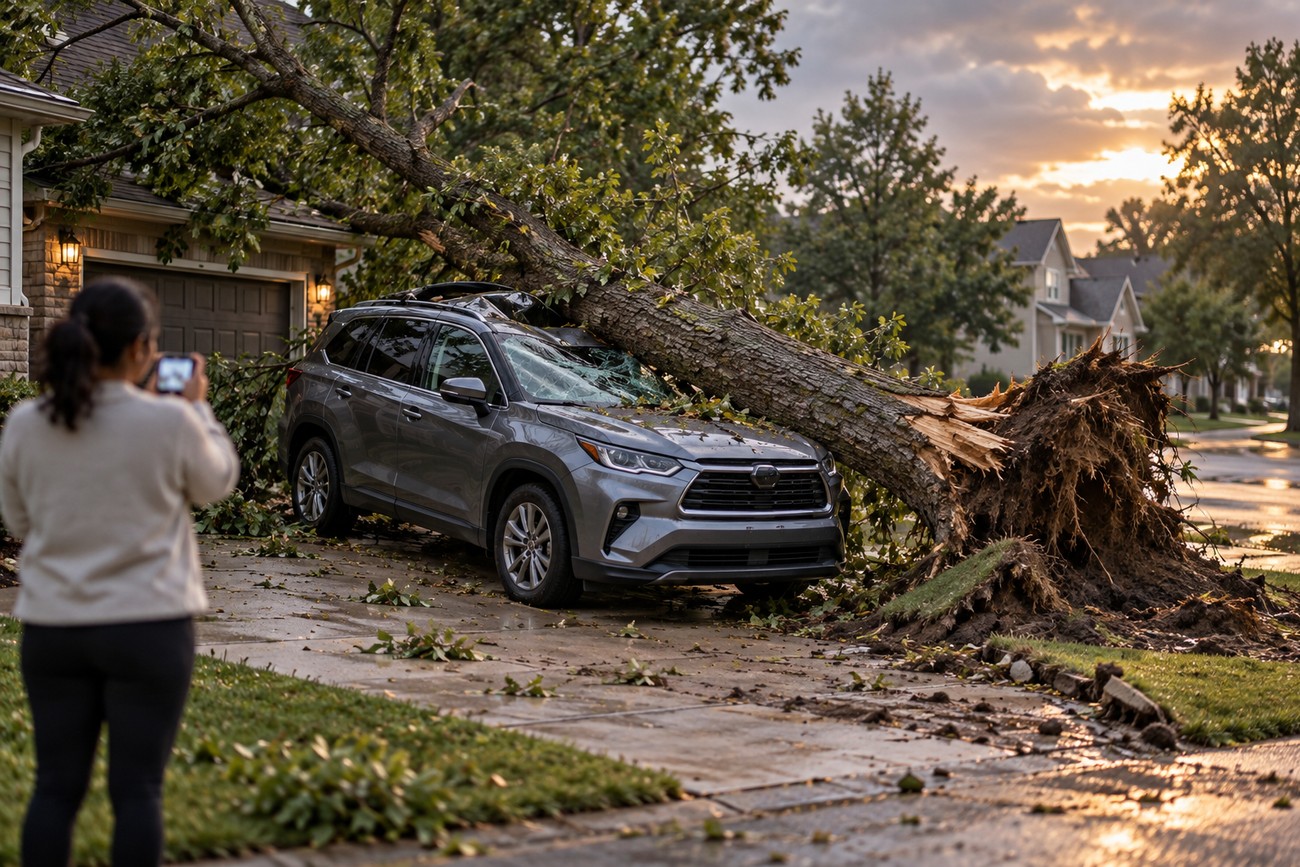
Take photographs from a safe distance before the tree is cut or the Highlander is moved. Capture the entire vehicle, every damaged side, the tree’s root or break point, the direction of fall, ground marks, nearby objects, signs, and the wider location. Include images that show how the tree contacted the roof, hood, windshield, side panels, or other parts of the vehicle.
The sequence of events can affect how the claim is classified. A clear record may show that the Highlander was parked and the tree fell onto it, rather than showing only a vehicle beside a tree after the fact. Photograph the parking position, road or property boundaries, visible hazards, and any relevant warning signs without entering an unsafe area.
Do not cut branches, move the trunk, or clear the vehicle before documenting the scene when it is safe to leave everything in place. If the tree is blocking a roadway, threatening a building, touching power lines, or under tension, leave removal to municipal services, emergency arborists, or another qualified service directed by the responsible authority.
Save photographs in their original form, and write down the date, approximate time, location, weather conditions, and what you observed before moving the vehicle. Keep towing, cleanup, storage, and inspection receipts. Witness contact details, security-camera footage, and a property manager’s incident report may also help establish what happened.
How Insurance Usually Classifies the Loss
A tree falling onto a parked vehicle is usually classified as comprehensive or other-than-collision damage. This commonly applies when the vehicle was stationary and the tree fell because of wind, deterioration, or another event. It does not guarantee coverage: the policy, jurisdiction, deductible, limits, exclusions, and insurer’s decision still control.
If the Highlander struck a tree that was already lying in its path, the loss is more commonly treated as collision damage. The distinction can become difficult if a tree fell moments earlier, visibility was poor, or the vehicle moved during an emergency. The claims department makes the final classification after reviewing the policy and facts.
Describe the event in plain, chronological language. For example, state that the Highlander was parked, the tree fell onto it, and the vehicle was not moving. If you were driving and encountered an already fallen tree, say that the tree was lying in the vehicle’s path before contact. Avoid choosing a coverage label or saying “I hit a tree” when that wording does not describe what occurred.
Ask the insurer which coverage is being evaluated, what deductible applies, where the vehicle should be inspected, and whether storage or emergency cleanup must be approved in advance. Keep the claim number and submit photographs, towing records, and witness information promptly. A separate claim involving a property owner is a different route and may require different evidence.
Why a Small Roof Dent Can Hide a Major Repair
Toyota describes the Highlander as having a reinforced passenger compartment, energy-absorbing pillars, and protective roof and door interior materials. Those design features support occupant protection in relevant crash conditions, but they do not establish that the roof is protected from a falling tree. Toyota does not publish a universal tree-weight or impact-force limit that the Highlander roof is guaranteed to withstand.
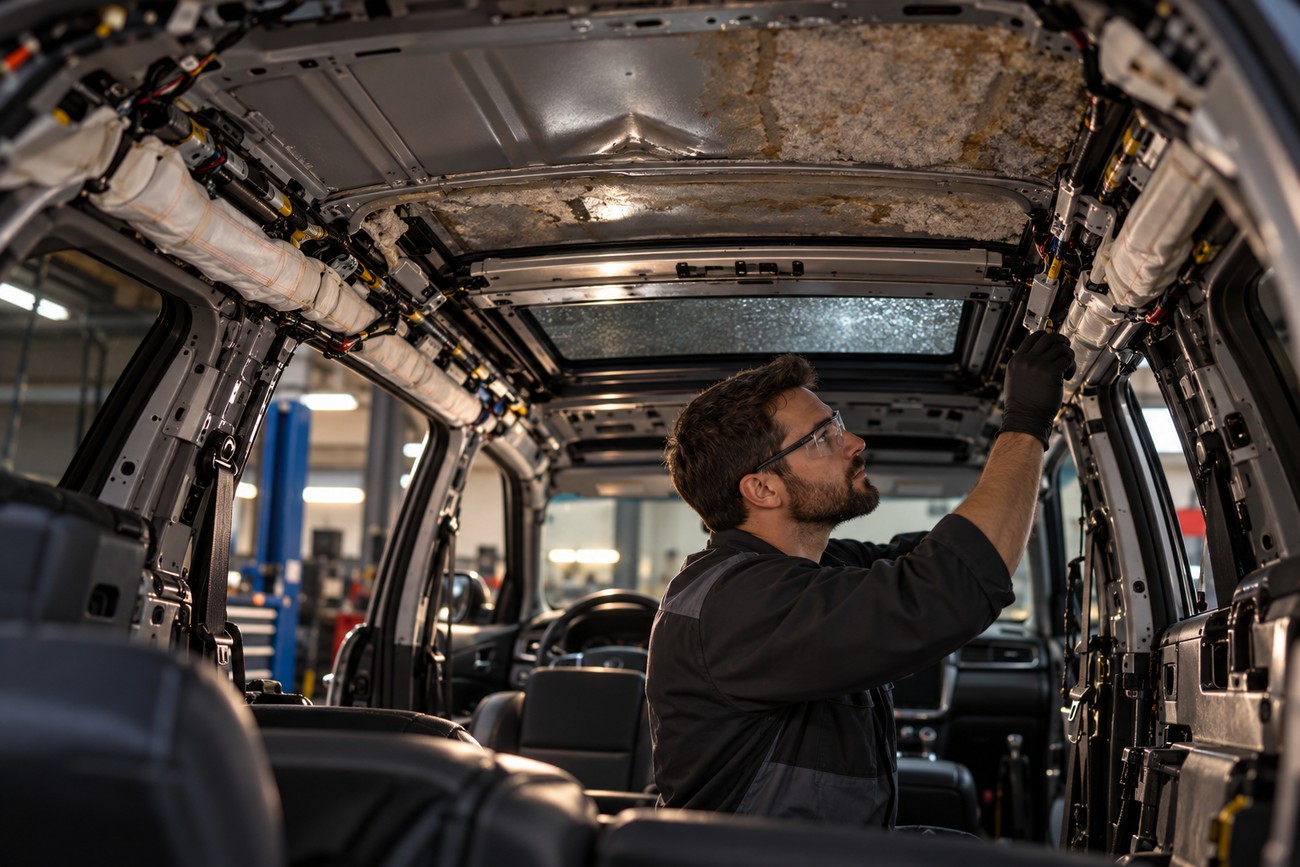
A proper inspection may require removal of the headliner, trim, curtain airbags, and parts of the wiring before the repair scope is known. Technicians may also need to inspect roof supports, pillar alignment, restraint mounts, the moonroof frame, glass, seals, and climate components. The first estimate may therefore cover only visible damage and later require supplements after disassembly.
Exterior photographs are a poor basis for approving a roof-panel repair by themselves. The headliner, curtain-airbag mounts, wiring, seals, and calibration requirements should be considered before the repair is treated as cosmetic.
Airbags that did not deploy do not prove that the pillars, sensors, mounts, wiring, or restraint system are undamaged. A sensor or attachment point can require diagnosis even when the dashboard shows no immediate warning. The same caution applies to a moonroof that still opens: damaged tracks, seals, or the surrounding roof structure may allow leaks later.
Repair or replacement of relevant glass, roof, or body components may require camera and Toyota Safety Sense calibration. A shop should identify which systems were disturbed, what diagnostic scans are needed, and whether calibration was completed after structural and glass work. Ask for those results with the repair records rather than relying only on a quiet dashboard at pickup.
Repair, Supplement, or Total Loss?
The first estimate is a starting point, not always the final repair plan. Hidden damage discovered during disassembly can add structural work, restraint components, wiring, glass, seals, interior removal, and calibration. A vehicle may also require additional inspection after water intrusion or after the roof is opened.
The repair-versus-total-loss decision depends on the vehicle’s market value, repair scope, deductible, and applicable local rules and policy terms. There is no universal repair threshold that can be applied to every Highlander. If the insurer is considering a total loss, ask how it determined the vehicle’s pre-loss value and which comparable vehicles were used.
Preserve documents that support the Highlander’s condition and equipment. Useful material includes the trim level, options, mileage, ownership and service records, purchase documents, photographs from before the loss, and comparable same-year Highlander listings with similar equipment. These records can support a valuation review if the initial figures do not reflect the vehicle accurately.
A serious structural repair can affect future resale value and create a significant damage-history record, even when the vehicle is repaired correctly. Ask whether the repair plan addresses water tightness, restraint systems, diagnostic scans, and calibration, and keep copies of the final estimate, supplements, invoices, and inspection results. Those records may matter to a future buyer or insurer.
Avoid These Mistakes Before and After Repair
Do not drive the Highlander simply because the engine starts or the airbags did not deploy. Do not cut the tree, approve a cosmetic roof repair, or authorize work before the shop has considered hidden structural, restraint, wiring, and water-ingress damage. Also avoid giving the insurer an inaccurate event label that changes the apparent sequence of events.
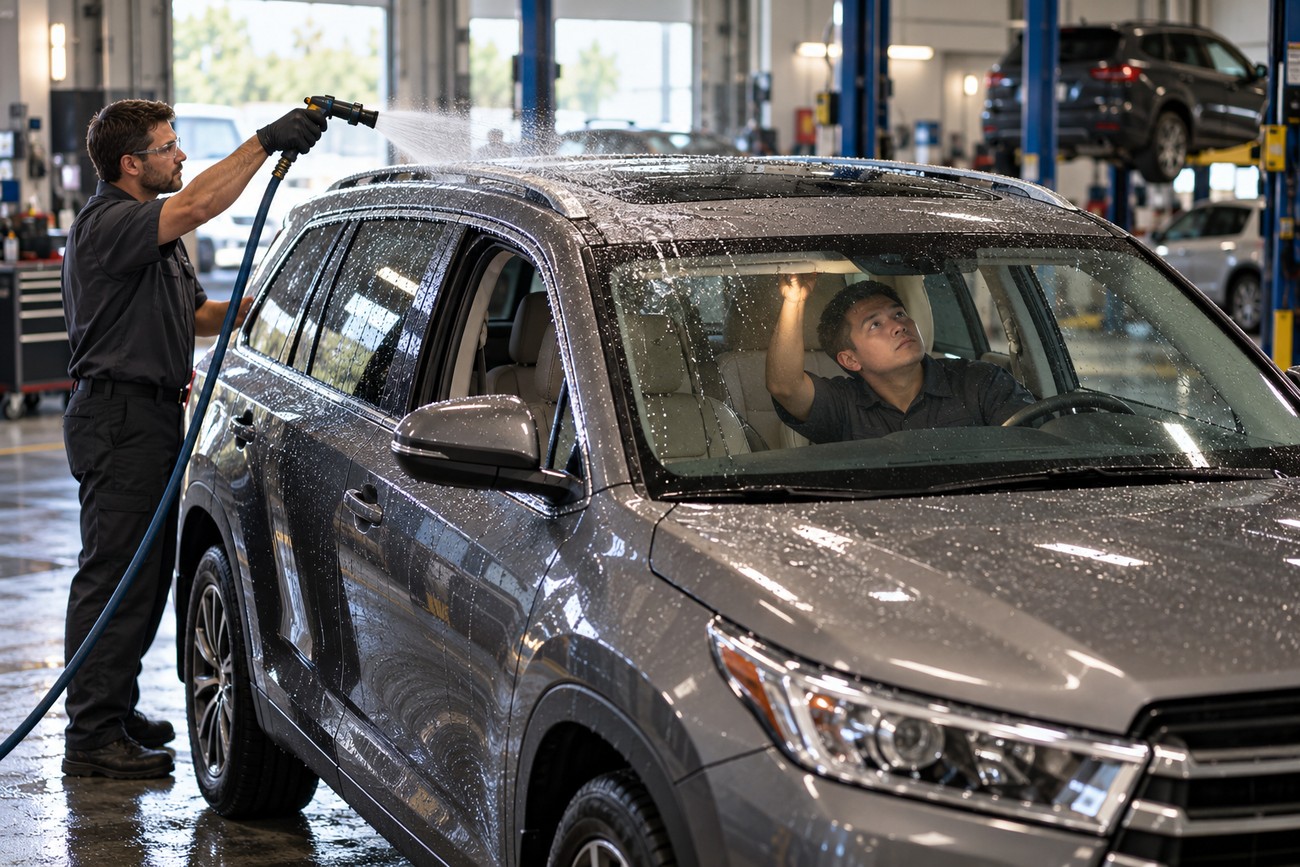
Before accepting the vehicle, inspect it in daylight and ask for a written explanation of repairs and diagnostic procedures. Check for water leaks after rain or a controlled water test, moonroof operation, glass fit, weather seals, and unusual wind noise. A damp headliner, musty odor, or intermittent electrical fault deserves prompt documentation.
Confirm that the seat belts, curtain airbags, windows, warning lights, cameras, and other affected systems work as intended. If glass, the roof, or related body components were repaired or replaced, verify that camera and Toyota Safety Sense calibration was completed where required. Keep the repair invoice and calibration documentation with the vehicle records.
Do not postpone reporting a leak or warning light because the outside appearance is satisfactory. Moisture can damage interior materials and electrical connections over time, while an unresolved restraint or camera fault may affect safety functions. A follow-up inspection is appropriate when the repair facility cannot explain a warning, leak, misalignment, or recurring electrical symptom.
Frequently asked questions
What is the most common problem with a Toyota Highlander after a tree strike?
There is no single universal Highlander defect associated with this event. The problems depend on where the tree landed and how much force reached the vehicle. Common impact-specific concerns include water intrusion through the roof or moonroof, damaged seals and glass, hidden pillar or restraint damage, wiring faults, and camera or sensor problems.
A Highlander with a small visible dent may still need a deeper inspection, while a vehicle with extensive exterior damage may also have damage to the hood, grille, side panels, or climate components. The correct assessment comes from teardown, diagnostic scanning, and a watertightness check rather than from the roof’s appearance alone.
Who is liable if a tree falls on my car?
Responsibility may depend on local law, the tree’s condition, the property owner’s knowledge, and evidence of negligent maintenance. Ownership of the land alone does not automatically establish liability. Evidence may include arborist reports, prior complaints, inspection records, photographs of decay, and proof that the owner knew or should have known the tree was dangerous.
Your comprehensive claim and a separate claim against a property owner are distinct routes. They may involve different evidence, deadlines, deductibles, and dispute procedures. Notify your insurer promptly while preserving scene evidence, and obtain local legal advice if the property owner’s responsibility is disputed.
What should I keep if the insurer declares my Highlander a total loss?
Keep purchase and service records, the trim and option list, mileage evidence, ownership documents, photographs from before the loss, and records showing recent maintenance or installed equipment. Save comparable same-year Highlander listings with similar mileage, trim, and options, and note when each listing was collected.
Ask for the valuation report, the comparable vehicles used, and the deductions applied. Check whether the report correctly reflects equipment, condition, mileage, and local market availability. Provide corrections in writing and retain all estimates, photographs, claim correspondence, and title or ownership documents.







