
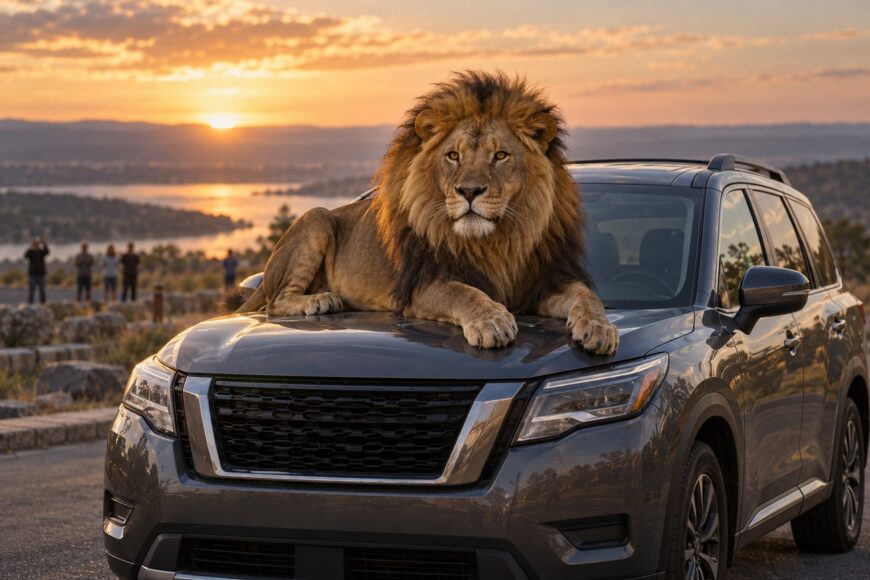
A lion climbing onto a Nissan Pathfinder is an emergency, even if the animal appears calm. A lion is a particularly dangerous wild predator and may attack when threatened, startled, or cornered. The people inside and around the vehicle are the priority; scratches, dents, broken trim, or mechanical stress come second.
A Pathfinder is not a fortress. Its glass, doors, mirrors, and body panels are designed for ordinary road hazards and crash loads, not claws, bites, or the weight of a large predator. Filming through an open window, shouting, or trying to make the lion move can turn a frightening vehicle incident into a direct human encounter. The right response centers on distance, emergency coordination, careful evidence, and realistic insurance expectations.
- A Lion on the Hood Is an Emergency
- What to Do While the Lion Is on Your Pathfinder
- Why a Pathfinder Is Not a Protective Shell
- Could the Hood Latch Make the Situation Worse?
- Damage, Insurance, and Evidence After the Lion Leaves
- The Mistakes That Turn a Scary Encounter Into a Crisis
- Frequently asked questions
- What is the most common problem with a Nissan Pathfinder in this situation?
- Which Nissan Pathfinder year should I avoid because of the hood-latch issue?
- What are the most common starting problems with a Nissan Pathfinder after an animal incident?
- What recalls should I check on a Nissan Pathfinder before driving it again?
A Lion on the Hood Is an Emergency
A lion must be treated as a dangerous predator even when it is lying quietly on the hood. Its apparent calm does not guarantee predictable behavior. A sudden movement, loud sound, nearby person, or blocked escape route may cause a defensive reaction.
Remain away from the animal and avoid sudden movements, running, or attempts to interact with it. People standing near the Pathfinder may unintentionally corner the lion, particularly if other drivers or bystanders gather around the vehicle. The safest objective is to create space and prevent anyone from approaching.
Contact emergency services, police, or the relevant wildlife authority immediately. Depending on the country and local system, this may involve an emergency number such as 112, police dispatch, wildlife officers, or another authorized response service. Tell the dispatcher that a large predator is on a vehicle and that people may be nearby.
Do not delay the call because you are concerned about paint or bodywork. A scratched hood can be inspected and repaired; an agitated predator near an open door or a crowd is a substantially more serious hazard. Authorized personnel can coordinate traffic control, public safety, and the animal response.
What to Do While the Lion Is on Your Pathfinder
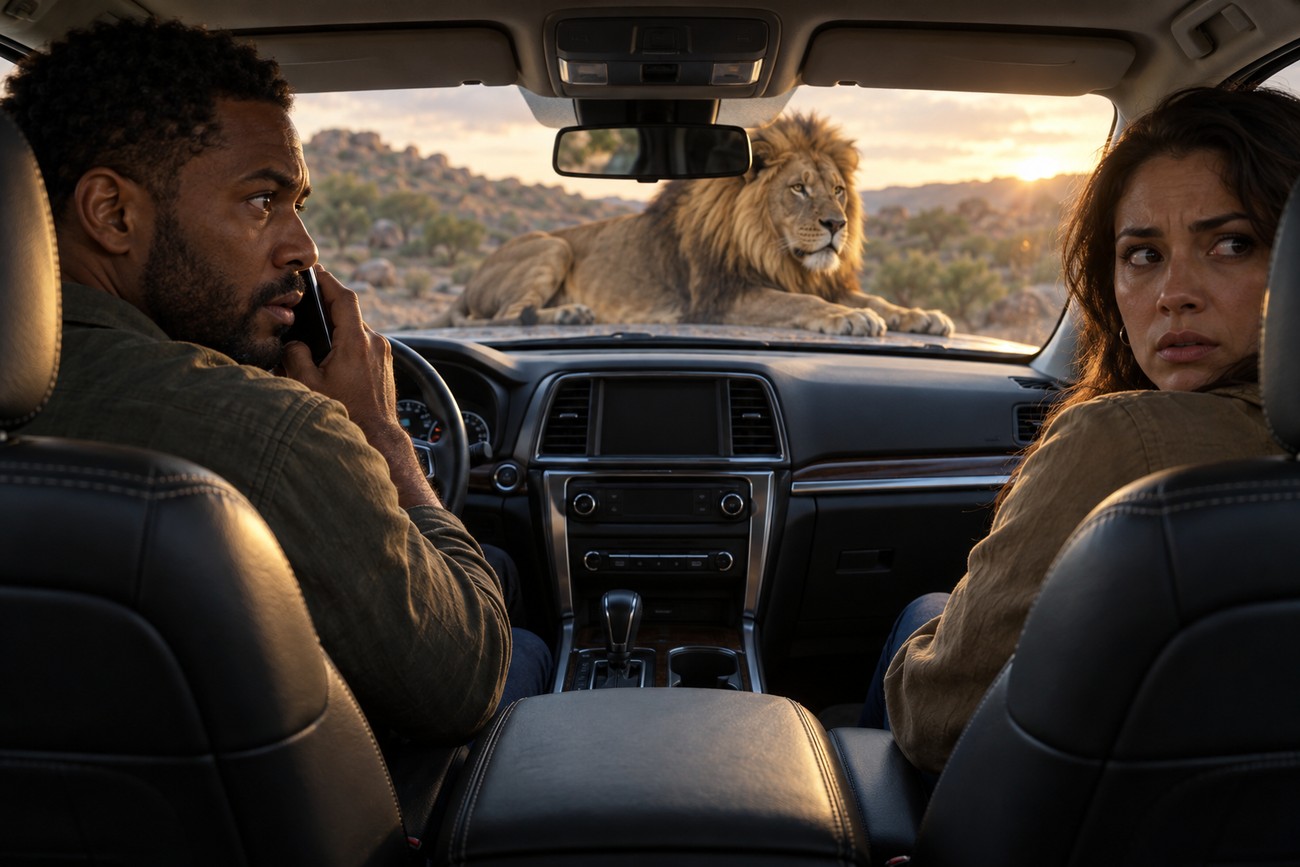
If you are inside the Pathfinder, stay there with the doors locked and the windows fully closed. Keep all occupants away from the side nearest the animal where possible, and ask passengers to remain quiet. Do not open a door to check whether the lion has moved.
Call emergency services or the appropriate wildlife authority and give a precise location. Include the species, the animal’s position on the vehicle, its behavior, apparent condition, and whether it seems aggressive or calm. Report nearby pedestrians, homes, road users, and traffic hazards so responders can plan their approach.
Avoid the horn, shouting, engine revving, flashing lights, feeding, and sudden gestures. Do not reach through a window or hold an object outside the vehicle. These actions may startle the lion or make it feel threatened, even if the intention is only to encourage it to leave.
Close-range photography is also unsafe. If a passenger can record anything without opening a window, leaning toward the animal, or distracting the driver, keep the device inside and use it only when it does not increase the risk. Safe-distance footage taken by others may later help establish what happened, but no image is worth provoking the animal.
Wait for specialists to confirm that the lion has gone and that the area is safe. Do not drive away while it is on the hood, and do not attempt to redirect it toward a yard, garage, or open land. A vehicle moving beneath the animal could cause a fall, a panic response, or a jump toward the windshield or roof.
Why a Pathfinder Is Not a Protective Shell
Remaining inside the Pathfinder reduces exposure to the lion, but it does not make a deliberate attack harmless. Standard vehicle safety design addresses ordinary road loads and crash forces. It does not certify the vehicle against claws, bites, or the weight and movement of a large predator.
The animal may scratch paint, dent body panels, bend trim, damage mirrors or antennas, and crack glass. A windshield or side window can become a critical weakness if the lion strikes it repeatedly or uses it to investigate movement inside the cabin. A damaged door, latch, or window may also complicate an orderly exit after authorities declare the area safe.
The SUV’s size can create a false sense of security. A Pathfinder may give occupants valuable separation and a locked enclosure, yet its exterior components remain vulnerable. Avoid touching the glass, waving, or moving suddenly where the animal can see you.
The practical trade-off is clear: accept possible vehicle damage while maintaining a closed, quiet cabin. Trying to protect the paint by opening a door, moving the vehicle, or confronting the lion usually creates a greater danger than the original contact.
Could the Hood Latch Make the Situation Worse?
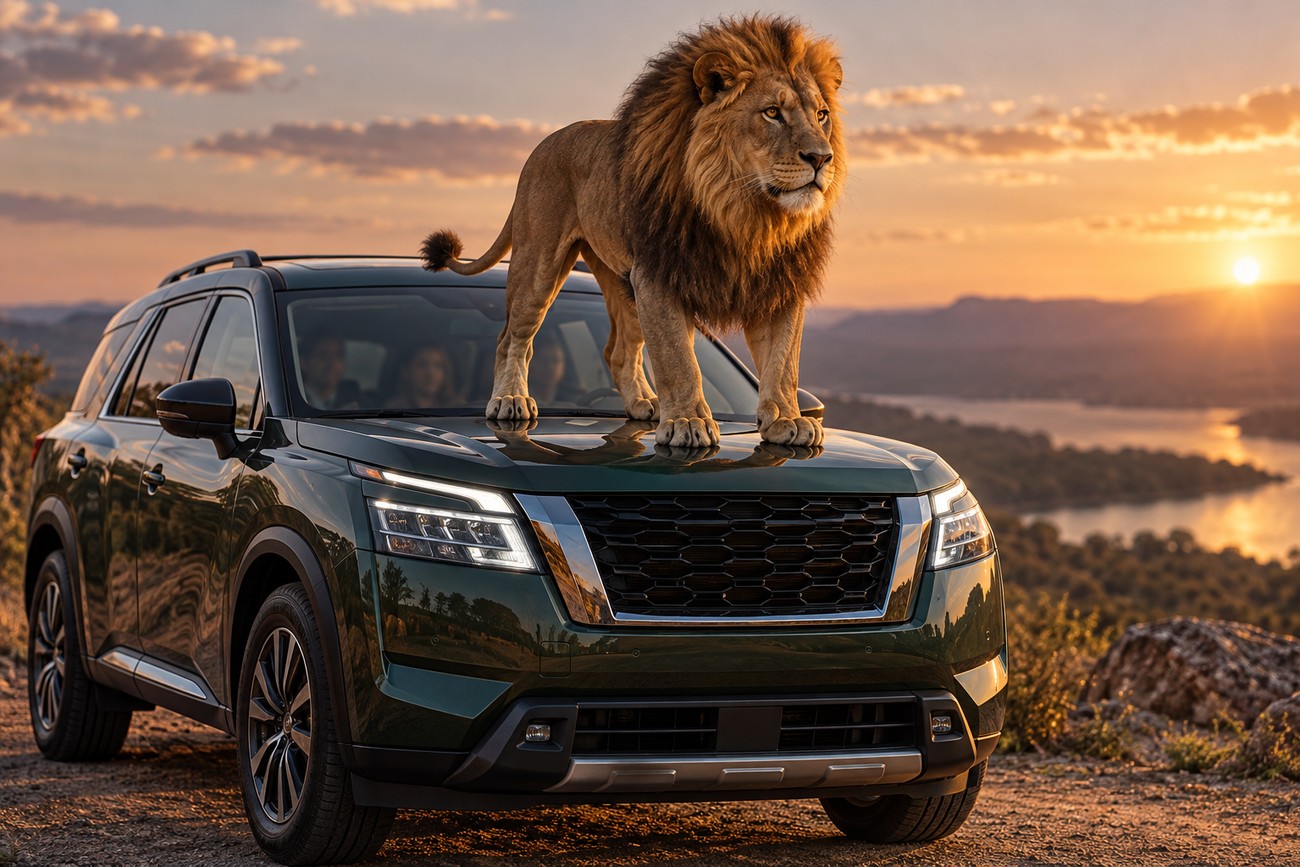
Nissan Pathfinder models from 2013–2016 had reported hood-latch problems associated with contamination. This should be treated as a model-year and vehicle-condition concern, not as proof that every Pathfinder in that range will fail or that a recall applies to every market.
In a lion encounter, unexpected hood movement beneath the animal could startle it. A sudden shift might encourage the animal to move toward the windshield, roof, or side of the vehicle, increasing both damage and risk to people inside. This is a theoretical additional hazard, not a diagnosis of the particular vehicle.
Any unexpected hood movement is a separate hazard for responders and technicians. Occupants should report latch behavior and visible movement, rather than testing the hood themselves while the animal is nearby.
Do not pull the hood release, push the hood from inside, or ask someone outside to inspect the latch during the encounter. Once the lion has left and authorities have cleared the area, the hood, latch, hinges, windshield edge, and surrounding panels should be inspected before the vehicle is driven.
Recall status must be checked by VIN, model year, market, and the official manufacturer or regulator database. A reported defect, a service concern, and a confirmed recall are different things. If the hood has shifted, the latch is contaminated, or the front structure is damaged, arrange a professional inspection even if the engine starts normally.
Damage, Insurance, and Evidence After the Lion Leaves
Do not open the door immediately after the lion disappears. Watch from inside and follow the instructions of emergency personnel or wildlife officers. The animal may remain close, return to the vehicle, or be hidden by the vehicle’s blind spots.
After the area is declared safe, record the incident before cleaning or repairing the Pathfinder. Photograph scratches, dents, broken glass, displaced trim, mirror damage, hood movement, and any marks on the roof or fenders. Include wide views showing the location, road conditions, and vehicle position, provided this can be done safely.
Keep the official call record, police or wildlife-authority report, timestamps, witness details, safe-distance photographs or video, towing documents, and repair estimates. Ask responders how to obtain an incident number or written record. These materials help establish that the event was sudden and that you did not approach, feed, or provoke the animal.
OSAGO generally does not cover damage caused to the insured vehicle by a wild animal because it is third-party liability coverage. KASKO or another form of comprehensive insurance may cover animal-related damage only when the policy includes that risk and the circumstances are adequately documented. Wording differs by country and contract, so check the policy rather than relying on a general description of comprehensive cover.
An insurer may dispute the claim if the owner appears to have provoked the animal, approached it, opened the vehicle for a close recording, or failed to establish the sudden nature of the event. Report the incident promptly, describe actions factually, and avoid speculative statements about why the lion climbed onto the hood. Do not authorize major repairs before the insurer has had a reasonable opportunity to inspect the damage, unless emergency work is needed for safety.
The Mistakes That Turn a Scary Encounter Into a Crisis
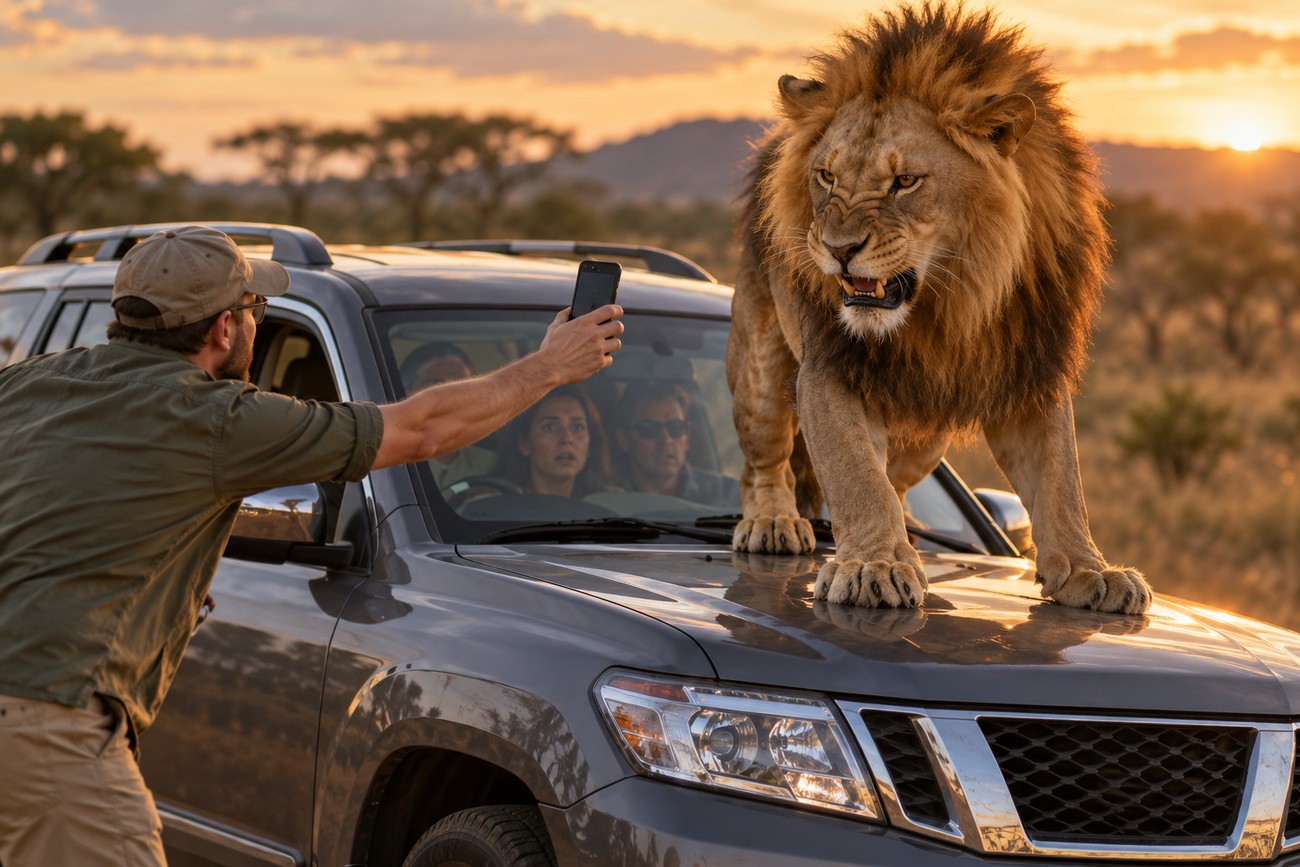
Leaving the Pathfinder to chase the lion away is one of the most dangerous choices. Throwing objects, banging on the hood, revving the engine, or running toward the animal can turn a passive investigation into a defensive response. A person on foot has far less protection and fewer escape options than someone inside a locked vehicle.
Open windows create another avoidable exposure. A hand, phone, food item, or other object extended through the window may attract the animal or trigger a reaction. Close selfies and videos made beside the vehicle are especially dangerous because they place a person within the animal’s immediate movement zone.
Bystanders should be kept away from the Pathfinder rather than invited to watch. Ask people to move back only if you can do so without shouting or opening the vehicle; otherwise, let police or emergency personnel manage the crowd. Additional people, headlights, horns, and flashing phones can make the scene harder for responders to control.
Do not attempt to capture, transport, shoot, or otherwise remove the lion yourself. In some regions, unauthorized shooting, capture, transport, or removal of a wild animal may lead to administrative or other legal consequences, even when the person believes the action was helpful. Wildlife specialists should decide how the animal is contained or relocated.
Frequently asked questions
The vehicle’s model year and condition matter when assessing possible hood-latch concerns after an animal incident. Recall information must be checked for the specific vehicle, while physical damage requires a separate inspection. The following answers distinguish those issues.
What is the most common problem with a Nissan Pathfinder in this situation?
There is no single universal problem across all Nissan Pathfinder generations. The relevant concern here is the reported hood-latch issue associated with contamination on 2013–2016 models, while damage after a lion encounter may involve the hood, paint, glass, mirrors, wiring, or body panels.
That reported concern should not be turned into a general reliability claim. The vehicle’s actual condition, maintenance history, market, and VIN matter more than the model name alone.
Which Nissan Pathfinder year should I avoid because of the hood-latch issue?
There is no automatic “avoid” range based only on this reported concern. A 2013–2016 Pathfinder deserves a hood-latch inspection and verification of its service and recall history, but the result depends on the specific vehicle and market.
Before buying one or putting it back into service, inspect the latch for contamination, correct engagement, and damage. Check the VIN in the official Nissan or regulator database rather than treating every vehicle from those years as unsafe.
What are the most common starting problems with a Nissan Pathfinder after an animal incident?
A no-start condition after the encounter should be investigated only after checking for visible hood, wiring, battery, glass, and other damage. A lion may damage exterior components or disturb wiring, but the animal encounter alone does not identify the fault.
Have the vehicle inspected before repeated starting attempts, especially if the hood moved, the battery area was struck, fluids are leaking, or glass and body panels are displaced. A technician can then separate incident damage from an unrelated starting or electrical problem.
What recalls should I check on a Nissan Pathfinder before driving it again?
Use the vehicle identification number, model year, and sales market to search the official Nissan recall system and the relevant government or regulator database. Confirm whether an open recall applies to that specific vehicle and follow the stated repair instructions.
A reported hood-latch problem is not automatically a confirmed recall, and a general service concern is not the same as a recall. After a lion incident, recall verification should accompany a physical inspection of the hood, latch, glass, wiring, and body structure before driving.







