
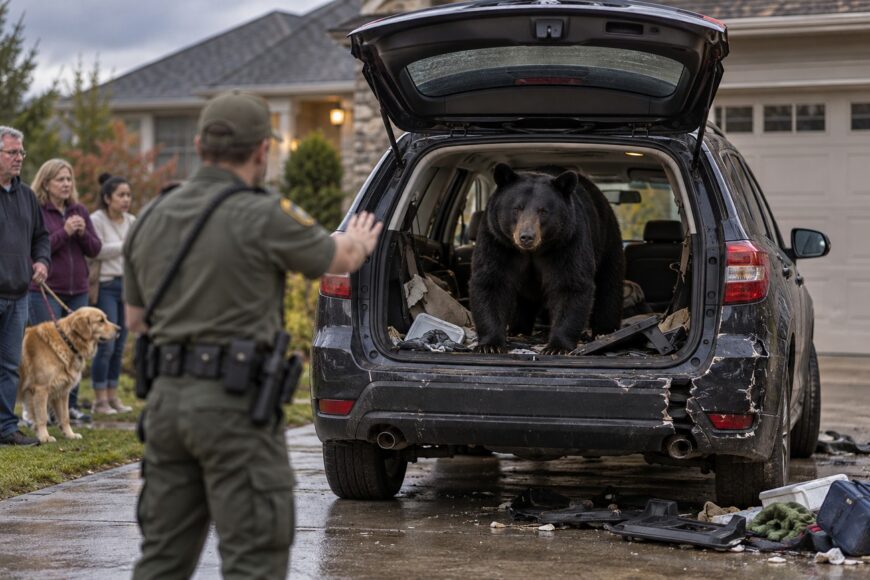
A bear breaking into a Subaru Forester creates more than cosmetic damage. People may be at risk, the cabin may contain biological contamination, hidden electrical faults may develop, and an insurer may require clear evidence before assessing the claim.
Keep your distance first. Once the animal is gone, document the vehicle before cleaning, arrange a professional inspection, and then address sanitation and repairs. Avoid starting the Forester while a bear remains inside, even if moving the vehicle seems like the quickest solution.
- If the Bear Is Still There: Safety Comes First
- Document the Break-In Before You Clean Anything
- Inspect the Forester Beyond Visible Damage
- Remove the Odor, Repair the Damage, and Prevent a Repeat
- Frequently asked questions
- How likely is a bear to break into a car?
- What should I do if a bear attacks my car while I am inside?
- What is a bear’s worst enemy?
- What should I do if a bear attacks my car?
If the Bear Is Still There: Safety Comes First
A bear inside a vehicle is a dangerous wild animal in a confined space. Do not reach into the cabin, corner it, shout at close range, use a stick, or approach for a video. Move people and pets away, keep others from gathering around the Forester, and leave the area if the animal’s behavior makes that necessary.
Keep your distance and contact wildlife control, police, or a game warden; do not physically confront a bear inside the vehicle. Tell the responding service where the bear is, whether anyone is nearby, and whether the vehicle is parked near a home, road, or public area.
Advice to “start the car and drive away” applies only when the bear has already left and the vehicle is safe to operate. Starting the engine with an animal inside can provoke it, trap it further, or place you directly in its path. Wait for trained help and follow local instructions.
Document the Break-In Before You Clean Anything
Before touching the cabin, photograph the overall Forester from several angles. Then record both sides of the entry point, including the outside damage and the matching interior damage. The rear hatch and cargo area are a common outside-in access point, though they are not the only possible entry route.
Capture tracks, fur, saliva, feces, urine, torn seals, broken glass, disturbed trim, and other relevant evidence. Use a ruler or another familiar object for scale where possible; close-ups alone may fail to show how extensive the damage is. Photograph the cargo area, rear seats, floor, and any damaged food packaging.
If food or packaging remains in the vehicle, preserve it as evidence if doing so is safe. Record the date, location, and basic sequence of events, then notify your insurer and any relevant authority promptly. Coverage and incident classification depend on the policy and jurisdiction; photographs and an incident report improve the claim record but do not guarantee coverage.
Inspect the Forester Beyond Visible Damage
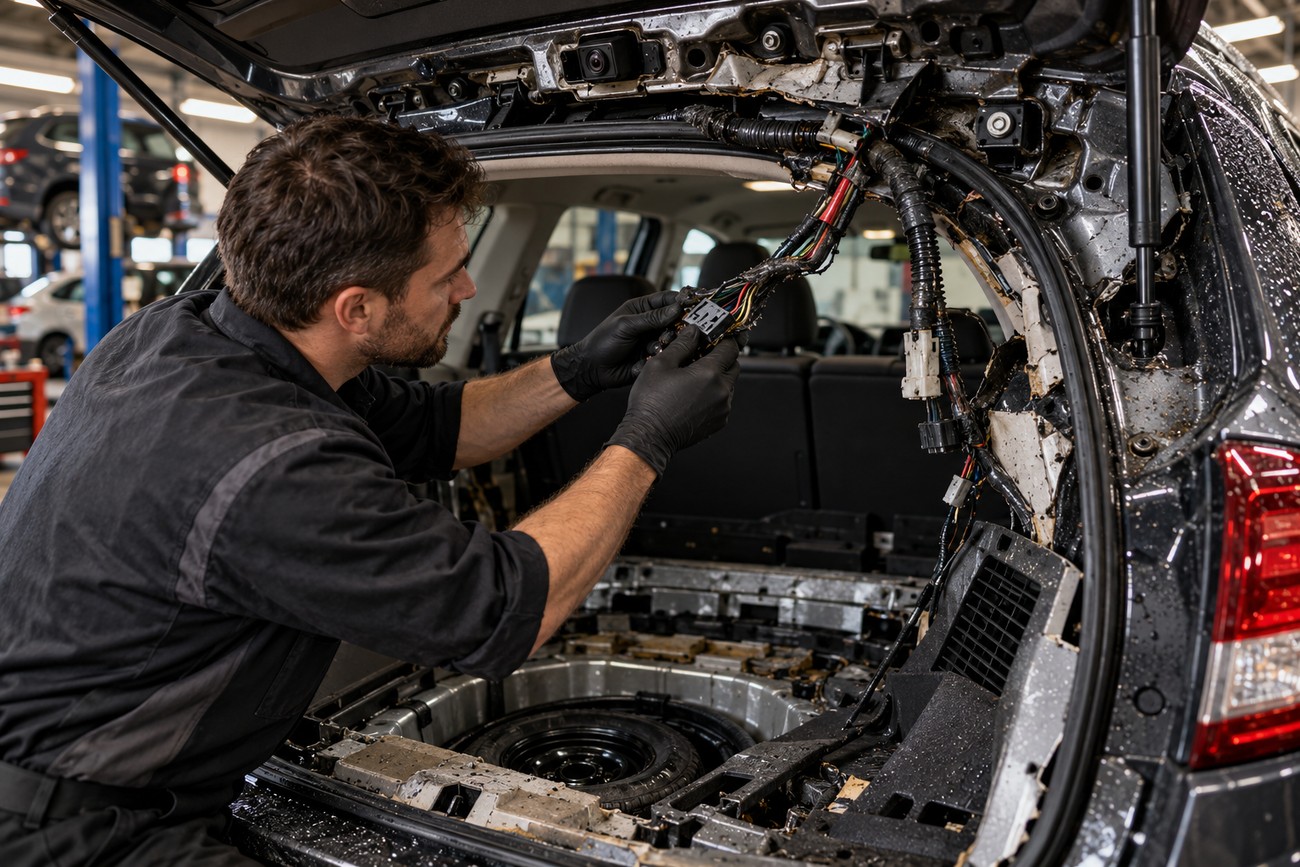
A damaged bumper or torn cargo trim can conceal a larger repair. Ask a qualified repair shop to inspect the hatch seals, clips, guides, locks, door sensors, window regulators, lighting, hatch wiring, and rear-view camera. A bear can damage sealing surfaces without leaving an obvious hole, leading to water intrusion, wind noise, or whistling later.
The inspection should include under the seats, the spare-tire well, and the area beneath the cargo floor. Check the under-hood area as well, since animal odors and materials can draw attention beyond the cabin. Loose clips, crushed connectors, and stretched wiring may look harmless until the hatch, lights, or camera stops working.
Replaceable plastic can make a repair look complete while a damaged hatch connector remains hidden behind the trim. Wiring, plugs, and sealing surfaces deserve their own inspection before the final estimate is approved.
Electrical faults can appear later through damaged wiring or corroded contacts, even when visible damage seems minor. Ask the shop to document its findings and test affected systems after cleaning and drying. This record helps separate the original incident from later symptoms during an insurance review.
Remove the Odor, Repair the Damage, and Prevent a Repeat
Bear contamination may include fur, saliva, feces, urine, and damaged seals. Treat the Forester as a sanitation issue, using appropriate protective equipment and professional cleaning methods. Surface wiping and an air freshener can leave contamination inside seams, insulation, and trim.
Organic odors penetrate seat foam and carpet more deeply than hard plastic. Deep cleaning and disinfection may require removing interior panels, lifting carpet, or replacing porous materials that cannot be reliably cleaned. Ventilation helps with drying, yet it rarely removes the source.
Ozone may reduce residual odor, but it does not remove contamination and should be supplementary to source removal, deep cleaning, and disinfection. Using ozone first can mask the problem while urine, food residue, or saliva remains in the foam and carpet. Ask the cleaner what material was removed, treated, or replaced.
Remove food, garbage, pet food, and other strong odors from the vehicle and its surroundings after the repair. A Forester can become a repeat target if attractants remain. Interior parts and trim may also be delayed by unavailable components or shop backlogs, so keep the claim, inspection notes, and repair receipts together.
Frequently asked questions
These answers cover the practical points that often remain after the immediate damage has been documented.
How likely is a bear to break into a car?
The risk is highest where the vehicle offers an accessible entry point and carries food odors. A closed car is a useful barrier, yet it is not absolute protection if windows, seals, or the rear hatch are compromised. Food, garbage, pet food, and scented items can encourage investigation, especially around the cargo area.
What should I do if a bear attacks my car while I am inside?
Stay inside if the vehicle remains a usable barrier, keep doors and windows closed, and avoid provoking the animal. Do not exit toward the bear or attempt to scare it away at close range. Contact emergency services or wildlife authorities and provide your location, the vehicle’s condition, and whether anyone is injured.
What is a bear’s worst enemy?
There is no single universal “worst enemy” in every setting. Bears face habitat loss, human conflict, vehicles, and other environmental pressures, while people create preventable risks by leaving food and waste accessible. Removing attractants and giving wildlife space is safer than treating the animal as an opponent.
What should I do if a bear attacks my car?
Prioritize personal safety, remain away from the animal, and call wildlife control, police, or a game warden. After the bear leaves, avoid entering the Forester until it is safe, document the damage, and arrange an inspection for structural, electrical, sealing, and sanitation problems.







