
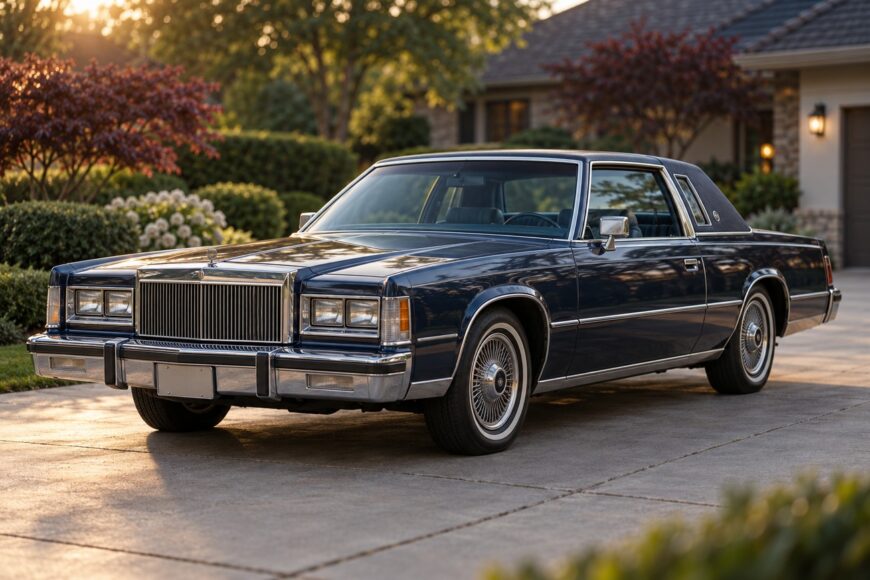
The Frank Sinatra name gives the 1981 Chrysler Imperial an instant story, while the mechanical specification is much more restrained: a carbureted 318-cubic-inch V8, a three-speed automatic, and the weight and dimensions of a large American personal-luxury coupe. That tension defines the car. Its appeal comes from presentation, period atmosphere, and documented association with Sinatra, rather than from exceptional acceleration or specialized chassis engineering.
For a buyer, the badge is only the starting point. Condition, originality, completeness, and provenance carry greater weight than a plaque or an attractive seller’s description. A genuine-looking car can have replacement trim, a changed interior, missing cassette materials, or a history assembled from assumptions. This is a collector car that rewards patient inspection and penalizes casual interpretation.
- What the 1981 Chrysler Imperial Actually Is
- What the Frank Sinatra Edition Adds—and What It Does Not
- Performance, Comfort, and the Reality of Driving One
- Buying Inspection: Rust, Mechanics, and Electrical Trouble
- Authenticity, Originality, and Provenance
- Value, Ownership Costs, and the Collector Verdict
- Frequently Asked Questions
- How many 1981 Chrysler Imperials were made?
- How much horsepower did a 1981 Chrysler Imperial have?
- Was the Chrysler Imperial a good car when new?
What the 1981 Chrysler Imperial Actually Is
The 1981 Chrysler Imperial was a two-door personal-luxury coupe on Chrysler’s large M-body platform. It occupied the traditional American luxury-coupe role: broad, softly styled, richly trimmed, and designed for relaxed travel rather than tight urban maneuvering. Its size gives the car presence, though it also creates practical problems in garages, parking lots, and narrow streets.
1981 was the final model year for this Imperial body generation as a separate Chrysler line; the Imperial name later changed format. That timing matters because the car belongs to the late phase of a luxury tradition already adapting to emissions requirements, fuel-economy pressure, and changing buyer expectations. Comparing it with earlier, more powerful full-size Imperials produces the wrong expectations.
Power came from a carbureted 318-cubic-inch V8, equivalent to 5.2 liters. References commonly place output at approximately 140 hp SAE net, although nearby figures appear because of market or calibration differences. The engine is a straightforward period Chrysler unit, and its character is better described as steady and serviceable than urgent.
A three-speed TorqueFlite automatic transmitted the power. Properly maintained, the TorqueFlite is one of the car’s more reassuring mechanical components, with a reputation for durability. That does not make every surviving transmission healthy: fluid condition, shift quality, leaks, and service history still deserve attention during an inspection.
What the Frank Sinatra Edition Adds—and What It Does Not
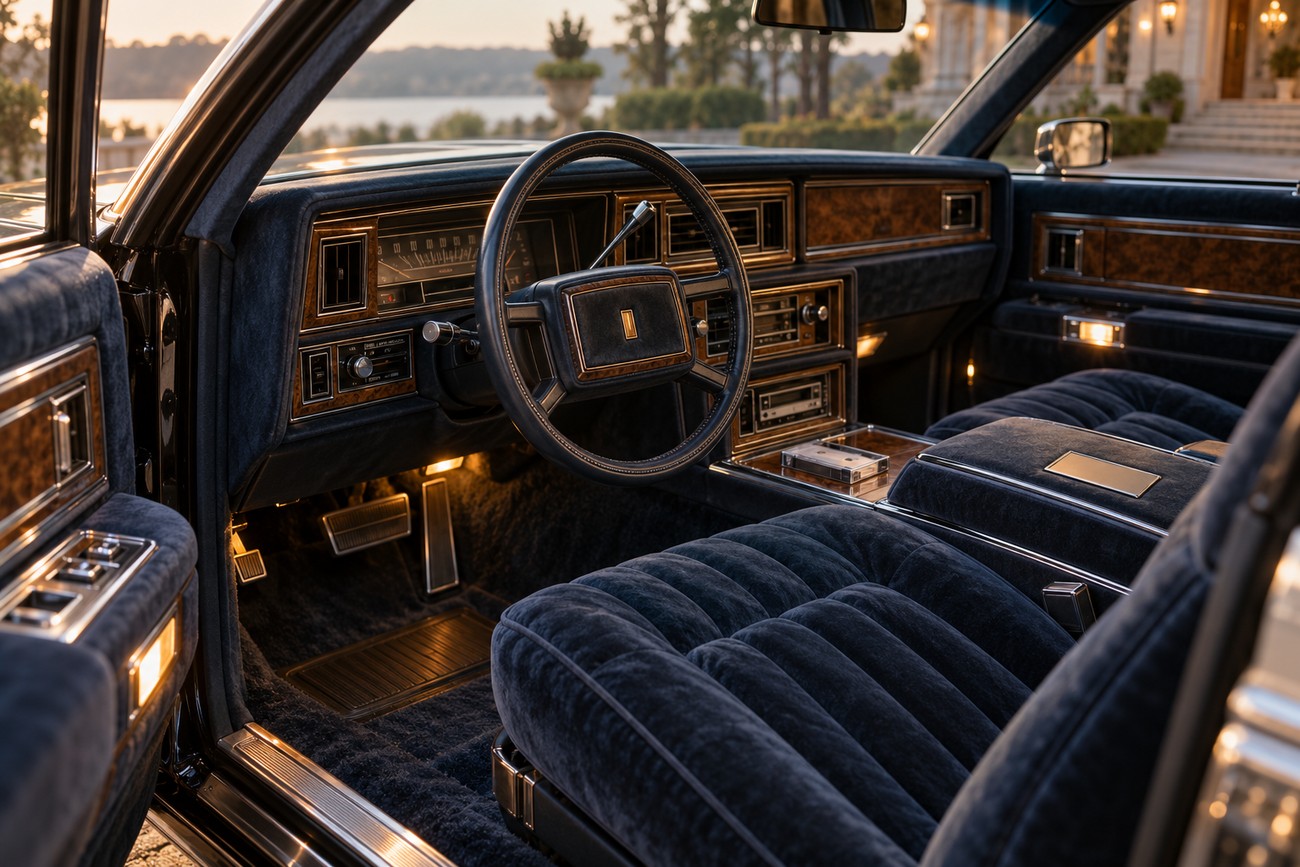
The Frank Sinatra Edition is a marketing and collectible special-edition package based on the regular 1981 Imperial. It should be understood as an association-driven luxury package, not as a separate technical performance model. The chassis, engine, and transmission remain fundamentally those of a regular 1981 Imperial.
Its appeal lies in Sinatra-related presentation and surviving equipment. Depending on the example, that may include music or cassette materials, commemorative plaques, special badging, personalized interior details, and autographed elements. These items can give the car a stronger historical identity, especially when they remain together with supporting documentation.
The package does not establish a distinct engine, suspension, braking, or performance specification. A buyer expecting sharper handling or extra power will be disappointed. The value is cultural and collectible: the car connects a familiar Chrysler luxury product with one of the most recognizable entertainers of the period.
Surviving examples may be incomplete, altered, or assembled from replacement parts. A changed stereo, recovered seats, modern wheels, repaint, or missing cassette set can leave the car usable while reducing its originality. The more unusual the claim, the more carefully the surviving details should be compared with the paperwork and the car’s ownership history.
Performance, Comfort, and the Reality of Driving One
Approximately 140 hp SAE net is the practical horsepower reference for the 1981 Imperial. Some period and later references list nearby figures, generally reflecting market or calibration differences rather than a different engine. The number should be read in context: the 318 V8 is moving a heavy luxury coupe, and modern traffic makes its limited reserve apparent.
The driving experience is relaxed. The TorqueFlite shifts in an unhurried manner, the large body favors a calm pace, and the suspension is aimed at comfort rather than cornering precision. The car can make a pleasant boulevard cruiser, especially when the interior is complete and quiet, yet it has little in common with a muscle car.
Carburetor condition strongly affects the ownership experience. Unstable idle, difficult cold starts, hesitation, and sensitivity to fuel-system adjustment can turn an otherwise sound car into an irritating one. A warm engine that idles acceptably during a short viewing does not prove that the choke, fast-idle system, and cold-start behavior are correct.
Urban use exposes the Imperial’s least appealing traits. Its width, large turning circle, and long body complicate tight parking and narrow maneuvering. The car makes more sense for someone with suitable storage and a tolerance for deliberate driving than for a commuter seeking modern visibility, compact dimensions, or effortless daily operation.
Buying Inspection: Rust, Mechanics, and Electrical Trouble
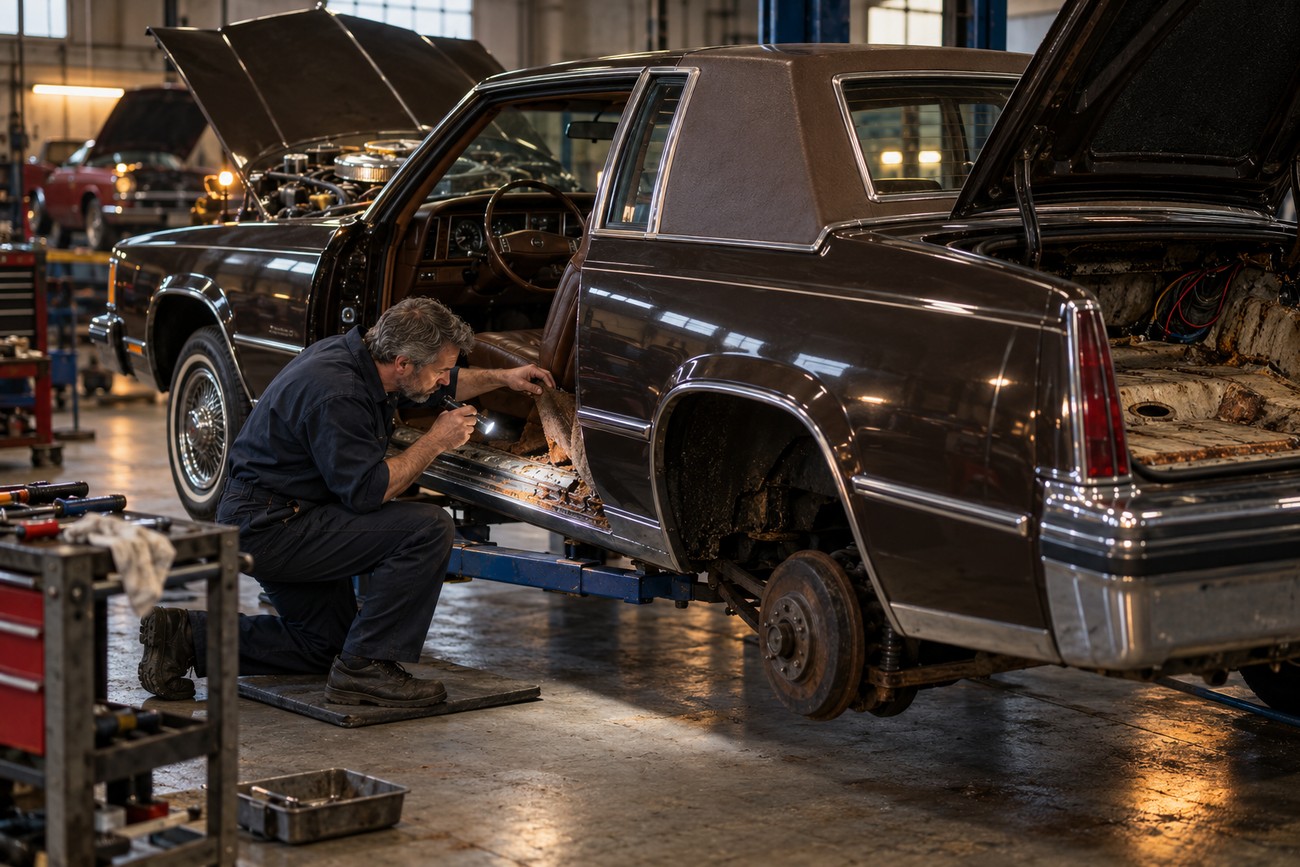
Rust should lead the inspection. Hidden corrosion in the rockers, wheel arches, floors, lower door edges, and trunk can dominate restoration costs, particularly when attractive paint conceals older repairs. Look beneath the carpets, inspect the lower seams, examine the undersides of the doors, and check the trunk floor and surrounding structure from below as well as above.
A running engine proves very little about the condition of the car as a whole. Check cold-start behavior, idle stability, throttle response, exhaust smoke, fluid leaks, and signs of neglected fuel-system work. A carbureted 318 can be straightforward to service, though poor adjustments and aged components may require repeated diagnosis before the car behaves consistently.
The TorqueFlite automatic deserves a road test after the fluid and leak inspection. Engagement should be predictable, shifts should not be accompanied by severe slipping or harsh impact, and the transmission should show evidence of regular maintenance where records exist. Its durability is an advantage only when previous owners have supplied the basic service it requires.
Electrical faults are common age-related risks. Aging wiring and contacts can affect power windows, lighting, switches, and the instrument cluster. Test every window, lamp, gauge, warning light, interior fitting, and dashboard function. A non-working accessory may be a small repair, or it may reveal brittle wiring, corroded connectors, or a history of improvised repairs.
- Inspect the rockers, wheel arches, floor sections, lower door edges, and trunk for concealed corrosion.
- Start the engine cold and assess choke operation, idle quality, and throttle response.
- Check TorqueFlite engagement, shifting, leaks, and available service records.
- Operate the power windows, lighting, instruments, switches, and other electrical equipment.
- Separate cosmetic defects from structural rust before estimating restoration costs.
Body restoration is usually the financial danger zone. Mechanical parts may be serviceable or replaceable, while correct sheet-metal repair, paintwork, trim, and interior restoration can quickly exceed what the finished car is worth. A solid but untidy car is often a safer purchase than a glossy example with corrosion hidden beneath fresh paint.
Authenticity, Originality, and Provenance
Authentication begins with the VIN and the title or registration documents. Compare the identification numbers with the car, inspect the ownership history, and seek dealer paperwork or archival material where available. A coherent history strengthens the claim that the car was delivered as a Sinatra Edition and has not acquired its identity through later decoration.
Next, document the surviving special-edition equipment. Check for the cassette or music materials, literature, plaques, emblems, interior details, and any personalized or autographed elements. Missing items do not automatically disprove the car’s history, but they reduce completeness and should affect the price and the confidence attached to the description.
Verify the VIN and paperwork before judging the trim. A correct-looking plaque or cassette set can be transplanted, while consistent dealer history and matching interior details are harder to fake.
Originality also includes the less glamorous parts of the car. Replacement upholstery, repainting, non-original wheels, a later stereo, changed trim, and undocumented mechanical work all alter the evidence. A well-restored car can still be desirable, yet restoration should be described accurately instead of being presented as untouched originality.
The strongest examples combine a matching identity, a believable ownership trail, surviving special-edition details, and a body that has not been heavily reconstructed. The Sinatra badge is useful evidence only when it agrees with the rest of the car. When the story depends on one emblem and verbal assurance, the buyer should treat the claim as unconfirmed.
Value, Ownership Costs, and the Collector Verdict
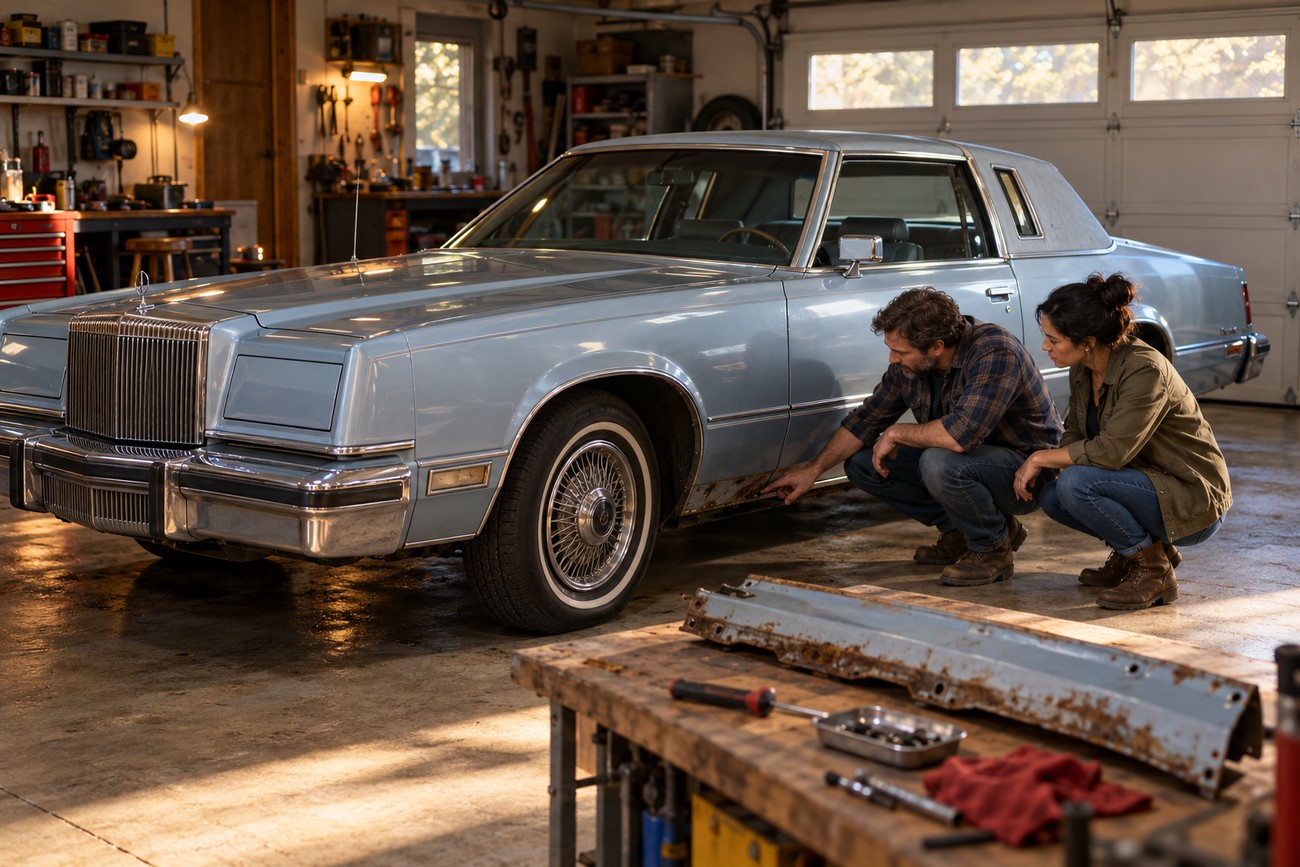
Limited production creates interest, though rarity alone does not create a high-value collectible. An undocumented Sinatra badge carries no automatic premium. Collectible value depends more heavily on body integrity, condition, originality, completeness, and documented provenance than on an unsupported production claim.
Restoration economics are especially important here. A car may need rust repair, paint, interior work, electrical diagnosis, carburetor service, trim replacement, and missing special-edition equipment. Those jobs can cost more than the market value of the finished Imperial, even when the result is attractive and mechanically dependable.
The best purchase is usually the most honest car rather than the most dramatic advertisement. A solid body with incomplete cosmetics gives the buyer a clear project. A shiny car with hidden corrosion, mixed trim, and no documentation can absorb substantially more money while still failing to achieve convincing originality.
Ownership also requires realistic expectations. The Imperial is a large, age-sensitive luxury coupe with carburetor and electrical concerns, limited modern performance, and difficult parts sourcing for certain interior and Sinatra-specific details. It is poorly suited to a low-maintenance daily-driver role.
For a patient enthusiast, the car can make sense as a characterful cruiser and a piece of Chrysler and popular-culture history. The right example offers period comfort, a distinctive story, and an unusual place in the Imperial lineage. Buy the condition and evidence first; treat the Sinatra association as a valuable bonus only when it can be demonstrated.
Frequently Asked Questions
The surviving evidence supports careful descriptions rather than confident slogans. These answers separate established specifications from claims that require verification on the individual car.
How many 1981 Chrysler Imperials were made?
The available evidence supports describing production as limited, but it does not establish one reliable, verified total for the Frank Sinatra Edition in the supplied record. Buyers should avoid repeating a precise number unless it is supported by a credible production or dealer source.
That uncertainty makes the car’s individual evidence more important. VIN records, dealer documentation, surviving special-edition equipment, and a coherent ownership history provide more useful information than an impressive but unsupported production figure.
How much horsepower did a 1981 Chrysler Imperial have?
The principal reference is approximately 140 hp SAE net from the carbureted 318-cubic-inch, or 5.2-liter, V8. Some references give nearby figures because of market or calibration differences, so a small discrepancy does not necessarily indicate a different engine.
The practical conclusion remains the same: the Imperial offers modest output for a heavy luxury coupe. Its relaxed TorqueFlite gearing and comfort-oriented character matter more to the driving experience than a minor difference between period horsepower listings.
Was the Chrysler Imperial a good car when new?
It was a comfort-focused luxury coupe with durable basic hardware, especially when the TorqueFlite and 318 V8 received proper maintenance. Its broad cabin, quiet cruising character, and formal presentation suited buyers who valued American luxury and did not need sports-car performance.
Size, modest output, carburetor-era behavior, and fuel-economy compromises limited its appeal compared with earlier Imperials. Judged today, it is best understood as a specialized period cruiser rather than an effortless all-purpose vehicle.







