
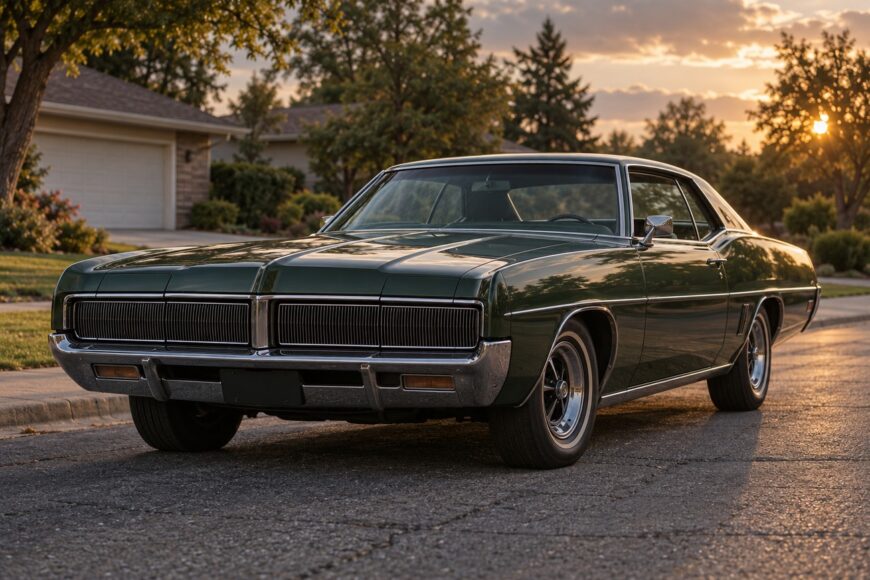
The 1969 Mercury Marauder leads with concealed headlights and a long, low profile. Behind that forceful face is a substantial full-size car, whose weight shapes the way its V8 power feels on the road. Its appeal rests as much in its unhurried grand-touring character as in its engine specifications.
That distinction matters when buying one. A standard Marauder and an X-100 share the name and the imposing silhouette, but the X-100 was a separate version with a defined high-output 429 V8 specification. Treating every surviving car as an X-100 can turn an appealing purchase into an expensive argument about originality. The better starting point is to enjoy the design, then examine the particular car—its documents, equipment, and condition—with equal care.
- The look: hidden headlights on a full-size Ford-family coupe
- 1969 Marauder engines: 390, 429, and X-100 compared
- What the X-100’s big numbers feel like on the road
- Rare grand tourer, not an automatic muscle-car legend
- The ownership costs hiding behind the styling
- How to verify the car before paying an X-100 price
- Frequently asked questions
- Which is the better year to buy: a 1969 or a 1970 Marauder?
- What was the top speed of the 1969 Mercury Marauder?
- Does an original X-100 need special attention when choosing modern fuel?
- How should an occasionally driven Marauder be stored?
The look: hidden headlights on a full-size Ford-family coupe
With its headlights concealed, the Marauder presents a broad, nearly uninterrupted face. The long body and sweeping roofline carry that impression past the doors, giving the car a sense of motion even when parked. It is an assertive design, though its visual length also reflects the amount of car a buyer must house and maneuver.
The dimensions settle any doubt about its scale: a 121-inch wheelbase and approximately 219.1 inches of overall length. Those figures place the Marauder firmly among full-size coupes. A parking space that comfortably takes a smaller classic may leave little room to walk around this one, especially when access to the doors or trunk matters.
The body and roofline are related to the Ford XL and Galaxie 500 SportRoof, and the Marauder shares Ford-family construction. That relationship is useful when understanding its layout and looking for possible mechanical parts sources. It does not establish that every Mercury body panel, molding, or interior piece will interchange with a more common Ford.
That distinction is easy to miss in photographs. The profile may look familiar, while the pieces that make a Marauder look complete and correct are specific to it. A prospective buyer should therefore judge the trim on the car as carefully as the silhouette: a missing detail can be much harder to resolve than an ordinary service item.
1969 Marauder engines: 390, 429, and X-100 compared
The Marauder name covered several engine specifications; the X-100 designation identified a separate version.
| Model or engine choice | Engine and carburetor | Published rating | Context |
|---|---|---|---|
| Standard Marauder, base engine | 390 CID V8, two-barrel | 265–280 hp in published sources | The differing figures describe the cited base-engine rating, not two confirmed engine options. |
| Optional engine | 429 CID V8, two-barrel | 320 hp | An optional 429 specification for the Marauder. |
| Optional engine | 429 CID V8, four-barrel | 360 hp | The higher-rated optional 429 specification. |
| X-100 version | 429 CID V8, four-barrel | 360 hp; 480 lb-ft | Specified with 10.5:1 compression and a three-speed SelectShift automatic. |
The 265 and 280 hp figures for the two-barrel 390 are a published-specification disagreement. They should not be turned into a pair of distinct factory choices without evidence for the individual car. Carburetion is more informative here than a horsepower number repeated in a sales listing.
Likewise, a 429 under the hood does not by itself make a Marauder an X-100. The version, original engine specification, transmission, and trim need to be considered together. For a buyer, the table is a guide to what to verify, rather than a substitute for identifying the car in front of them.
What the X-100’s big numbers feel like on the road
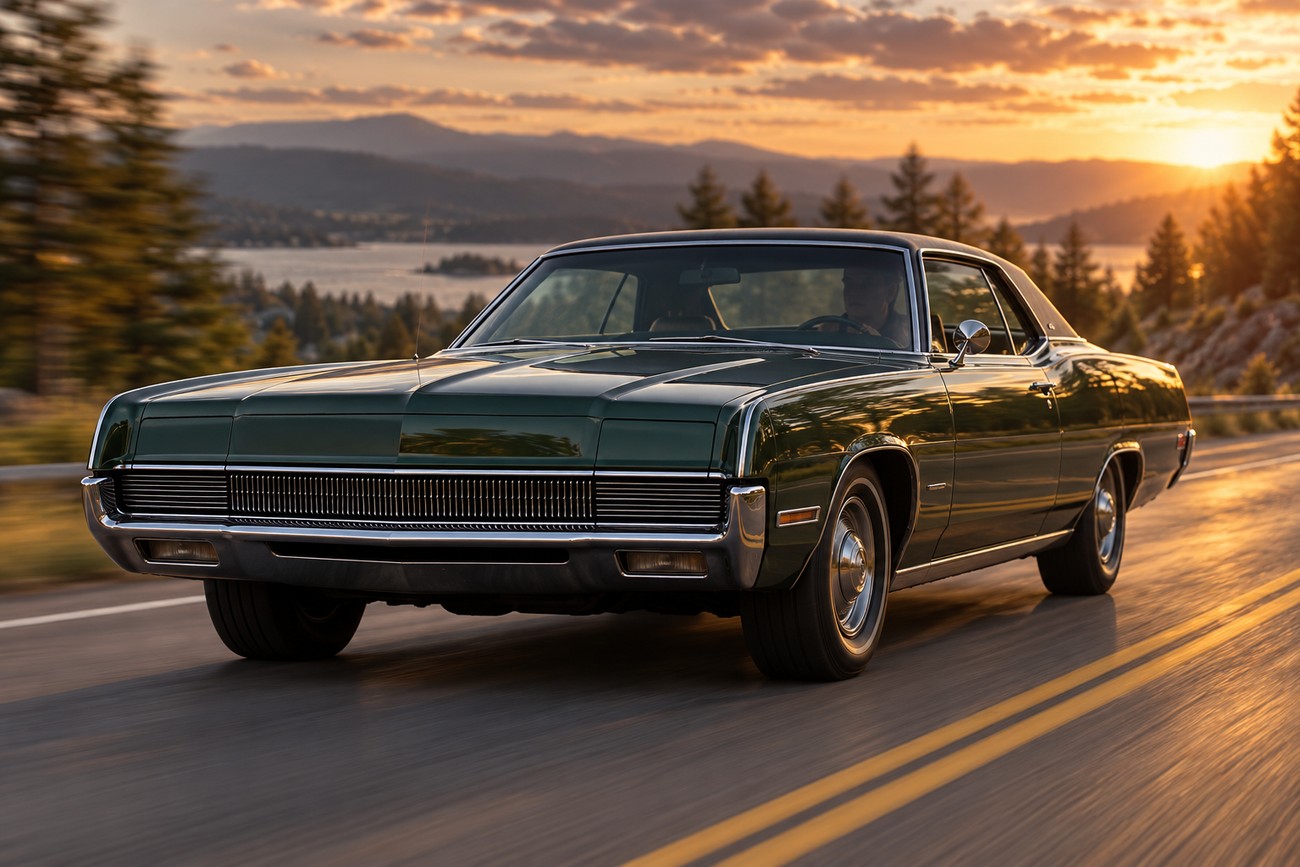
The X-100’s 429 CID four-barrel V8 was rated at 360 hp and 480 lb-ft of torque. That torque suits a large coupe: it gives the car the reserve to gather speed without demanding that the driver treat every acceleration as an event. It is a persuasive engine specification, provided the rest of the car is understood on the same scale.
Published X-100 weight is approximately 4,500 lb. Moving that mass helps explain why contemporary performance figures sound strong without suggesting the response of a lightweight muscle car. Published 0–60 mph results differ at 7.5 and 7.8 seconds; test conditions and methods can affect a result, and neither figure promises the same time from a surviving example.
The car’s size is part of its road character, too. Its long wheelbase and substantial body favor a settled grand-touring impression over quick changes of direction. Buyers drawn chiefly to the 360 hp rating should allow for the weight they will feel whenever the road bends or the car needs to slow.
Fuel use deserves the same measured reading as acceleration. Figures around 10–12 mpg appear in references and owner discussions, but an individual result will depend on the car and how it is driven. For occasional trips, that may be acceptable; for frequent long drives, fuel stops and running costs become a meaningful part of ownership.
Rare grand tourer, not an automatic muscle-car legend
The Marauder has the power and presence that invite muscle-car comparisons, particularly in X-100 form. Its proportions point to a different purpose. This is a full-size personal-luxury or grand-touring coupe: a car in which a large engine works within a long, heavy body, rather than a lightweight platform built around sharp acceleration.
Frequently cited production figures for 1969 are 9,031 standard Marauders and 5,635 X-100s. Those totals help explain why the cars attract attention, yet they cannot establish the value of a particular example. Condition, completeness, and a credible account of its original specification matter more than a production figure quoted without reference to the car for sale.
The model’s relatively brief run and commercially mixed reputation also deserve perspective. Limited production can make a car distinctive at a gathering while leaving a narrower pool of model-specific parts and informed buyers. Rarity, in other words, can complicate ownership as readily as it can add interest.
Calling a standard Marauder an X-100 obscures that distinction. The two versions deserve to be appreciated on their own terms, and the standard car still offers the same commanding scale and striking roofline. A buyer who likes those qualities may find a well-kept standard example more satisfying than an incomplete X-100 bought solely for its designation.
The ownership costs hiding behind the styling
Begin a walkaround with what the photographs celebrate. Check that the headlight doors operate as fitted, that the surrounding trim is present, and that the large body panels are sound. Sight along the sides for damage or poor repairs, then look at how the doors and other openings fit. Cosmetic work on a full-size car can become a substantial undertaking without any need for a quoted restoration price.
Inside, examine cabin wear and the condition of the accessories actually fitted to the car. Confirm their operation rather than assuming that a complete-looking dashboard means everything works. Replacement of Mercury-specific trim may be less straightforward than sourcing a common mechanical service part, despite the Marauder’s Ford-family construction.
Space is another cost that arrives after purchase. At approximately 219.1 inches long, the car needs suitable storage with enough working room to keep it dry, inspect it, and get in and out without scraping its sides. Fuel use reported around 10–12 mpg is also worth including in plans for regular drives, while recognizing that no single figure describes every car.
Finally, judge it as a full-size 1960s automobile when planning how it will be used. Its period safety provisions do not meet modern crashworthiness expectations. The styling is compelling, but neither the long hood nor the big V8 removes the practical compromises of driving, maintaining, and storing a car of this age and size.
How to verify the car before paying an X-100 price
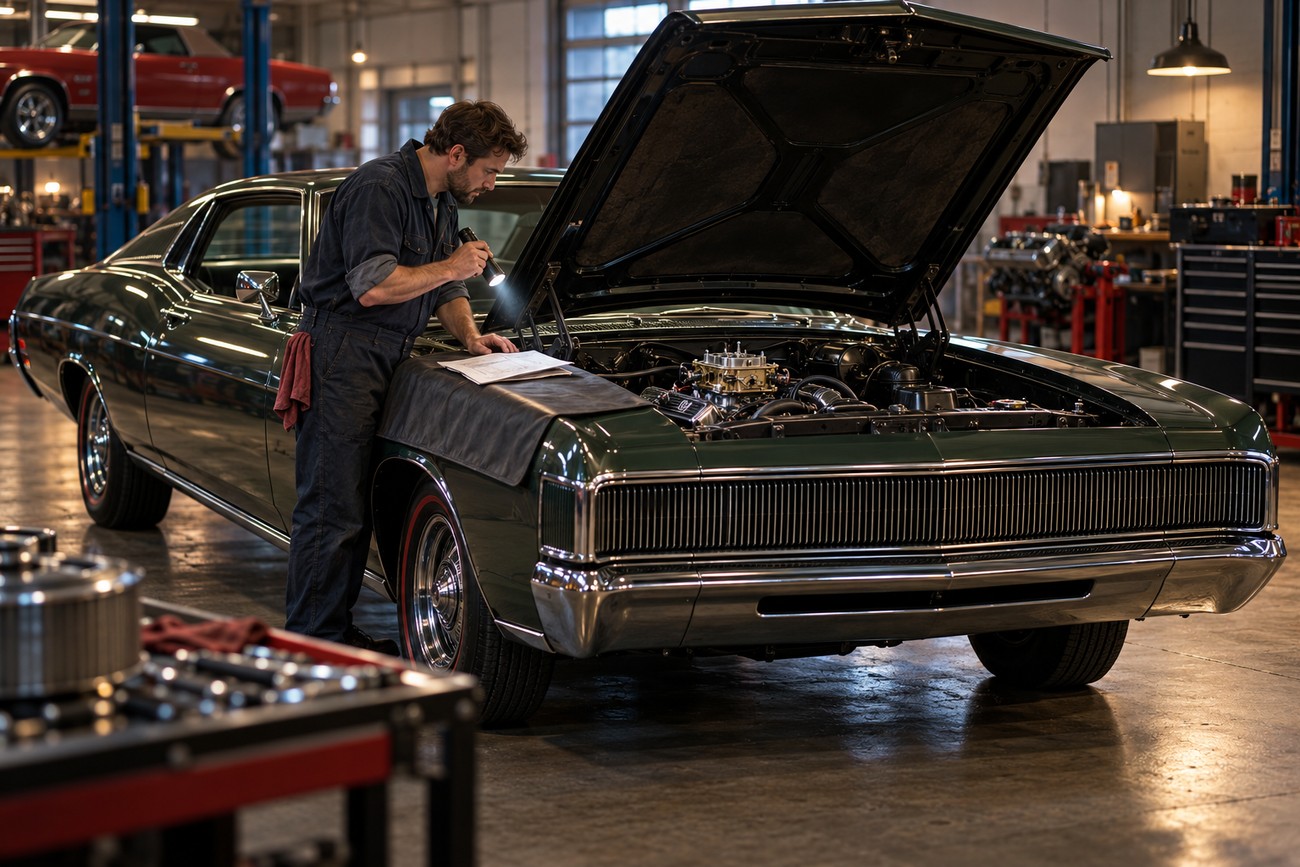
Start with the car’s identification and any available factory paperwork, then compare those records with the engine, carburetor, transmission, and trim it has today. Follow with a condition inspection; a correct specification on paper cannot make missing parts or deteriorated bodywork inexpensive to put right. An X-100 badge is a prompt to check the evidence, not proof of the version.
The documented X-100 specification includes a 429 CID four-barrel V8 and three-speed SelectShift automatic. An installed 429 may be consistent with that description, but engines and other components can be changed. Equally, a listing that describes a 390, 428, or 429 should lead to an engine-code and paperwork check before the claimed original specification affects your offer.
An X-100 valuation is safest when the factory record, carburetor, transmission, and trim agree; pricing from badges or the installed engine alone can leave a costly identity dispute after the sale.
Keep the two published base-390 ratings—265 and 280 hp—separate from that identity check. Their disagreement does not confirm two distinct 390 choices, and a horsepower claim cannot resolve whether an engine is original. Ask the seller to distinguish what the documentation establishes from what has been inferred from parts currently on the car.
For the final decision, compare a documented, complete car with the full likely work required by a cheaper one. Missing Mercury-specific pieces and an uncertain version can erase an apparent saving, even if the less expensive car runs well. Paying for verified condition and specification may be the more defensible choice than paying for an X-100 story that the evidence cannot support.
Frequently asked questions
Choosing between Marauder examples requires attention to specification, condition, and documentation. The model’s size, age, and fuel use also affect how it fits into ownership plans. These questions address common points that can complicate a purchase or long-term use.
Which is the better year to buy: a 1969 or a 1970 Marauder?
Neither year is a universal better buy. Compare 1969 and 1970 cars of similar specification and condition before giving either year a premium in your own decision. A complete car with sound bodywork, working equipment, and documentation that supports its advertised version is easier to assess than a more attractive-looking example with unanswered questions. If two candidates differ sharply in completeness, the work needed to find and fit missing model-specific pieces may matter more than the year on their registration.
What was the top speed of the 1969 Mercury Marauder?
There is no substantiated top-speed figure here for the 1969 Marauder across its configurations. The published X-100 results of 7.5 and 7.8 seconds to 60 mph measure acceleration, not maximum speed, and cannot reliably be converted into one. Engine choice, gearing, test conditions, and the condition of an individual car would also matter. Treat a precise top-speed claim in a listing as something requiring a credible period source tied to that specification.
Does an original X-100 need special attention when choosing modern fuel?
Yes. The X-100’s specified 429 four-barrel V8 had 10.5:1 compression, so fuel choice deserves attention, but that figure alone does not establish one universal modern octane requirement. Check the engine’s present tune and condition, and pay attention to signs of detonation under load. A car may have been altered or rebuilt since new; if its history is unclear, discuss the actual engine and available fuel with a qualified classic-car specialist rather than relying on the badge.
How should an occasionally driven Marauder be stored?
Use covered space that accommodates the Marauder’s length and leaves room to inspect it. Check tire condition and pressures, make a plan for battery care, and avoid letting a minor leak or damp cabin go unnoticed between drives. Fuel and mechanical systems also benefit from a deliberate routine rather than long periods of neglect. The right routine depends on storage conditions and how often the car is driven, so plan it around the actual intervals instead of assuming an occasional start is enough.







